Hoppin’ down the bunny trail: America’s Easter traditions

March 2024

SMACK DAB IN THE MIDDLE

Hoppin’ down the bunny trail: America’s Easter traditions

by Donald-Brian Johnson

“Here Comes Peter Cottontail,
Hoppin’ down the bunny trail,
Hippity, hoppity, Easter’s on its way!”
(Steve Nelson & Jack Rollins, 1950)

That Gene Autry. First, the cowboy crooner set his sights on Christmas, giving us the lowdown on “Rudolph the Red-Nosed Reindeer” and offering the timely reminder, “Here Comes Santa Claus.” Then, Gene sidled on down the trail a-piece, until he found another holiday worth celebrating. The result: 1950’s bouncy “Here Comes Peter Cottontail.”

Holiday-happy Irving Berlin put all his eggs in one basket, too. “Easter Parade” started off as a song, then became the title of the 1948 Judy Garland/Fred Astaire movie smash. No bunnies, just a tuneful tribute to a beloved Easter Sunday tradition: folks decked out in bandbox finery, strolling down Fifth Avenue (Berlin was a master of re-invention. When an early composition “Smile, and Show Your Dimple” flopped, he put it away until 1933, when “Easter Parade”– the same tune with new lyrics – debuted).

Sprightly songs are one thing. But marshmallow Peeps? Be-ribboned bonnets? Frisky bunnies delivering candy-stuffed baskets? Just how did a major Christian holiday become teamed up with such unlikely springtime bedfellows? Well, blame it on that ancient Anglo-Saxon goddess “Eostre.” When Christianity arrived, it meant easing converts out of long-held pagan practices. Since the spring observance of Christ’s Resurrection roughly coincided with the timing of “Eostre’s” festival, a new celebration supplanted the old. The name remained (sort of); so did “Eostre’s” earthly symbol: the rabbit.

Lent was a period of penitence, “Mardi Gras” the final fling leading into it, Easter the grand celebration of its close. Gradually, Easter’s religious aspects were joined and complemented by secular traditions, celebrating spring as a season of rebirth and renewal. And, from the early 1900s onward, many of those traditions have enjoyed their greatest popularity in America:

Easter eggs
In medieval times, eggs, a symbol of new life, were not eaten during Lent. When Easter rolled around, exchanging Easter eggs seemed egg-zactly right. Back then, the wealthy wrapped theirs in gold leaf; the rest of the world settled for eggs color-stained with flower petals.

The Easter Bunny
In Germany, the “Oschter Haws” (“Easter Hare”) hides nests of brightly colored eggs. German immigrants brought the tradition to America in the 1700s (Incidentally, says the National Confectioner’s Association, 76% of Americans think chocolate bunnies should be eaten “ears first!”).

Easter cards
To boost sales, a printer in Victorian England spruced up generic spring greeting cards with bunnies. Today, while not leading the Easter parade, Easter cards follow Christmas, Valentines Day, and Mother’s Day cards in popularity.


Learning the ABCs, graphite, and watercolour

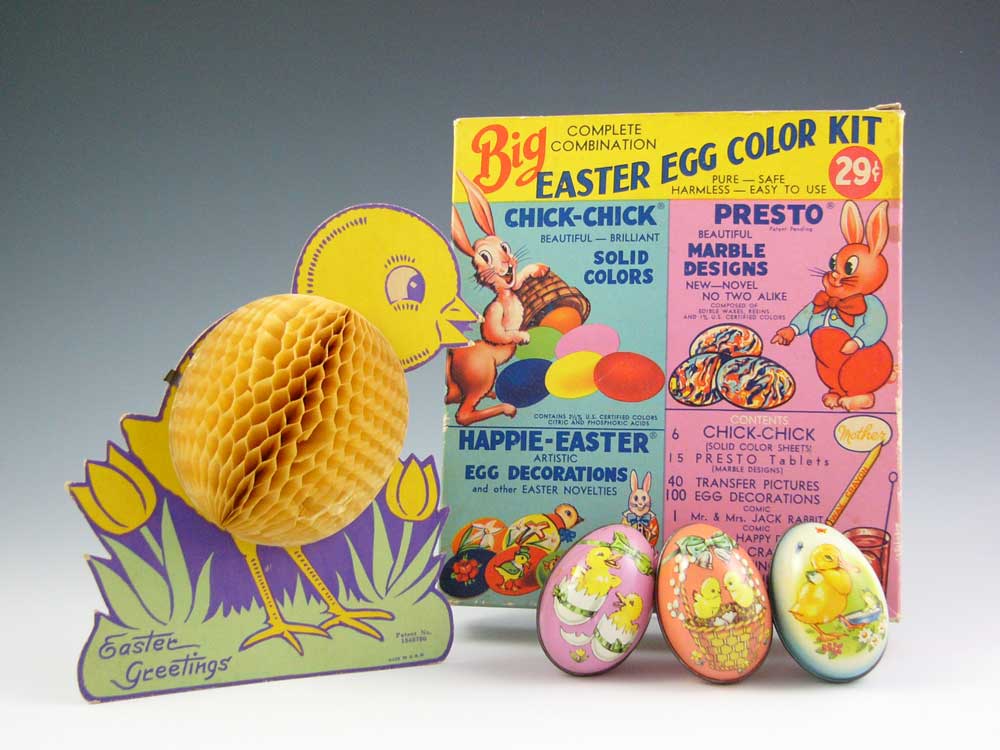
Honeycomb chick table decoration

Honeycomb chick table decoration, egg dye kit, and metal eggs with Easter decals. New/old stock from Campbell’s Department Store, Bridgewater Iowa, late 1940s. Chick and dye kit, $15-20 each; eggs $5-7 each. (Image courtesy of the author and photo associate Hank Kuhlmann)
 

Learning the ABCs, graphite, and watercolour

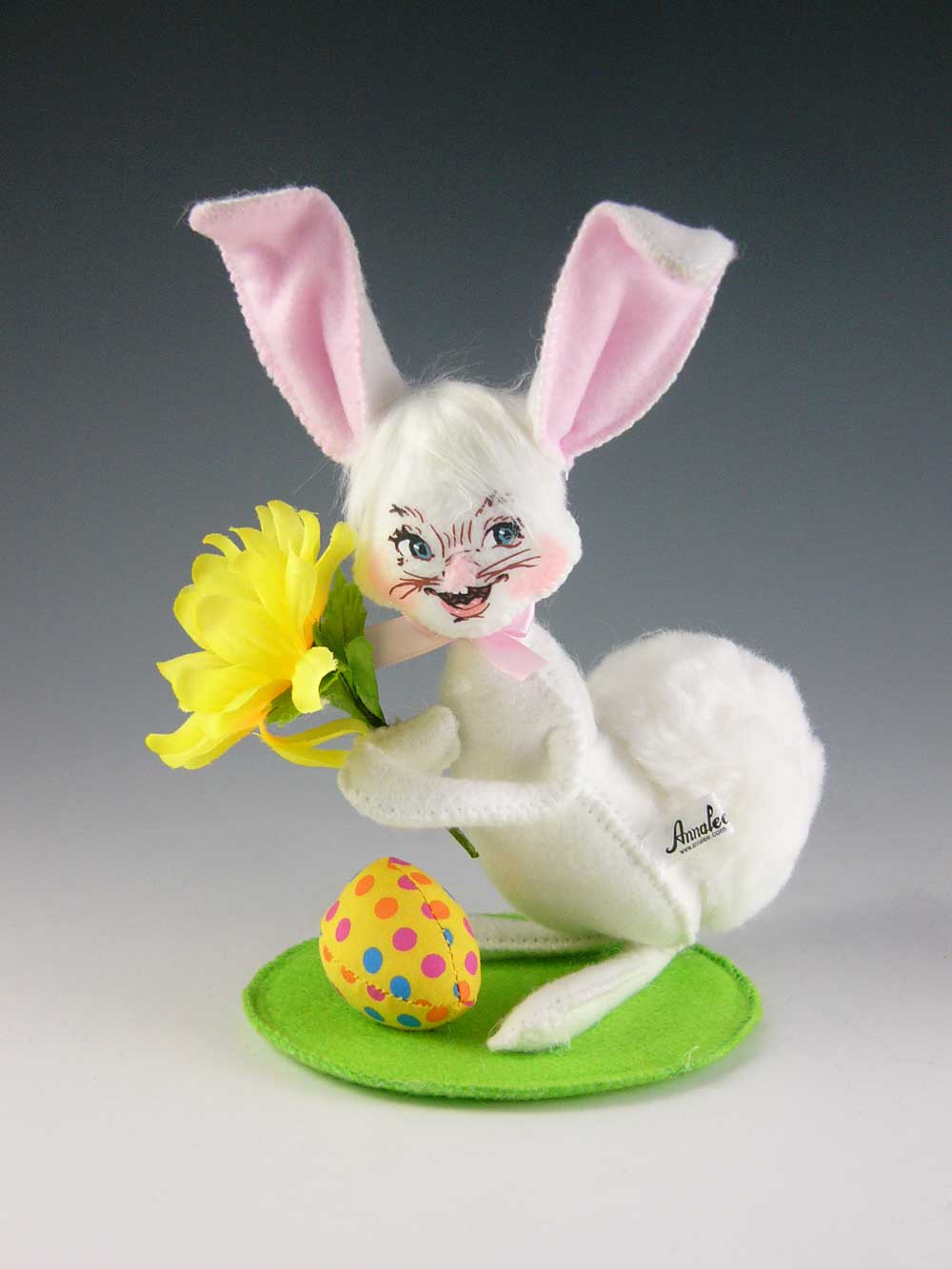
Flexible fabric Easter Bunny

All set for his big day: flexible fabric Easter Bunny by Annalee. $20-25. (Image courtesy of the author and photo associate Hank Kuhlmann)


Easter lilies
Early Christians viewed the lily as a symbol of purity. The white trumpet lily made its U.S. debut in the early 1900s, by way of Bermuda.

Peeps
Every Easter, we choke down more than 700 million of these marshmallow confections. Yellow chicks are the most popular, although there are Peep bunnies and eggs, too. It takes six minutes to make a Peep. In 1953, it took 27 hours.

Jellybeans
16 billion are gobbled up each Easter Sunday (and swept up for weeks afterward). Boston candy maker William Schrafft came up with the concept during the Civil War; customers were encouraged to send these nearly indestructible treats to soldiers.

Easter bonnets
It’s long been considered “good luck” to wear something new at Easter; 18th-century author “Poor Robin” advised, “At Easter, let your clothes be new, or else be sure you will it rue.” Even in the direst days of the Depression, a new Easter bonnet, (or, at least a refurbished old one), remained within the range of most pocketbooks. As the inimitable Irving Berlin put it:

“In your Easter bonnet, with all the frills upon it,
You’ll be the grandest lady
in the Easter Parade.”

(Unless, of course, you’re Fred Astaire. In that case, a top hat will do, and you’re the “grandest fella!”)
Happy Easter!


Donald-Brian Johnson is the co-author of numerous Schiffer books on design and collectibles, including “Postwar Pop,” a collection of his columns. Please address inquiries to: donaldbrian@msn.com
Valentine boxes evoke childhood memories

February 2024

SMACK DAB IN THE MIDDLE

Valentine boxes evoke childhood memories

by Donald-Brian Johnson

Here’s a memory-jogger: it’s Valentine’s Day in mid-20th century America, and across the country, nearly every elementary school classroom has something in common. Atop each weatherbeaten desk sits a “valentine box.” It began life as just another old shoebox, but now, carefully covered in colorful construction paper, and festooned with cutout red hearts, it’s been transformed (For the less artistically inclined, there were “valentine bags”—grocery sacks, minus the construction paper, but still sporting an array of drawn or pasted hearts).

Each receptacle had an opening cut into it, ready to receive its quota of cards — and there was a quota. Everybody gave a valentine, and everybody got one. That included the tough kid across the aisle who, every so often, “borrowed” your lunch money—and that girl with the braids, who accidentally mushed your favorite Crayola.

Lessons over, the teacher finally announced, “you may look at your valentines.” Box covers came off, bag tops were unrolled, and each student eagerly perused his or her “take” (after carefully counting them first). There were generic “to a friend” valentines, with illustrations of romping cats or puppies.

There were funny valentines, with chortle-provoking corny puns. There may even have been a valentine with an innocent romantic message — one that had you looking at that girl with the braids through different eyes.

Then, the school bell rang. Your valentines were packed up, brought home, and piled in a box of “school papers,” alongside their compatriots from previous years. Out of sight, and out of mind. Remember?

According to legend, the first valentine greeting was sent by the man himself: St. Valentine (Actually, there are at least three “St. Valentines,” each clamoring to be recognized as the day’s patron saint, but here’s the most romantic story).
A third-century clergyman, this Valentine was imprisoned for performing marriages in defiance of Emperor Claudius II, who’d decreed that all men of military age must remain single. While in prison, Valentine fell in love with his jailer’s daughter, declaring his feelings in a note signed “from your Valentine.” Since Valentine was eventually beheaded, the story lacks a happy ending, but nonetheless, a tradition was born.

The oldest-known written valentine dates from 1415, a poem the Duke of Orleans sent to his wife while imprisoned in the Tower of London. Shortly thereafter, King Henry V began sending valentines to his favorite, Catherine of Valois, although Henry hired a professional poet to do the heavy lifting.

By the 1700s, kings and dukes weren’t the only ones dispensing valentines. Each Feb. 14th, handwritten valentine messages made their way across all levels of society, often accompanied by small gifts. The dawn of mass printing and inexpensive postal rates meant that, by the early 1800s, just about anyone who wanted to could send, (and hopefully, receive), a valentine.

In the 1840s, ready-made valentines swept the United States, thanks to Esther A. Howland (now hailed by grateful retailers as the “Mother of the Valentine”). Her creations were quite lavish, incorporating ribbon, lace, and colorful bits of material. Joining the traditional visuals of hearts and flowers was “Cupid,” that little winged fellow with the bow and arrow. It was a logical choice: in ancient Roman mythology, Cupid’s the son of Venus, goddess of love.


Learning the ABCs, graphite, and watercolour

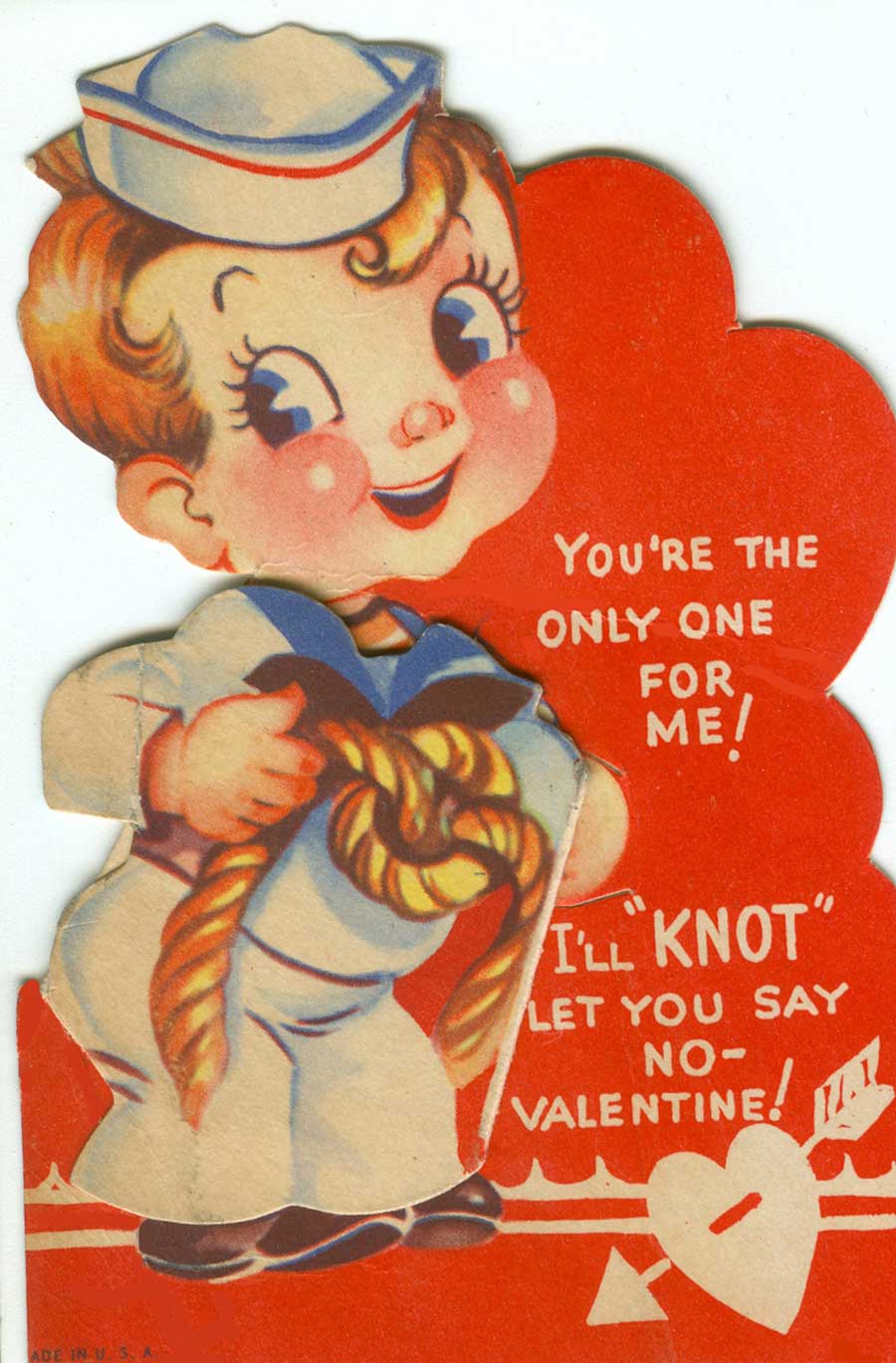
Vintage Valentine card

A Nautical-themed single-sheet Valentine from the 1940s. Image courtesy of the author and photography associate Hank Kuhlmann.


Nowadays, the Greeting Card Association notes that more than one billion valentines are sent annually, vs. two-and-a-half billion Christmas cards. Women buy 85 percent of them (which should have plenty of husbands and boyfriends hanging their heads in shame).

Valentines (including the ones you saved from grade school), remain popular with collectors, who enjoy their colorful visuals, whimsical themes, varied functions (for instance, pop-up, or moving-part valentines), and affordable prices (most are under $5). Displayed singly, or framed in a montage, vintage valentines add a touch of nostalgia to any décor. They’re also guaranteed to rekindle plenty of nostalgic memories—of carefree days, childhood friends. . .and, of course, the “valentine box.”


Donald-Brian Johnson is the co-author of numerous Schiffer books on design and collectibles, including “Postwar Pop,” a collection of his columns. Please address inquiries to: donaldbrian@msn.com
This month: ‘Just an old Christmas card’

December 2023

SMACK DAB IN THE MIDDLE

This month: 'Just an old Christmas card'

by Donald-Brian Johnson

Here’s when the Christmas season really gets underway: one wintry day, amongst the deluge of bills and ads, your daily mail coughs up something out of the ordinary. Maybe it’s an envelope dotted with stenciled snowflakes. Maybe there’s a grinning snowman on an address label. But you know, even before opening it, exactly what you’ve received. It’s your first Christmas card. Let the holidays begin!

Commercially-produced Christmas cards first came to us courtesy of Sir Henry Cole, director of London’s Victoria & Albert Museum.

Cole had a tradition of sending handwritten holiday greetings to family and friends, but by 1843 the list was lengthy. Inspiration struck: he commissioned John Calcott Horsley, a member of the Royal Academy, to create a card that could be lithographed and colored by hand. “Extras” in the initial printing of 1,000 were then made available for sale to the general public.

Horsley’s 3” x 5” card illustrated three scenes: A family enjoying a holiday toast filled the central panel; the side panels featured folks performing charitable acts. The cards were roundly condemned, however, because one figure shown sipping wine in the central panel was a child. They were quickly withdrawn from the market; today, only about a dozen remain.

Over the next several years, the custom of card exchange grew in popularity, although initially only the wealthy could afford them. Then, thanks to the use of less costly paper and the development of the steam printing press, production costs plummeted. And, thanks to England’s Postal Act of 1840, even mailing a Christmas card was extremely affordable: postage was just a penny to anywhere in the United Kingdom.

In the United States, those sending “season’s greetings” had to make do with imported cards until 1875. That’s when Louis Prang, the “Father of the American Christmas Card,” began to sell them domestically. Prang’s “chromos” utilized zinc plates, which proved much less expensive than previous methods of color printing. The Christmas card tradition caught on here just as quickly as it had overseas; by the 1880s, Prang produced nearly five million cards annually.

By the 1920s, the Christmas card thematic pattern had become well-established, offering up a unique blend of nostalgia, sentiment, and season-specific visuals. Holiday wishes became particularly poignant during World War II, as greetings were sent to those overseas, keeping morale high, both at home and abroad.


Learning the ABCs, graphite, and watercolour

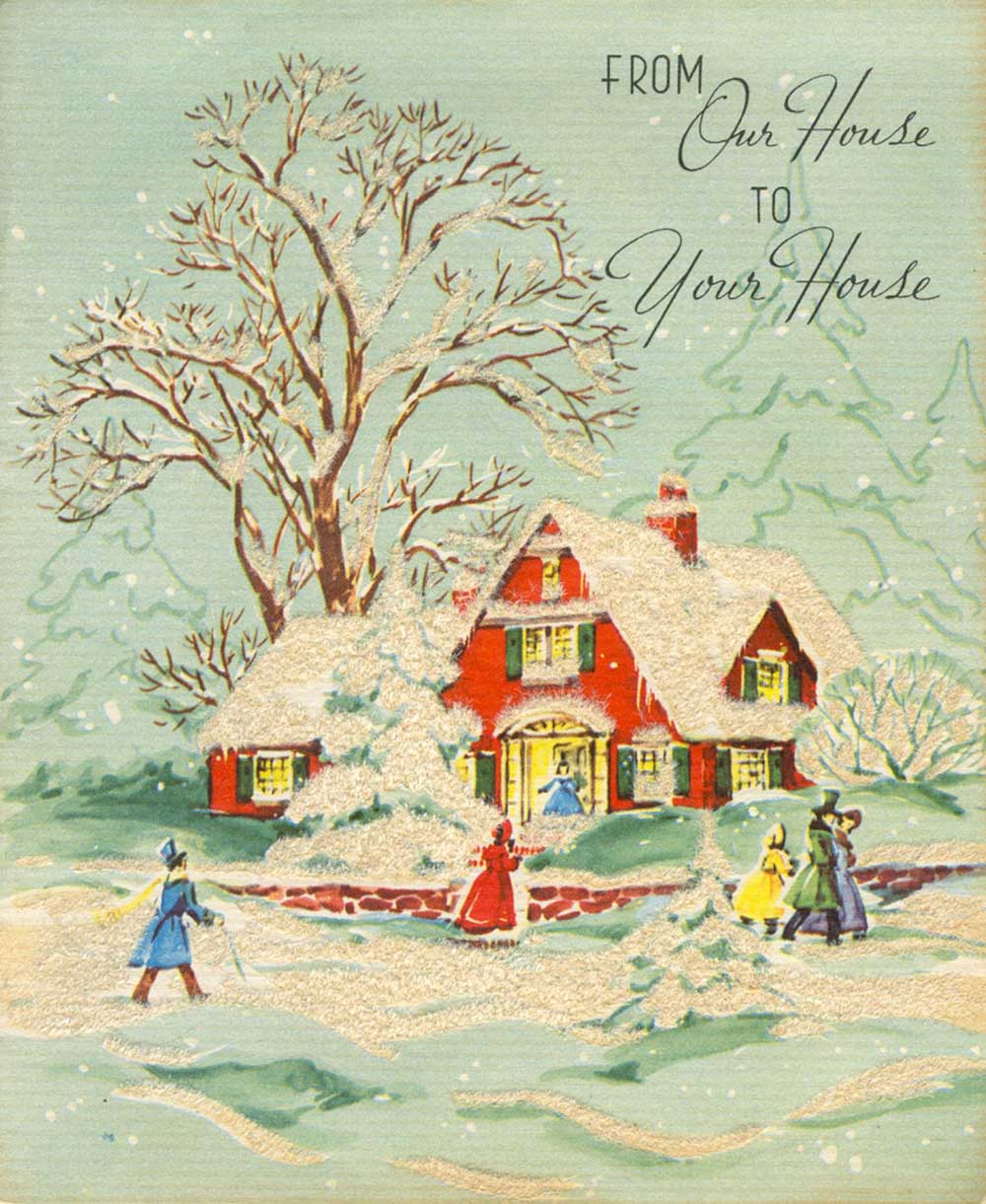
“From Our House To Your House”

A Christmas greeting that never grows old: “From Our House To Your House,” by A & W, early 1950s. The homes are festooned with flocked snow. Image courtesy of Donald-Brian Johnson and Hank Kuhlman


Learning the ABCs, graphite, and watercolour

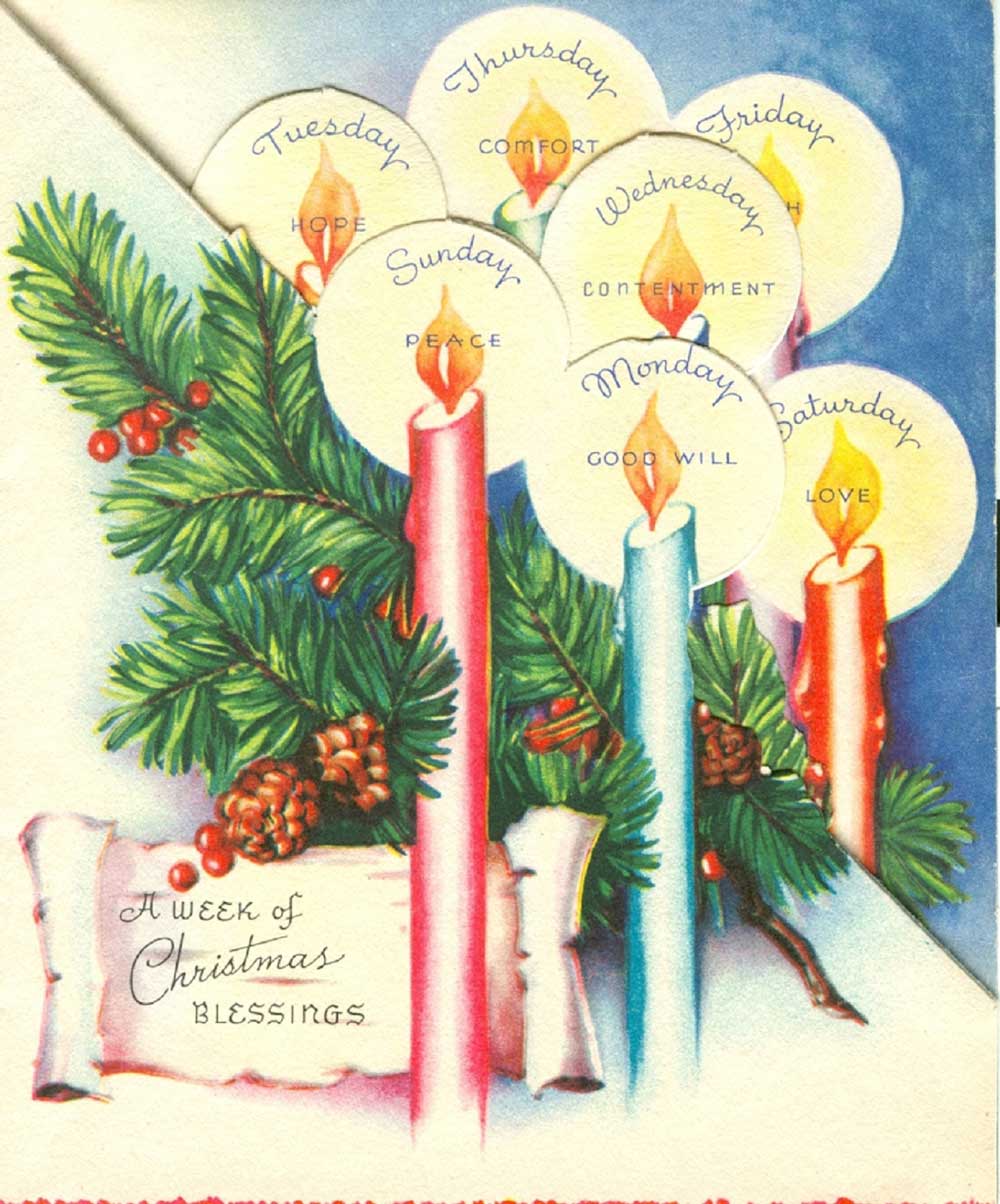
Week Of Christmas Blessings

Each candle on this early-1950s “Week Of Christmas Blessings” offers a different wish. Among them: “Hope,” Peace,” and “Good Will.” Image courtesy of Donald-Brian Johnson and Hank Kuhlman


While later cards incorporated photo art, those of the 1940s and ‘50s relied mainly on illustration. Novelty additions, such as glitter, flocking, window cut-outs, pop-ups, and pull-out tabs were often used. Card trim could include everything from lace ribbon bows to cotton snowdrifts to metallic foil accents.

Photo Cards

Today, many families wouldn’t consider a Christmas card complete without a family photo. The fad began in the late 1930s, with amateur black-and-whites adorning semi-glossy one-sheets.

Studio Cards

More upscale than a box of dime store holiday cards, the “studio card” of the 1950s and ‘60s provided understated elegance at overstated cost. Each season’s selection was displayed to prospective buyers in humungous “sample books.”

Hi Brows

Instantly recognizable by their tall and narrow shape, “Hi Brows” were introduced by American Greetings in 1957. The “Hi Brow” deconstructed the traditional Christmas greeting, reconfiguring it as hip and offbeat, with just a dash of snarky humor.
Over the decades, Christmas cards have been prized, not only for their individual, intrinsic charm, but also for the nostalgic memories they evoke. Memories, if not of a time we personally recall, at least of a time we’ve heard about, or read about, or dreamed about. Arranged individually, or as part of a larger holiday display, vintage Christmas cards remain an extremely affordable collectible; most average well under $15. They also provide an ongoing visual impetus for peace and good will, not just at Christmastime, but year-round.

The mail is here--and so’s that first card. Merry Christmas to all!


Donald-Brian Johnson is the co-author of numerous Schiffer books on design and collectibles, including “Postwar Pop,” a collection of his columns. Please address inquiries to: donaldbrian@msn.com
This month: ‘Heads Up! Character Wall Masks by Bossons’

November 2023

SMACK DAB IN THE MIDDLE

This month: ‘Heads Up! Character Wall Masks by Bossons’

by Donald-Brian Johnson

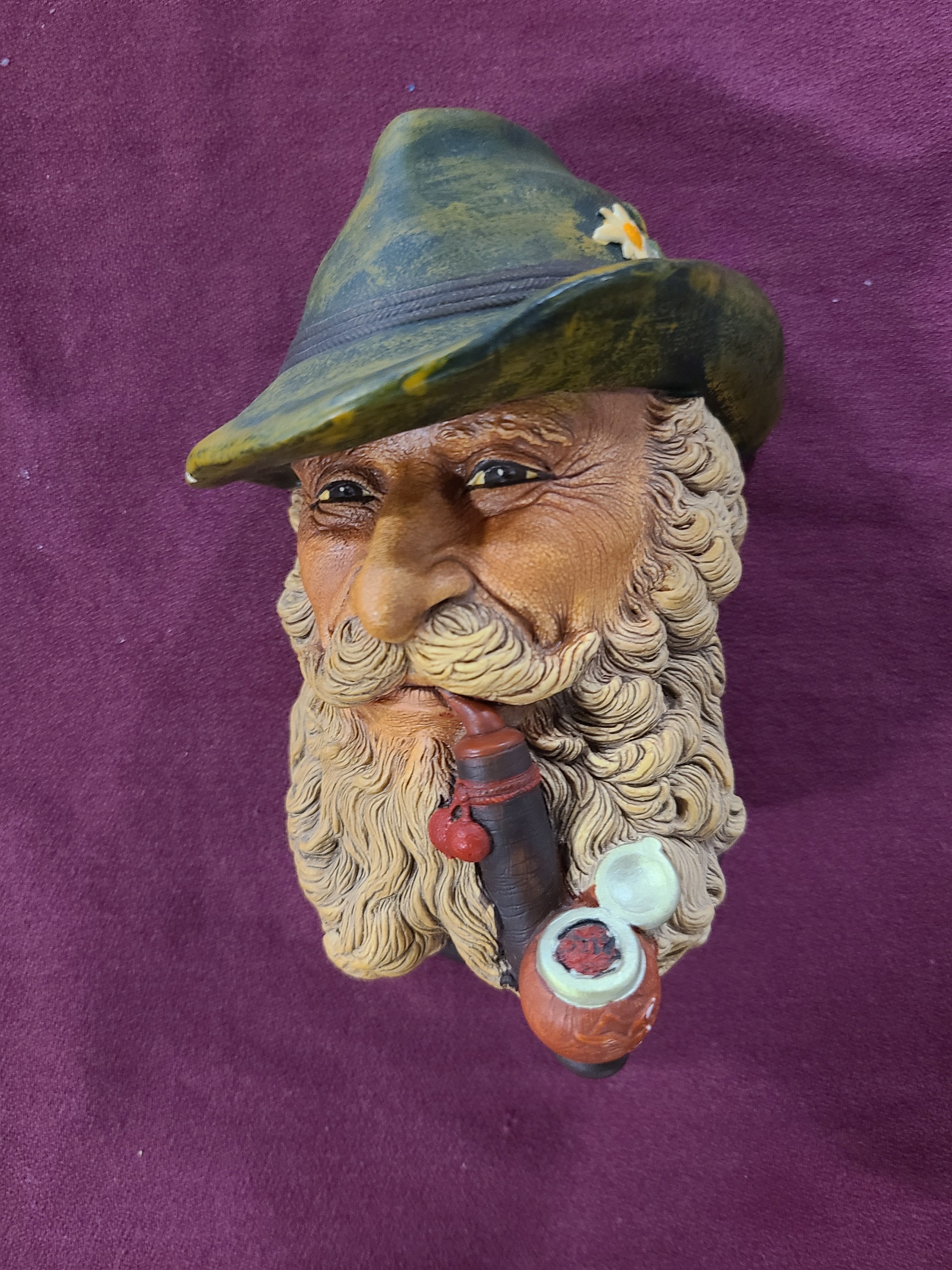
Ever wanted to study a “Tyrolean” up close? How about a “Smuggler?” A “Fisherman?” A “Fiji Islander?”

For collectors of Bossons Character Masks, opportunities like those are as close as checking out what’s hanging on the wall. There, in all their ethnic or character-inspired glory, are three-dimensional “heads,” celebrating the world’s diversity. There are characters from countries read about, yet still to be visited (“The Himalayan”; “The Corsican”; “The Rumanian”). Denizens of the Wild West (“Rawhide”; “The Old Timer”; “Tecumseh”). Working folk from all walks of life (“The Chef”; “The Lifeboatman”; “The Clown”). Ray Bossons’ intricately-detailed depictions run the global gamut, each encapsulating, in just about 6 inches, the essence of their subjects.
Unlike wall-mount “lady head vases,” which have an opening for flowers in the crown of the lady’s oversize hat, Bossons heads are solid plaster. The firm’s publicity referred to them as “wall masks,” which hits it right on the head. Not Halloween masks. Not pandemic masks. These are “life masks,” capturing facial likenesses with as much precision as possible.

Based in Congleton, England, the company was founded shortly after World War II by W. H. Bossons. With an extensive background in ceramics and tile work, W.H. saw a future in the manufacture of decorative plaster items. Following military service, son W. “Ray” Bossons joined the firm. A trained potter with considerable marketing experience, Ray became Bossons’ principal designer.
Plaster art had long been dismissed as a “poor man’s marble,” especially by those who could afford the real thing. For those who couldn’t (which included most prospective Bossons customers), attractive home décor items at attractive prices were just the ticket. Not “the real thing?” They were the next best thing, and that was good enough.

Bossons early success came with the release of high-relief plaques celebrating “Beautiful Britain,” from “Shakespeare’s Birthplace” to “Salisbury Cathedral.” Ranging in size from small “plaquettes” to whopping 14” rounds, the hand-painted plaques, with their sculpted three-dimensional highlights, brought a touch of class to any home (Most of those homes, incidentally, were outside of Great Britain. Due to a domestic sales tax of 125 percent, exports over the years accounted for almost 75 percent of Bossons’ business).

Bossons plaques and products were easy to find. If fine jewelry stores turned up their noses, there were plenty of other options: gift and collectible shops, tobacco shops, and souvenir shops on cruise ships. There was soon a bounty of Bossons products to choose from, including shelf ornaments, mirrors, barometers, thermometers, book ends, and lamp bases. In addition to scenic views, the 3-D variety encompassed everything from floral groupings to hunting scenes. And then, of course, there were the heads.

Learning the ABCs, graphite, and watercolour

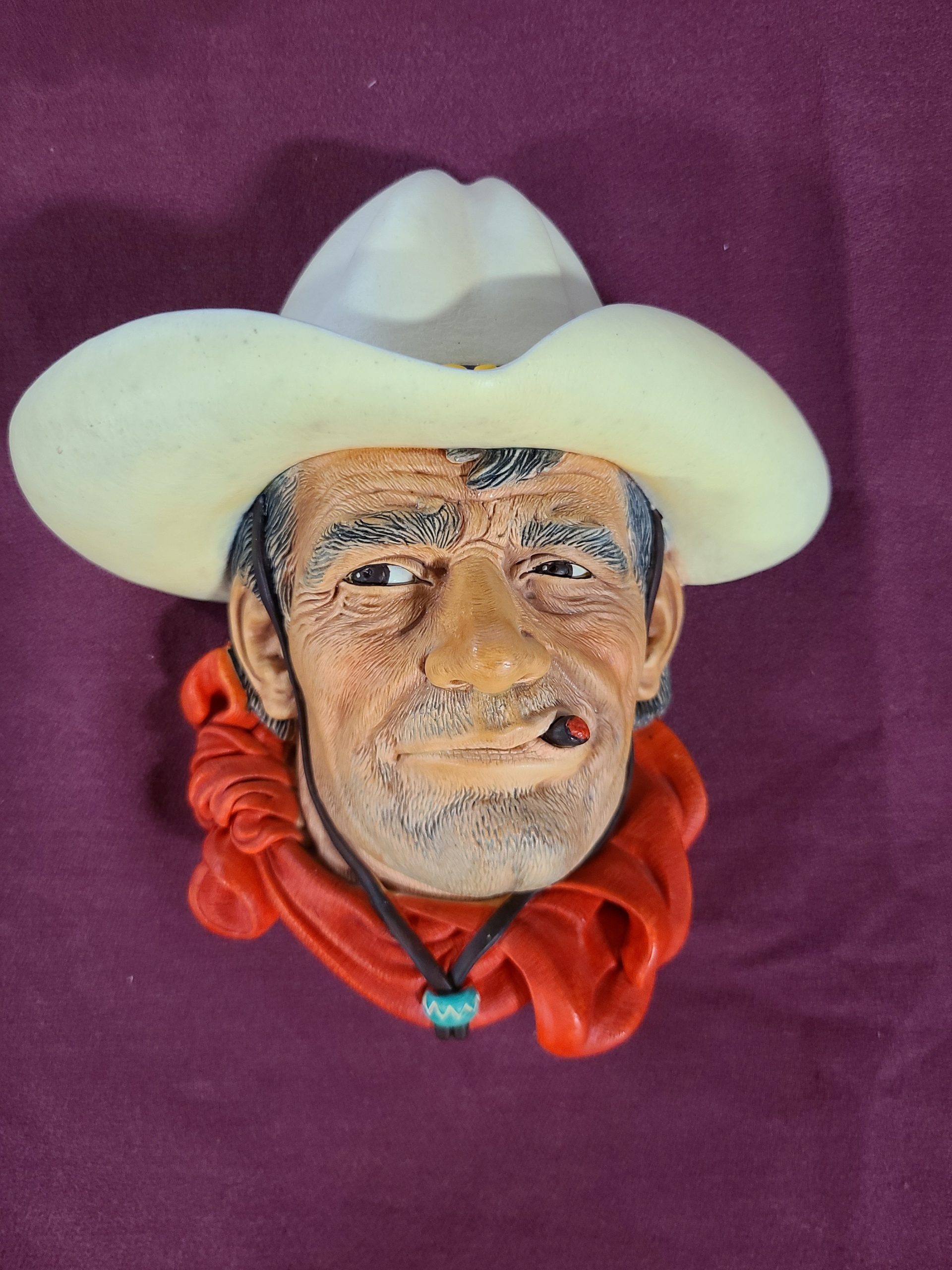
Rawhide

“Rawhide,” 1968. Image courtesy of the author and Hank Kuhlmann. Bossons heads courtesy of Doug (Pete) Petersen (djtoysandtreasures@gmail.com


Learning the ABCs, graphite, and watercolour

Tyrolean

“Tyrolean,” 1972. Image courtesy of the author and Hank Kuhlmann. Bossons heads courtesy of Doug (Pete) Petersen (djtoysandtreasures@gmail.com).


Ray Bossons designed his initial “Character Wall Mask” in 1958 (a “Snake Charmer”). The masks made their official debut in the 1959 catalog. From then on, Bossons masks were at the head of the company line. Each year’s catalog introduced new members of the Bossons community, and consumers couldn’t get enough. In addition to character and ethnic heads, there were animal and bird heads; heads modeled after fictional characters (including a generous assortment of Charles Dickens’ all-stars, from “Mr. Pickwick” to “Ebenezer Scrooge”); and even the occasional historical favorite, such as Sir Winston Churchill. While other modelers were employed over the years, the design impetus always came from Ray Bossons. If a mask wasn’t yet deemed ready for release, it was held back.

In 1996, Bossons ceased operations. Since then, appreciation for Bossons masks, and the company’s other plaster and pottery products, has been the realm of a devoted band of collectors. Annual conventions are held, two Bossons books have been written, and nearly 1,500 Bossons heads are available on eBay each day. Of those, the majority have a “buy-it-now” price of under $50. As in the past, Bossons prices remain as attractive as Bossons masks. In other words, head and shoulders above the competition.


Donald-Brian Johnson is the co-author of numerous Schiffer books on design and collectibles, including “Postwar Pop,” a collection of his columns. Please address inquiries to: donaldbrian@msn.com
This month: ‘A Vogue for Vogue’

October 2023

SMACK DAB IN THE MIDDLE

This month: ‘A Vogue for Vogue’

by Donald-Brian Johnson

Downbeat magazine called them “the discs that sparkle with color.” Gimbel’s trumpeted their “new and wonderful” arrival with a full-page ad in The New York Herald Tribune. Sears, Roebuck touted them as “amazing—with some of the most sensational improvements ever made in the history of phonograph records!”

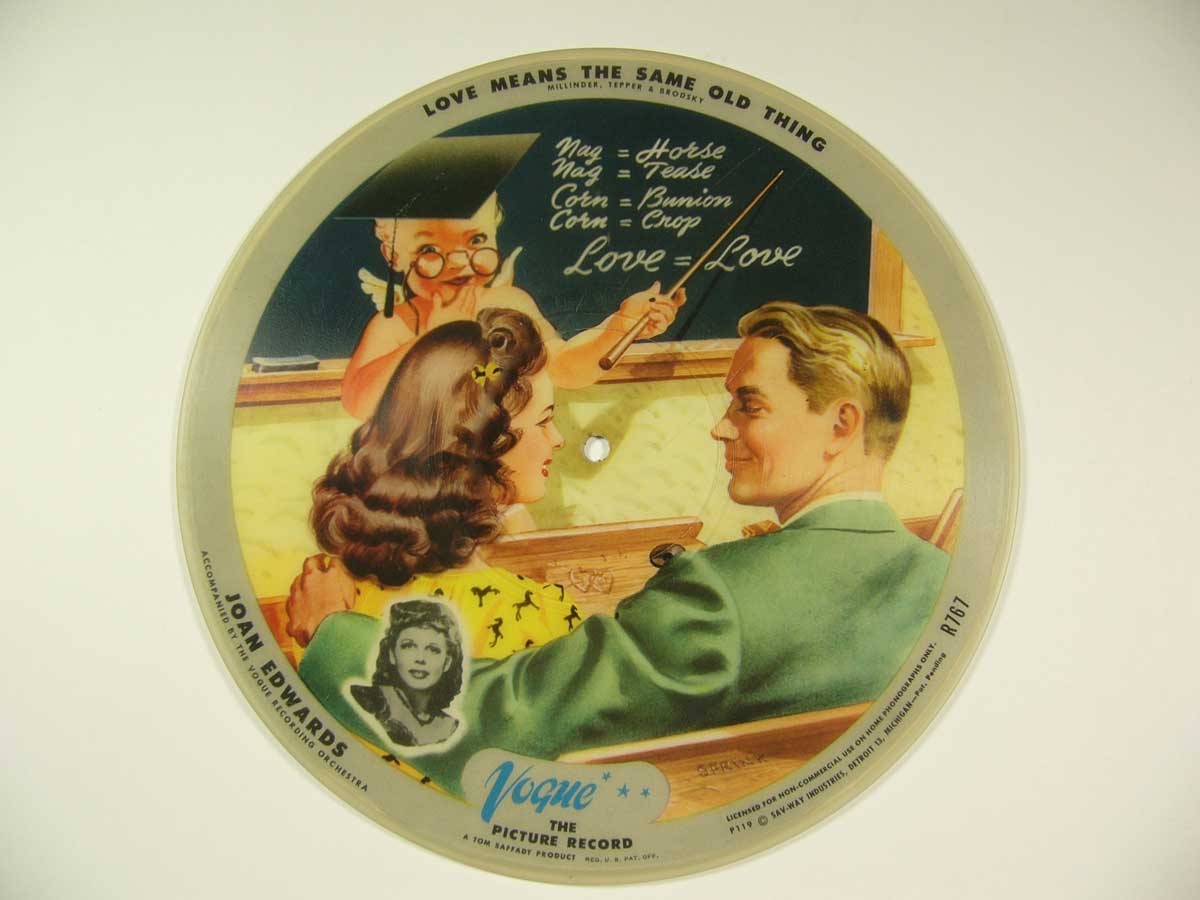
The subject of all the talk? Vogue picture records, those illustrated musical curiosities that have retained a unique appeal for over 75 years. Picture discs preceded Vogue, with Noel Coward, Paul Whiteman, and the cast of Music in the Air all depicted on records of the 1920s and ‘30s. They’ve also continued into the present, with vinyl visuals devoted to Elvis, the Beatles, and even Snow White. Vogue, however, brought picture records to the forefront.

Although the company’s heyday was brief, (from early 1946 through mid-1947), the Vogue catalog serves as a colorful time capsule of the post-World War II era. While Billboard dismissed Vogue illustrations as “strictly of the coal company calendar type,” the scenes depicted, (often romantic, patriotic, or humorous), retain a freshness and optimism totally in keeping with the spirit of mid-1940s America.

The visionary behind Vogue was 29-year-old Tom Saffady, president of Detroit’s Sav-Way Industries. Saffady’s dream: an “unbreakable” picture record, replacing easily-shattered shellac discs. Each 10-inch Vogue 78 had an interior aluminum core bonded to Sav-Way’s transparent Vinylite plastic. In addition to increasing durability, the aluminum core also made the records warp-proof, while the plastic reduced surface and needle noise.

All production, except label printing, was centered at Vogue’s Detroit plant. A Saffady-invented automatic record pressing carousel dramatically sped up record production, with discs stamped out some 80 times faster than before. There was also a complete in-house recording studio, plus a nearby Saffady-owned nightclub, where Vogue acts could perform when not busy cutting records for the label.

Learning the ABCs, graphite, and watercolour

Ouch!

Ouch! #R731, “Between the Devil and the Deep Blue Sea,” Marion Mann. $100-$125. (Image courtesy of the author and photo associate Hank Kuhlmann)


Learning the ABCs, graphite, and watercolour

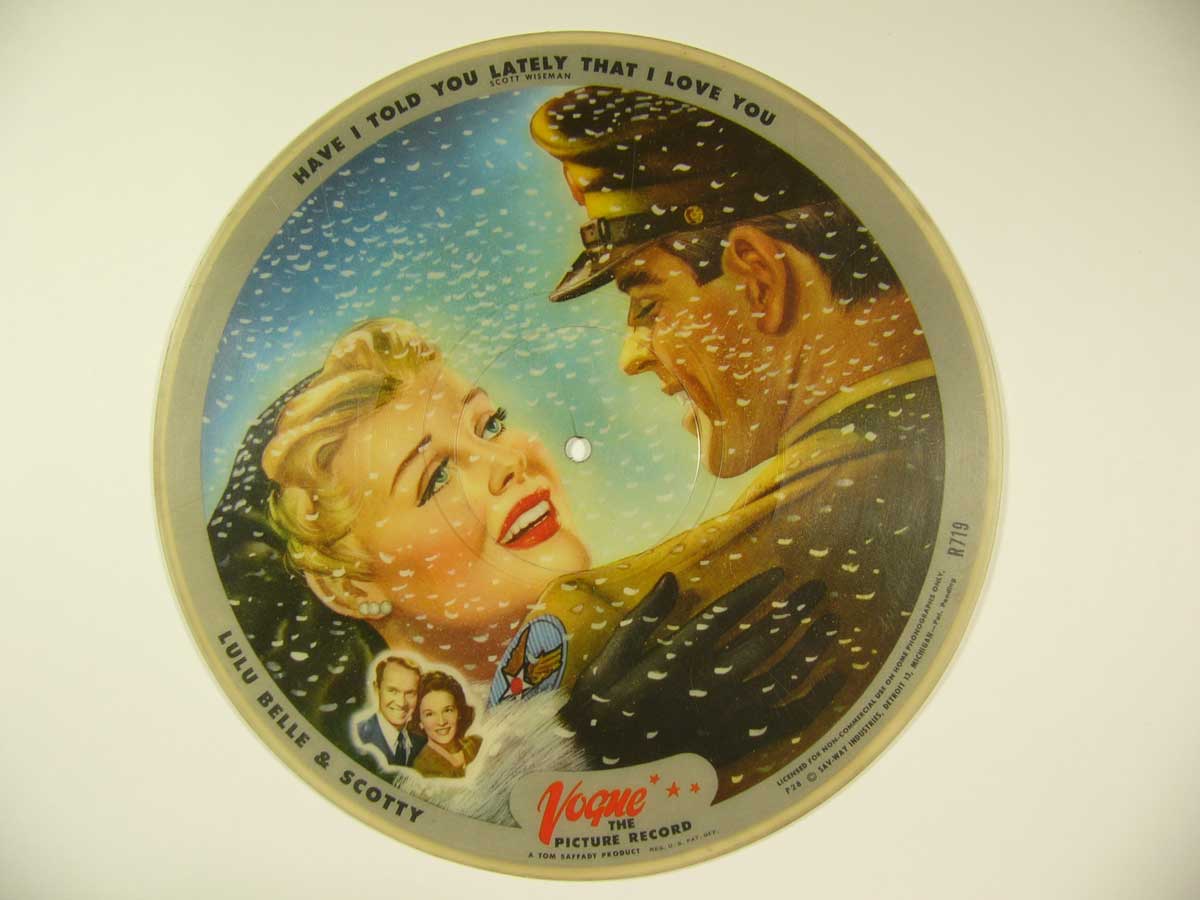
Warming up Winter

Warming up winter: #R 719, “Have I Told You Lately That I Love You?” by Lulu Belle & Scotty. $75-$100. (Image courtesy of the author and photo associate Hank Kuhlmann)


The Vogue roster included such musical luminaries of the time as Clyde McCoy, the Charlie Shavers Quintet, Patsy Montana, and Phil Spitalny’s All-Girl Orchestra, but Saffady was unable to sign such top-tier performers as Frank Sinatra and Bing Crosby. Since Vogues were priced at just over a dollar, (about twice the going rate for a traditional 78), buyers wanted more than just an illustrated, unbreakable record: they wanted a hit, which Vogue could not provide. Hampered by declining sales and high overhead, Saffady filed for bankruptcy in August 1947.

His picture discs, however, live on. In recent years, the records have become popular with collectors worldwide. Few are lured by the actual recordings themselves (“Does anyone,” said one collector, “actually play a Vogue record?”) The artwork is what draws us in, combining elements of Hollywood glamour, pinup art, old-fashioned unabashed sentiment, and just a touch of all-American 1940s whimsy. That unique visual style came courtesy of artists Ruth Corbett, Walter Sprink, Richard Harker, Will Wirts, M. Kanouse. and R. Forbes. Thanks to the impenetrability of the Vinylite coating, many of their Vogue illustrations retain colors as vibrant as the day they were first pressed.

Approximately 75 recordings, (not all consecutive numbers), were issued in the Vogue “R700” series; all but a handful show up with regularity on the secondary market. Collectors drawn to the themes and the colors of a Vogue record also get “two for the price of one,” since each side features a different illustration. Whether framed, displayed on plate stands, or hung on a wall, the flip side of a Vogue can easily be viewed whenever the mood strikes. (A limited series of black-rimmed Vogue vinyl facsimiles, released in later years by Bear Family Records, should not be confused with the originals.)

In 1946, as Vogue picture records took their first bow, Gimbel’s proclaimed them “just right for collectors, jitterbugs, old tune hummers, and all the other disc devotees of America.” Today, long after the Vogue turntables stilled, the “Recordings With Color”—Tom Saffady’s personal dream—remain as colorful and dream-inspiring as ever.


Donald-Brian Johnson is the co-author of numerous Schiffer books on design and collectibles, including “Postwar Pop,” a collection of his columns. Please address inquiries to: donaldbrian@msn.com