Landing Among the Stars  NASA collectibles enjoy resurgence in popularity

Landing Among the Stars NASA collectibles enjoy resurgence in popularity

The NASA logo, also referred to as “the meatball,” was designed by a NASA employee in 1959, the year after the organization was founded.

Mar 2024

Cover Story

​Landing Among the Stars

NASA collectibles enjoy resurgence in popularity

by Corbin Crable

Americans will be looking to the sky next year as the second phase of NASA’s Artemis II program takes its first crewed test flight of the program’s Orion spacecraft. The program is designed to eventually land a crew on the Moon twice by 2029. The last crewed mission to the Moon was conducted in December 1972.

NASA’s return to the Moon after more than 50 years has led to a renewed interest in all things related to space – that awe-inspiring, vast expanse that holds immeasurable possibilities for humankind and has sparked questions about our place in the universe for millennia.

NASA itself – that’s the National Aeronautics and Space Administration -- was established in 1958. Members of the Baby Boomer generation and even some early Generation Xers will remember President John F. Kennedy’s pledge in 1962 that Americans would eventually land on the Moon by the end of that decade. The president’s promise would become NASA’s crowning achievement on July 20, 1969, in an event watched by revelers across the globe. In the years both before and since, the genre of science fiction has inundated pop culture, from comics like “Flash Gordon” to beloved TV series and films such as “Star Wars” and “Star Trek.”
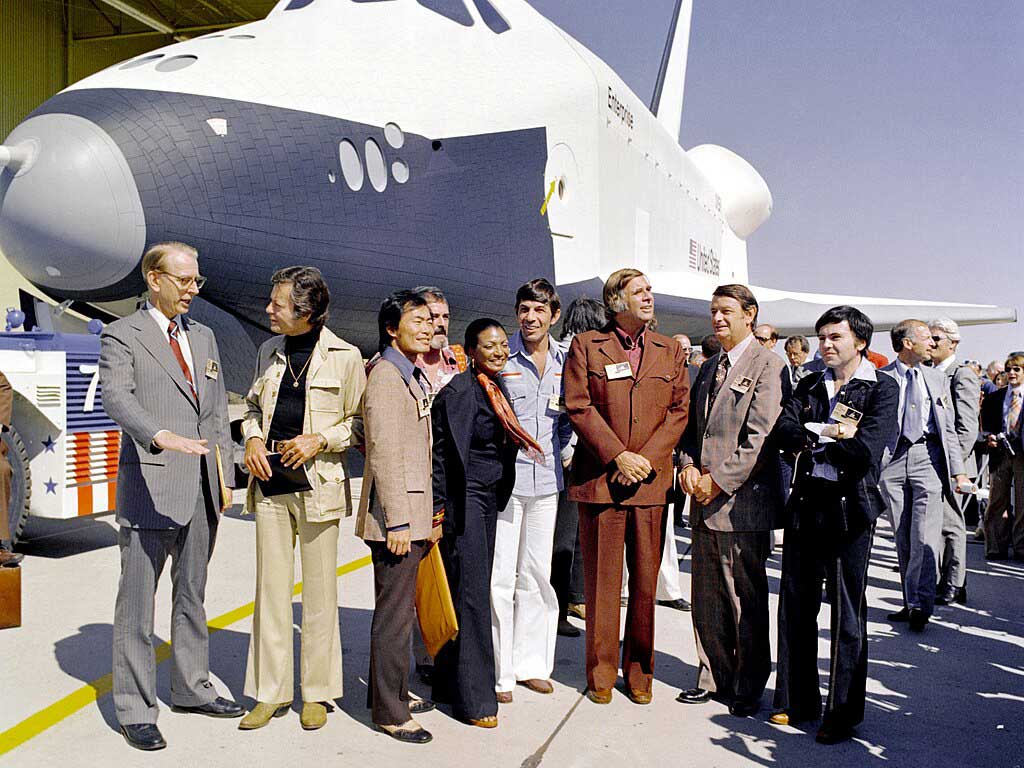
original “Star Trek” TV program

Original “Star Trek” TV program

The cast of the original “Star Trek” TV program witnesses the rollout of the spacecraft Enterprise in 1976. (Image courtesy of NASA)

Turns out, NASA’s space travels are highly collectible, too, with some items from the institution’s history fetching hundreds to thousands at auction. These items currently listed on eBay, Etsy, and antique auction house websites are sure to amaze any space case or dreamer with their head in the clouds:

NASA Apollo-era SCAPE helmet

This helmet was designed for handling of toxic fuel, worn by those transporting dangerously volatile and corrosive fuel to and from the Kennedy Space Center. This helmet still has its “property of NASA” tag attached to the helmet’s interior. “SCAPE” stands for “Self-Contained Atmospheric Protection Ensemble.” The helmet is being sold on eBay for $2,500.

Also being sold on eBay for an affordable $98 is a collection of ephemera related to the space shuttle Enterprise, built in 1976 to conduct atmospheric test flights. A 1975 booklet describing the shuttle’s mission, its use/operation, and its limitations; another booklet containing diagrams and the ship’s specs is included, as is a third booklet outlining future projects and equipment testing plans. Although the craft originally was named Constitution, Trekkies likely are aware of a campaign in which hundreds of thousands of “Star Trek” fans asked U.S. President Gerald Ford to rename the ship after the popular space craft from the beloved television show. The campaign worked, with Ford asking NASA leadership to change the name. The cast of the original “Star Trek” TV show, along with creator Gene Roddenberry, were on hand during the rollout of the Enterprise in Palmdale, California, on Sept. 17, 1976.
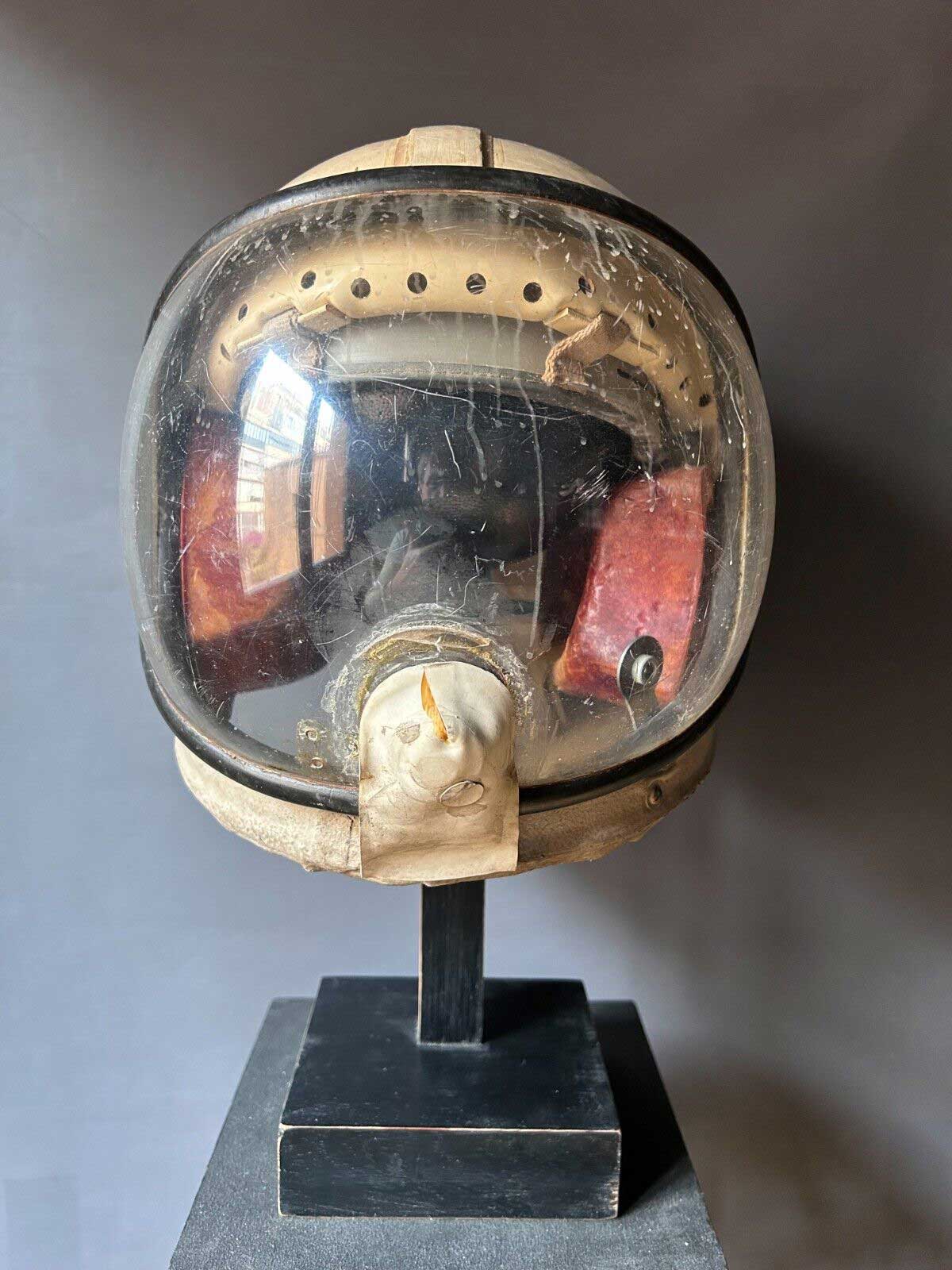
A helmet used to transport toxic fuel

A helmet used to transport toxic fuel

A helmet used to transport toxic fuel, this item is Apollo-era item is being sold for $2,500 on eBay. Image courtesy of eBay
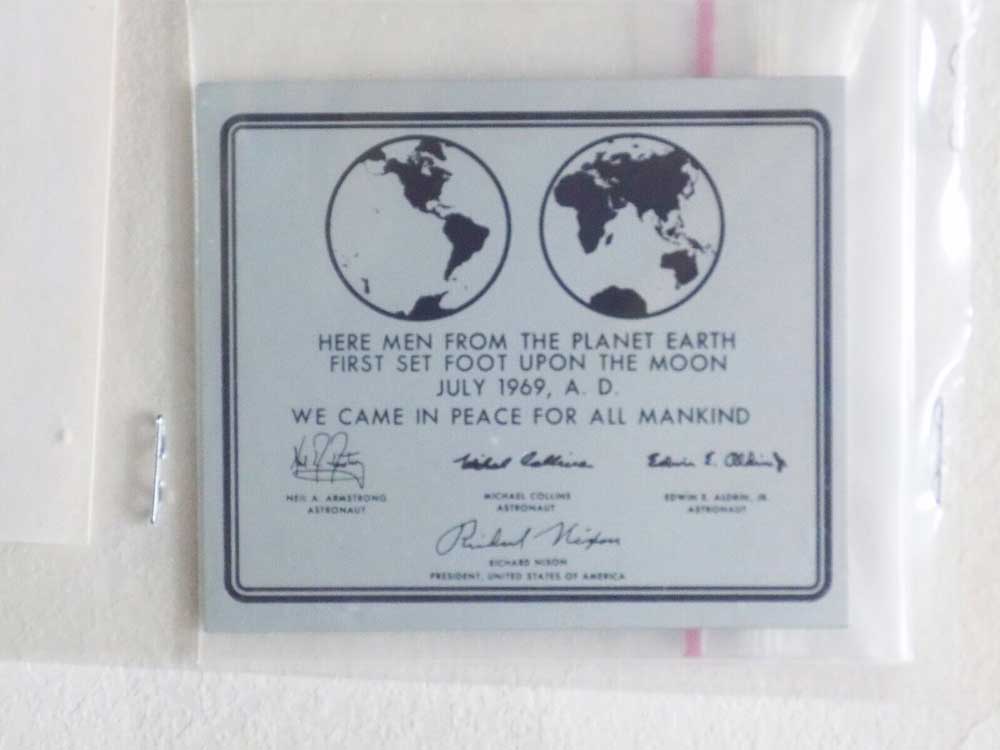
plaque commemorating the 1969 Apollo 11 moon landing

Plaque commemorating the 1969 Apollo 11 moon landing

An original plaque commemorating the 1969 Apollo 11 moon landing. (Image courtesy of eBay)
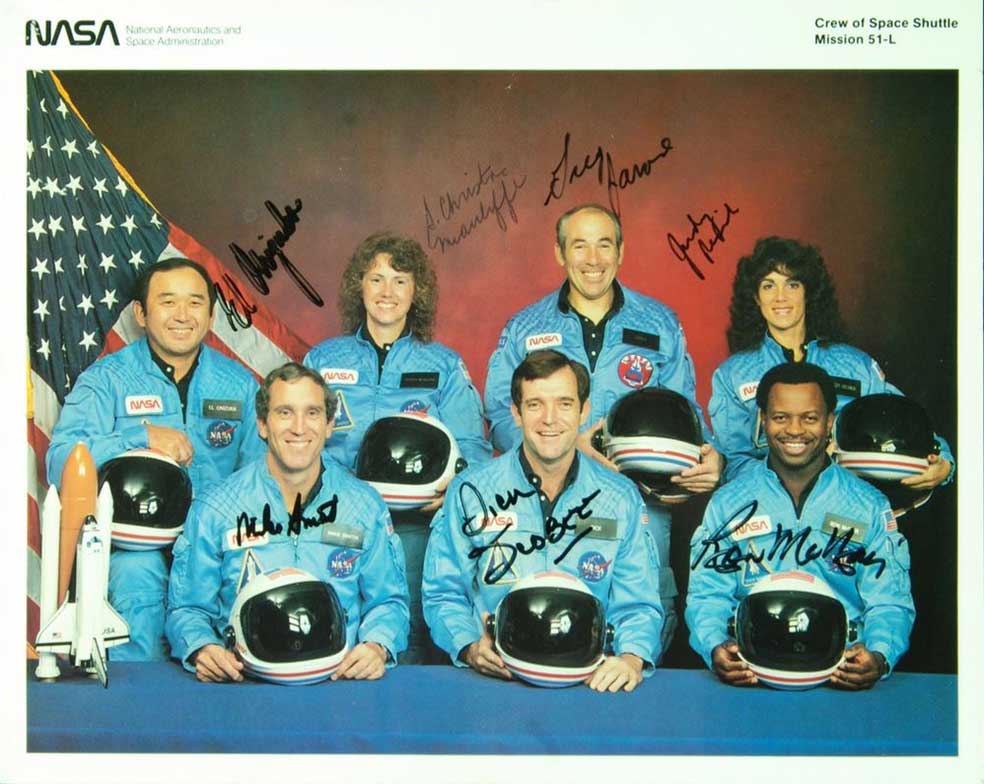
The crew of the ill-fated Challenger

The crew of the ill-fated Challenger

The crew of the ill-fated Challenger STS 51-L appears in a 1986 promotional photo on this signed, commemorative postcard. Science teacher, Christa McAuliffe (back row, second from left) was to be the first civilian in space. (Image courtesy of psacard.com)


If you’re willing to pony up $1,100 on eBay, you can be the owner of an authentic and original Apollo 11 commemorative plaque only given to NASA families and employees associated with the 1969 mission. The original plaque also comes with a replica plaque that the astronauts placed and left on the Moon during the first lunar landing.

An original photo from a NASA photographer documents the launch of the Apollo 13 spacecraft, currently selling for $1,500. The spaceflight in April 1970 was nearly a deadly one for the crew, which had to abandon its mission to land on the Moon after an oxygen tank in the craft’s service module ruptured, crippling its electrical and life-support system. The crew instead looped around the Moon, re-entered the Earth’s atmosphere, and touched down safely, thanks to the help of the flight’s Mission Control crew, who worked tirelessly to bring the astronauts home alive as the craft’s oxygen and electrical resources dwindled by the hour. The story of the perilous Apollo 13 mission was told in a 1995 film directed by Ron Howard and starring Tom Hanks as mission commander Jim Lovell.

Collectibles bearing the signature of the first American woman in space, Sally Ride, can be found on Historyforsale.com. At the time of her flight on the space shuttle Challenger in 1983, the 33-year-old Ride also became the youngest American astronaut in space. Photos, letters, and press releases signed by Ride are listed on the site at prices between $140 and $500.
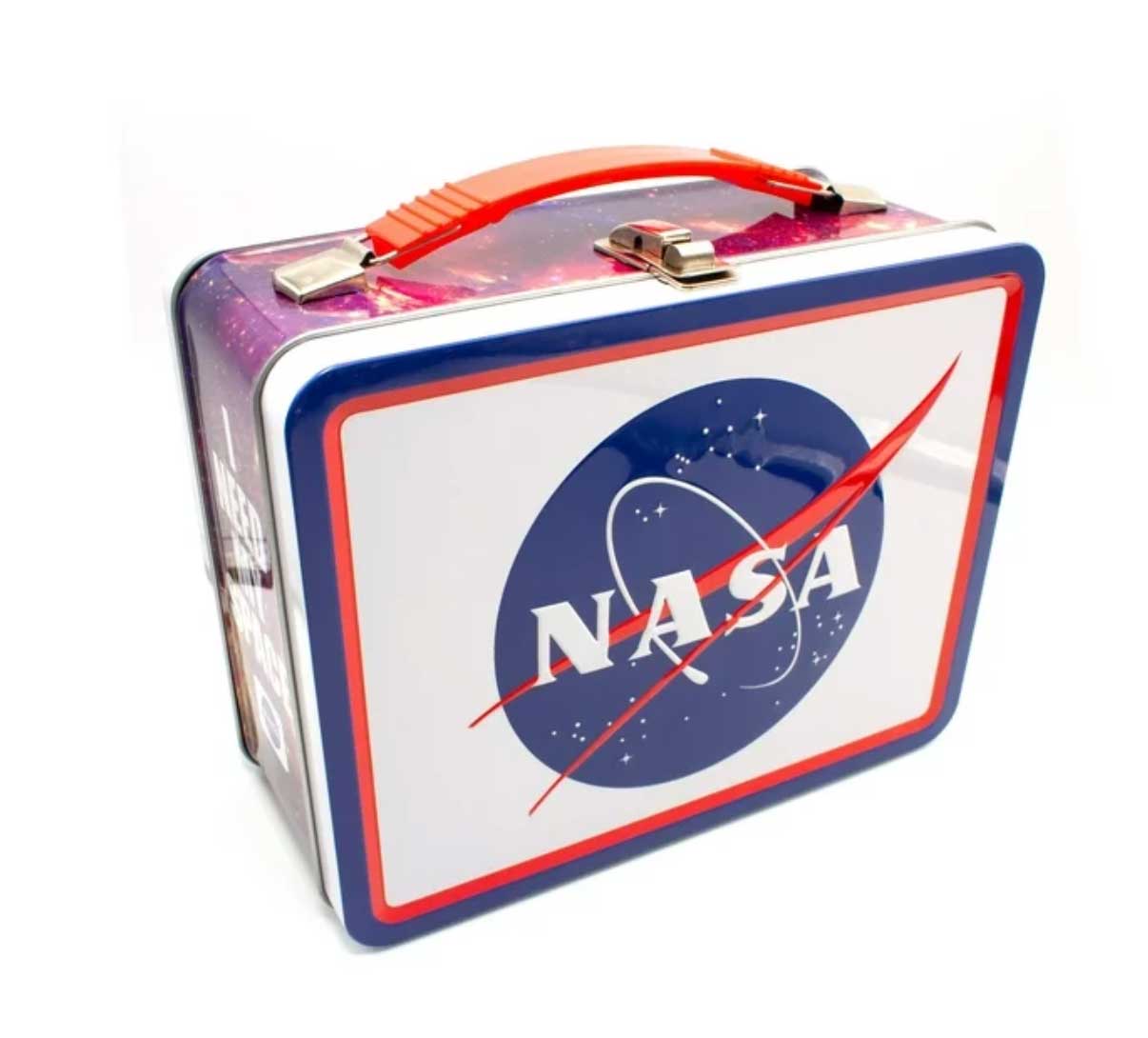
New NASA-themed items

New NASA-themed items

New NASA-themed items like this metal lunch box will delight the next generation of space enthusiasts. (Image courtesy of Amazon.com)
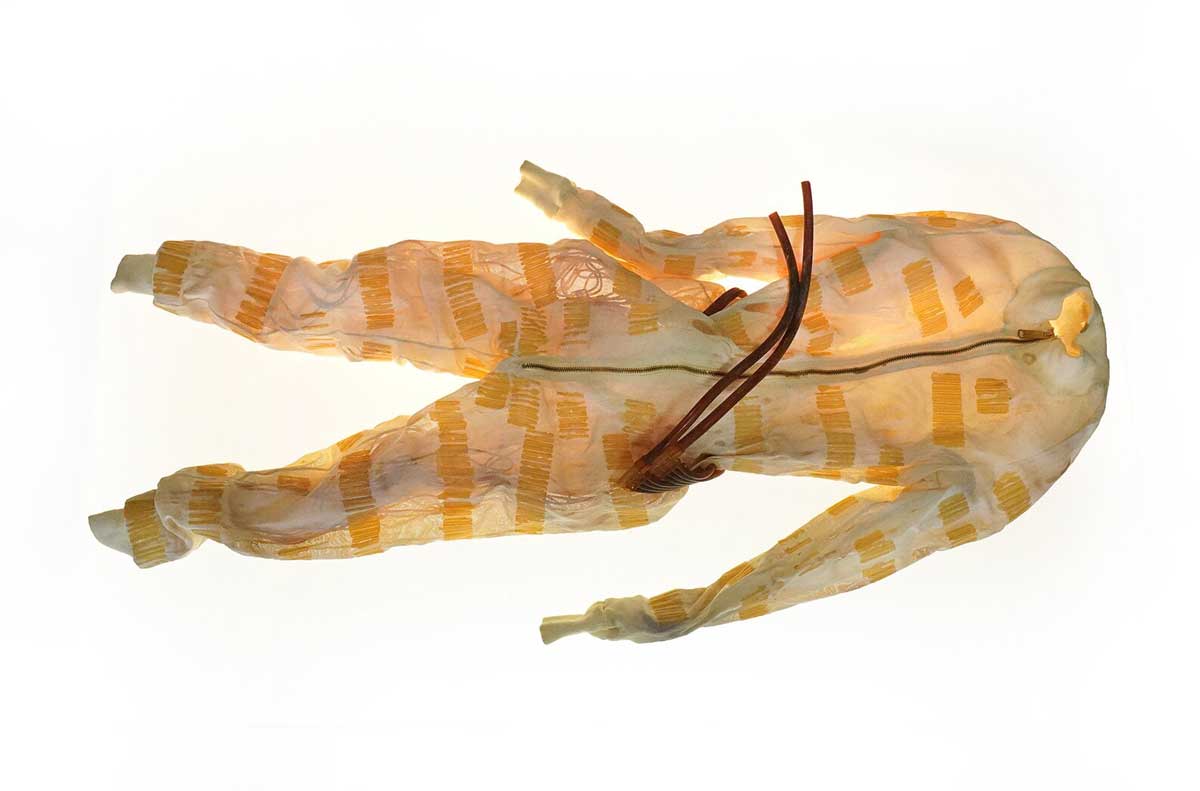
ventilation garment, worn by astronauts

Ventilation garment, worn by astronauts

This ventilation garment, worn by astronauts to ensure a cool body temperature during space missions, is being sold for nearly $8,000 on Etsy. (Image courtesy of Etsy


A rare piece of memorabilia for the serious collector is an Apollo-era NASA space shuttle cooled and ventilation garment, going for nearly $8,000 on Etsy. Also called a “spaghetti suit” due to the network of water transport tubing interwoven throughout the suit, this item was worn by astronauts in order to maintain a comfortable body temperature during their spacewalks. According to the product description provided by the seller, “Cold water flowing through the tubing drew heat away from the astronaut’s body, returning to the suit’s primary life support system, where it was cooled in a heat exchanger before being recirculated.”

Also on Etsy, one of the many products made in anticipation of the 1969 moon mission – a metal piggy bank depicting the original Apollo shuttle orbiting the moon. Made in 1968 by the John Wright Co., only 500 units were made, making it especially coveted among collectors. The piggy bank can be yours for $167. Throughout most the 20th century, the John Wright Co. was known for its production of cast iron toys and novelties until the 1980s, when cast iron toys declined in popularity; the company then shifted its focus to producing hardware.

A warning to collectors


Supposed samples of moon rocks can be found on auction sites everywhere. Encased in resin, they are proudly listed as being genuine, but they usually are sold for as little as $10. According to NASA, the Apollo missions collected more than 2,000 samples, some of which are on display at the Smithsonian National Air and Space Museum in Washington, D.C. Original samples collected during lunar missions are considered priceless. Moon rocks can be determined to be genuine through radiometric testing, and actual moon rocks are exceedingly rare; according to the Lyndon B. Johnson Space Center in Houston, Texas, those tiny pieces being hawked by eager merchants on auction sites are likely nothing more than fragments of petrified wood.


NASA’s own online shop reveals that demand for collectibles related to space is only growing. Currently, it lists several collectibles related to its Artemis I mission for sale, with Artemis II items sure not be coming up in the coming year. For more information, visit www.nasa.gov.
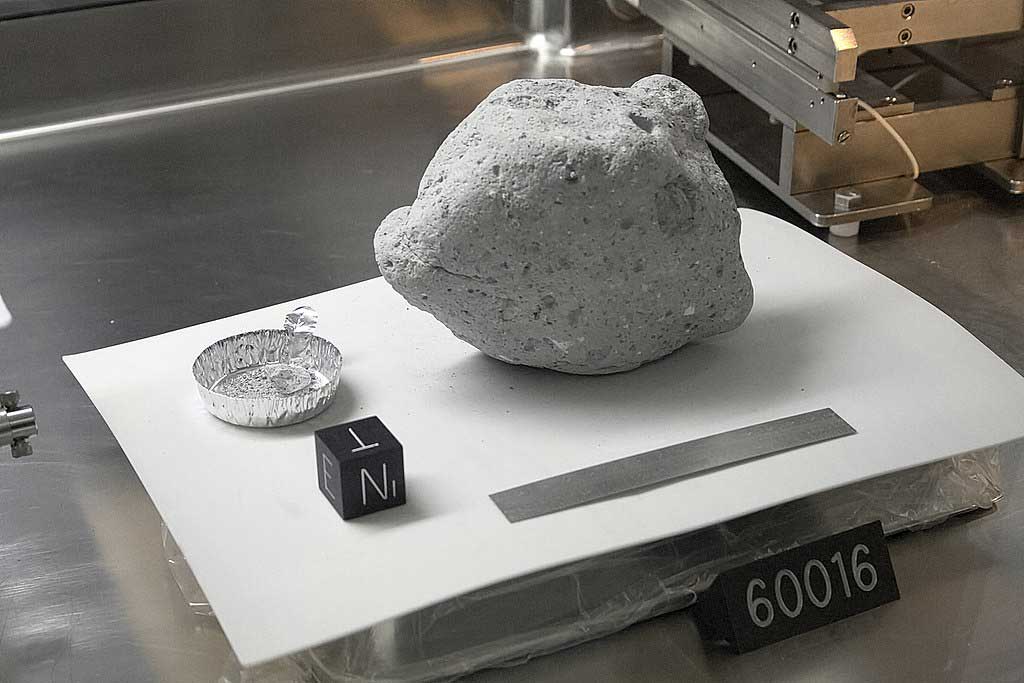
This moon rock fragment

This moon rock fragment

This moon rock fragment is on display at a Houston, Texas, museum. (Image courtesy of The Lyndon B. Johnson Space Museum)
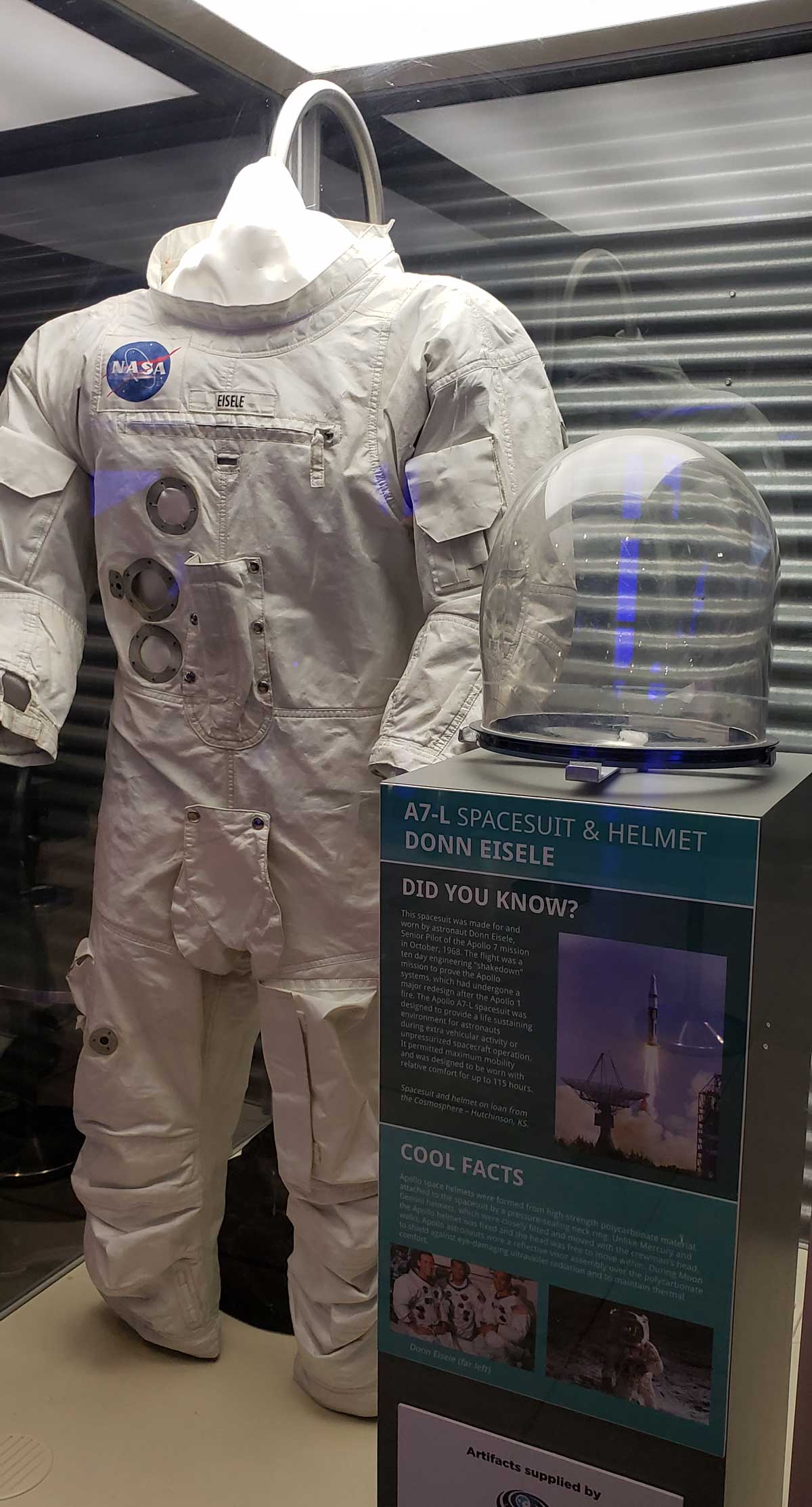
spacesuit, on display at Science City in Kansas City, MO

Spacesuit, on display at Science City in Kansas City, MO

This spacesuit, on display at Science City in Kansas City, MO, was made for and worn by Donn Eisele, senior pilot of the Apollo 7 mission in October 1986. (Image courtesy of Patti Klinge)
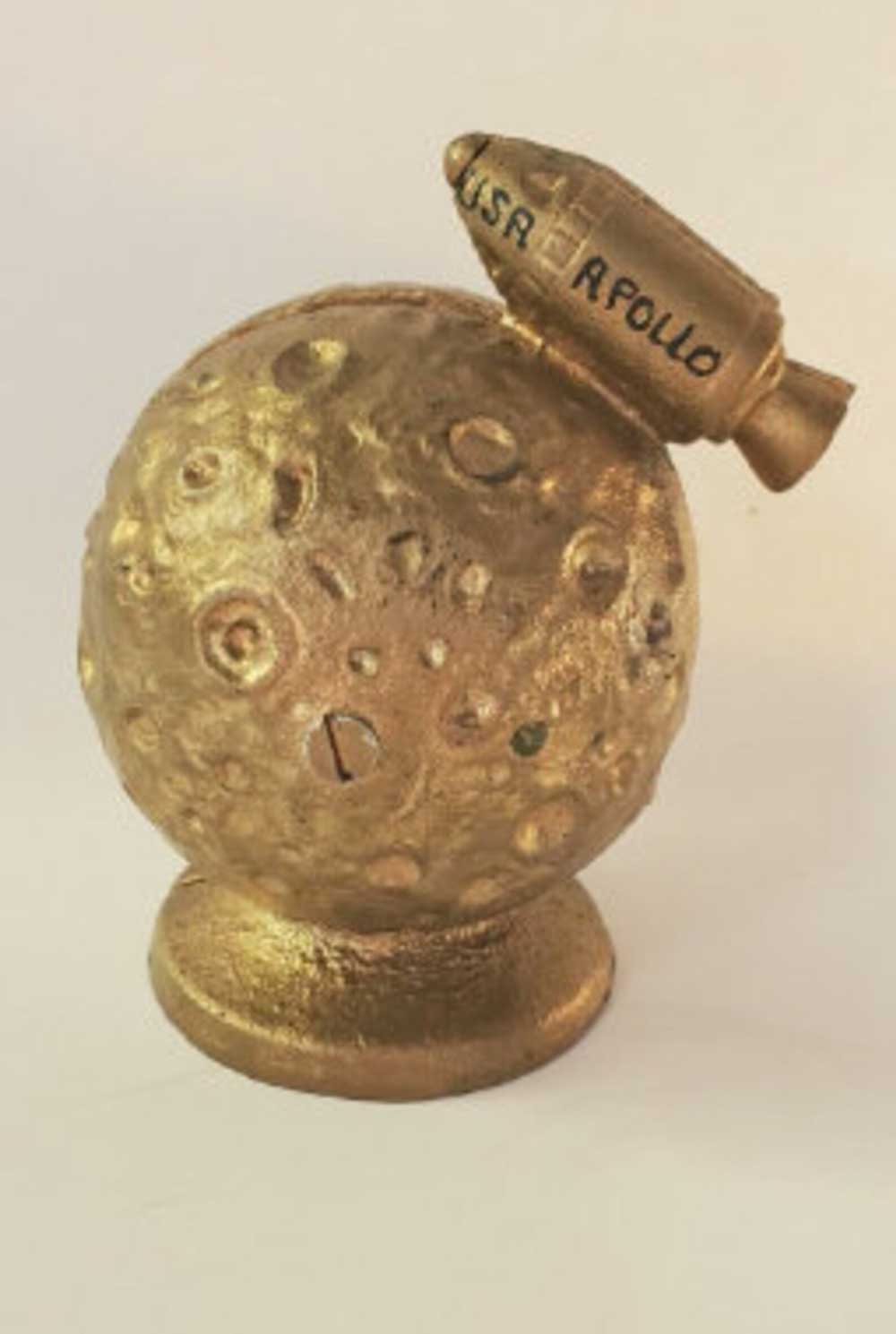
1968 cast iron piggy bank commemorating NASA’a Apollo 11

1968 cast iron piggy bank commemorating NASA’a Apollo 11

A 1968 cast iron piggy bank commemorating NASA’a Apollo 11 mission, which would launch the following year. (Image courtesy of Etsy)
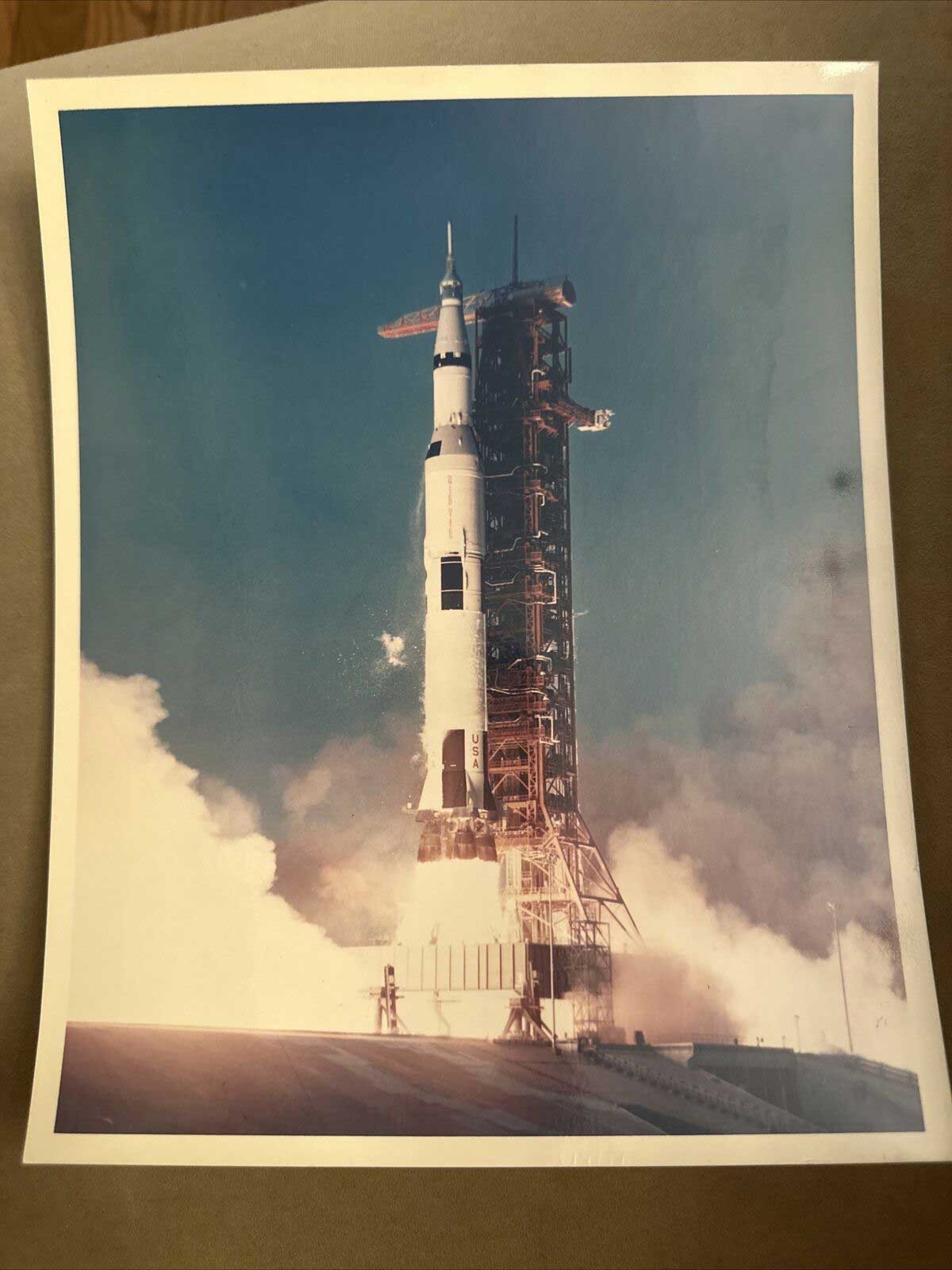
The Apollo 13 shuttle in 1970 liftoff

The Apollo 13 shuttle in 1970 liftoff

This photo captures the liftoff of the Apollo 13 shuttle in 1970; the shuttle’s crew members were forced to abandon their mission when their oxygen and electrical systems became compromised. (Image courtesy of NASA)
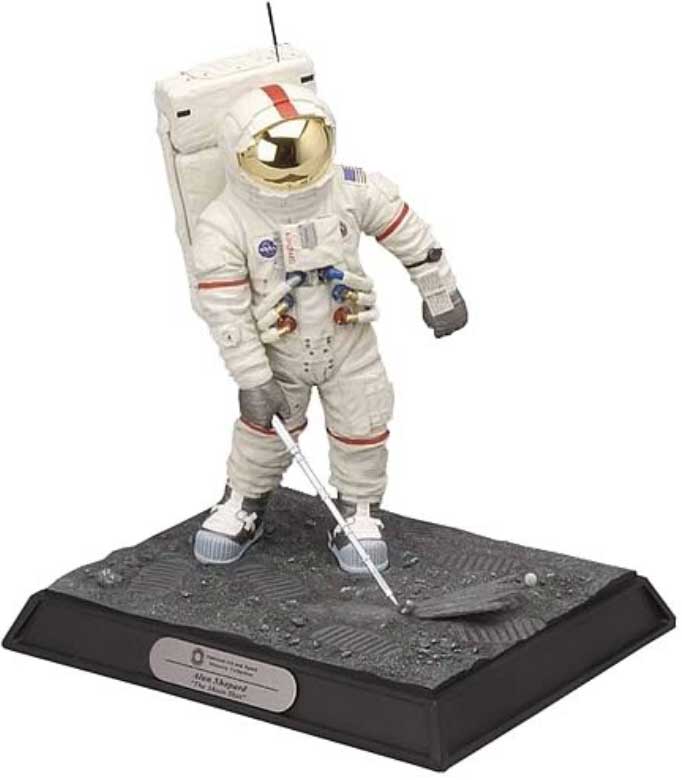
Alan Shepard moon shot statue

Alan Shepard moon shot

Alan Shepard moon shot replica statue. (Image courtesy of entertainmentearth.com)
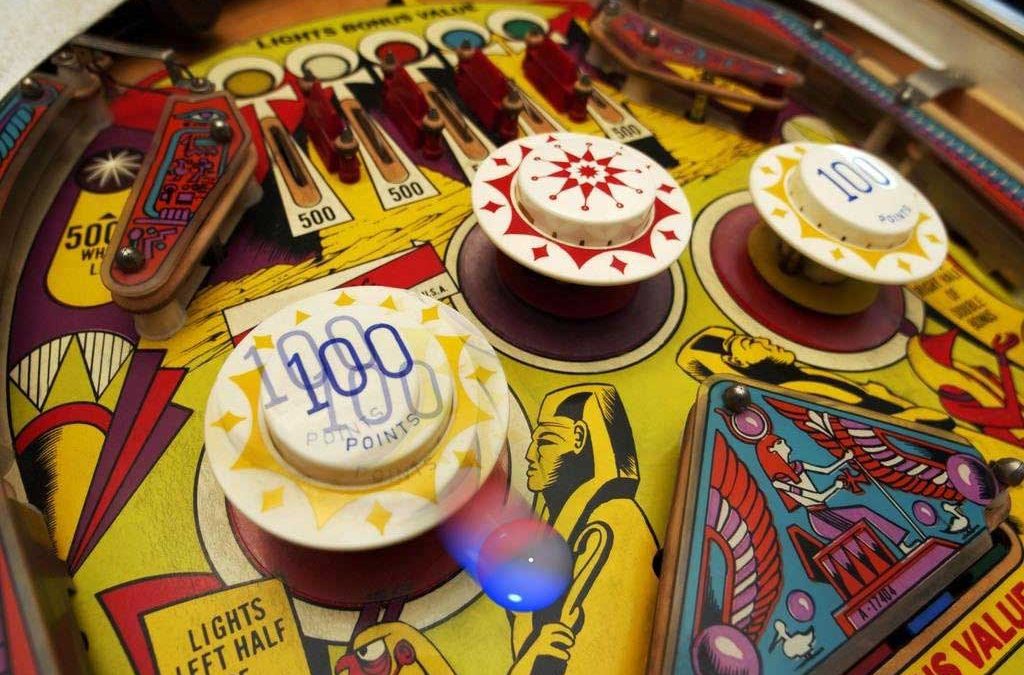
Pinball Wizard  Pinball machines stay in the game even 100 years after initial release

Pinball Wizard Pinball machines stay in the game even 100 years after initial release

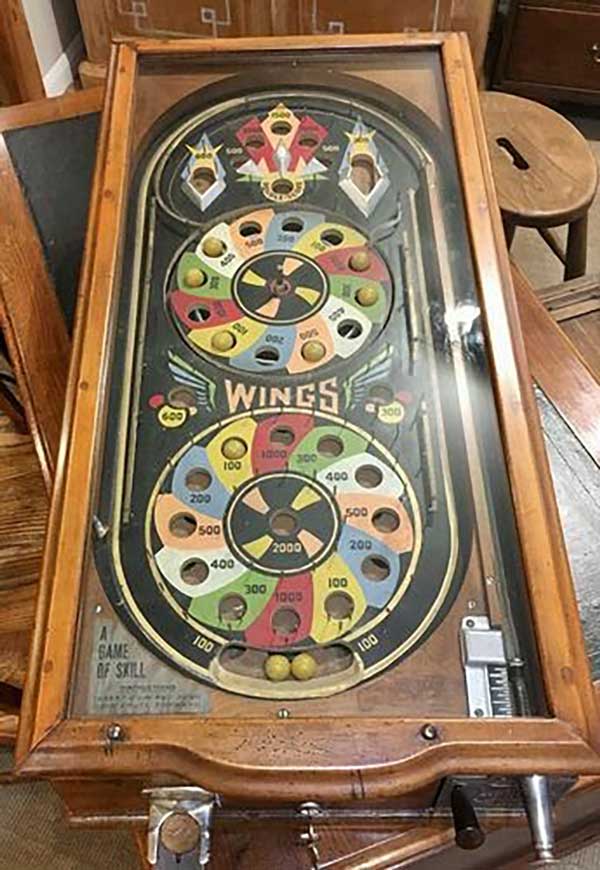
Detail of a vintage pinball machine. (Image courtesy of Design Market)

Jan/Feb 2024

Cover Story

Pinball Wizard

Pinball machines stay in the game even 100 years after initial release

by Corbin Crable

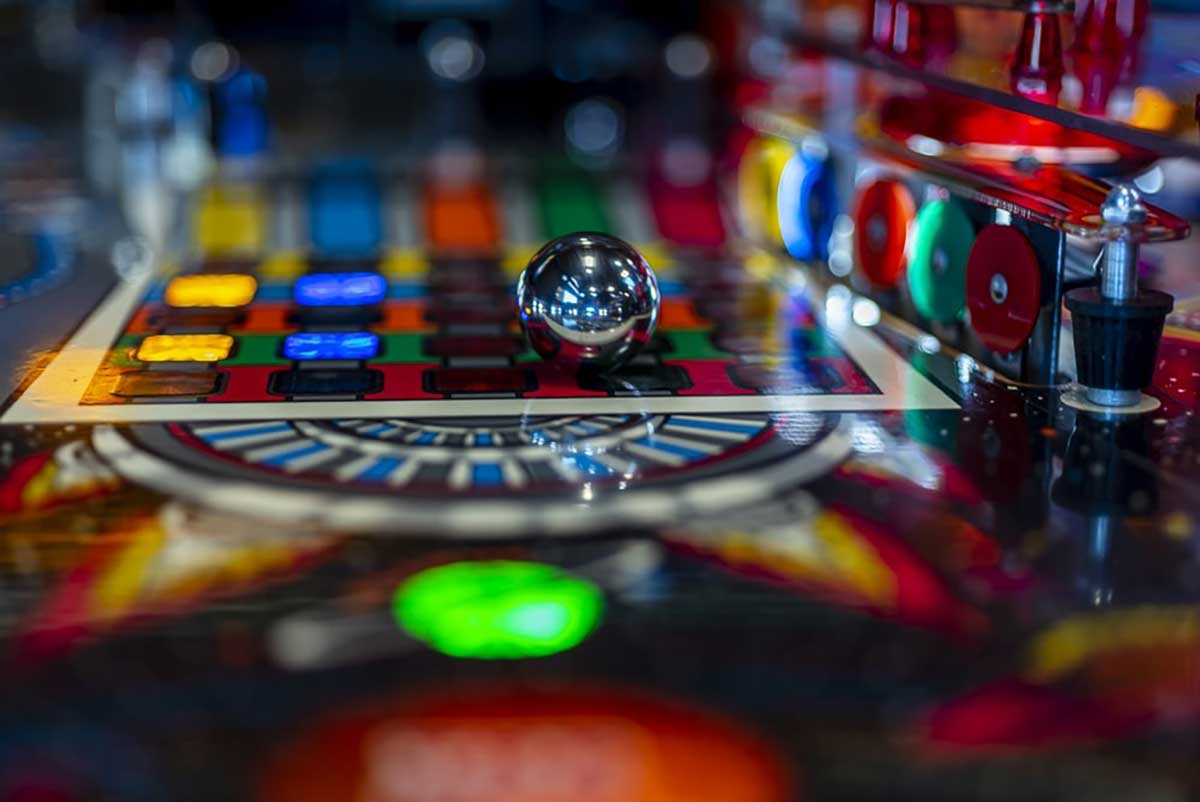
Clack! go the flippers as the ball is launched. Pop! go the bumpers as the metal ball weaves its way through obstacles. And then the bells – ding, ding, accompanied by the many flashes of light to signify your victory.

Close your eyes and you can see the lights and hear those sounds coming from the pinball machine in the old arcade, bar, or restaurant you used to visit every weekend -- the place where you and your friends spent countless hours feeding the machine one quarter after another in the hopes of attaining bragging rights of becoming a pinball champion.

A cost-effective diversion

Though the game was invented in France in the late 18th century, the coin-operated pinball machines we know today were created during the Great Depression as a cheap form of entertainment for Americans who craved a diversion from the nation’s economic woes.

“It was a low-cost game that anyone could play and get some respite from the hardships of everyday life,” according to an article on Betson.com. Betson is a manufacturer and seller of arcade games.

An antique pinball machine

An antique pinball machine

An antique pinball machine produced by Rockola in 1933. (Image courtesy of In a Nutshell Antiques and Interiors)

In those early days, the game bore many names, such as Ballyhoo, Baffle Ball, and Bingo. Early companies that produced the machines included the Bingo Novelty Co. and D. Gottlieb & Co., According to Betson, by 1936, the name pinball had finally stuck.

The first electronic pinball machine hit the market in 1933, and the machines installed in public places quickly proved to be a draw. Players could win prizes for achieving the highest scores. But along with the skilled players also came the cheaters, who would pick up the table and shake it in order to affect the game’s outcome.

“To counteract this, the tilt mechanism was invented in 1935 by Harry Williams, the founder of the Williams Manu-facturing Co.,” the Betson.com article explains. “Today, pinball machines have two tilt devices: one for tilting side to side and one for ‘slam tilt,’ when a player bangs the machine with their hand.”

By the end of the decade, there were an estimated 145 pinball machine companies throughout the country; however, the sheer number of them created intense competition, and many were forced to shutter their doors due to market saturation.

And, like many industries of the time, production of pinball machines came to a halt with the outbreak of World War II in 1939 – those that remained in business by the end of the war six years later were indeed fortunate.

Many themed pinball machines

Many themed pinball machines

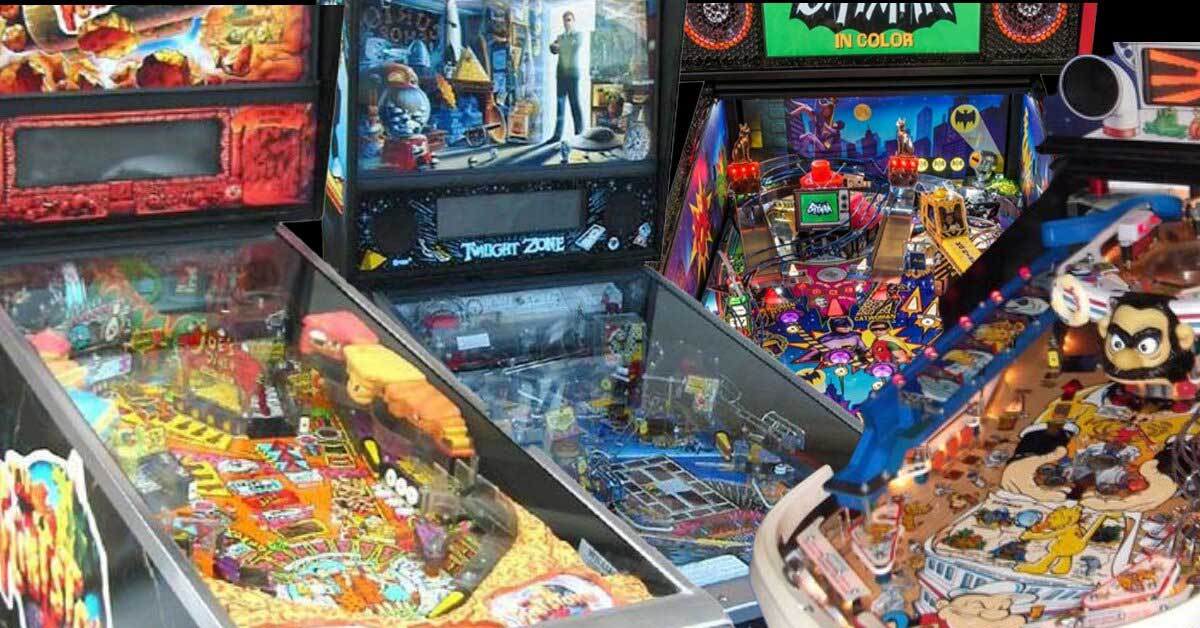
Many themed pinball machines manufactured in the last 50 years are inspired by TV shows and films.( Image courtesy of MeTV)

the metal ball rolling around under the glass

The metal ball rolling around under the glass

The sound of the metal ball rolling around under the glass of a pinball machine still brings back memories for many, says the owner of the Pinball Hall of Fame in Las Vegas. (Image courtesy of Pastime Pinball)

smashed by one of New York’s finest

Smashed by one of New York’s finest

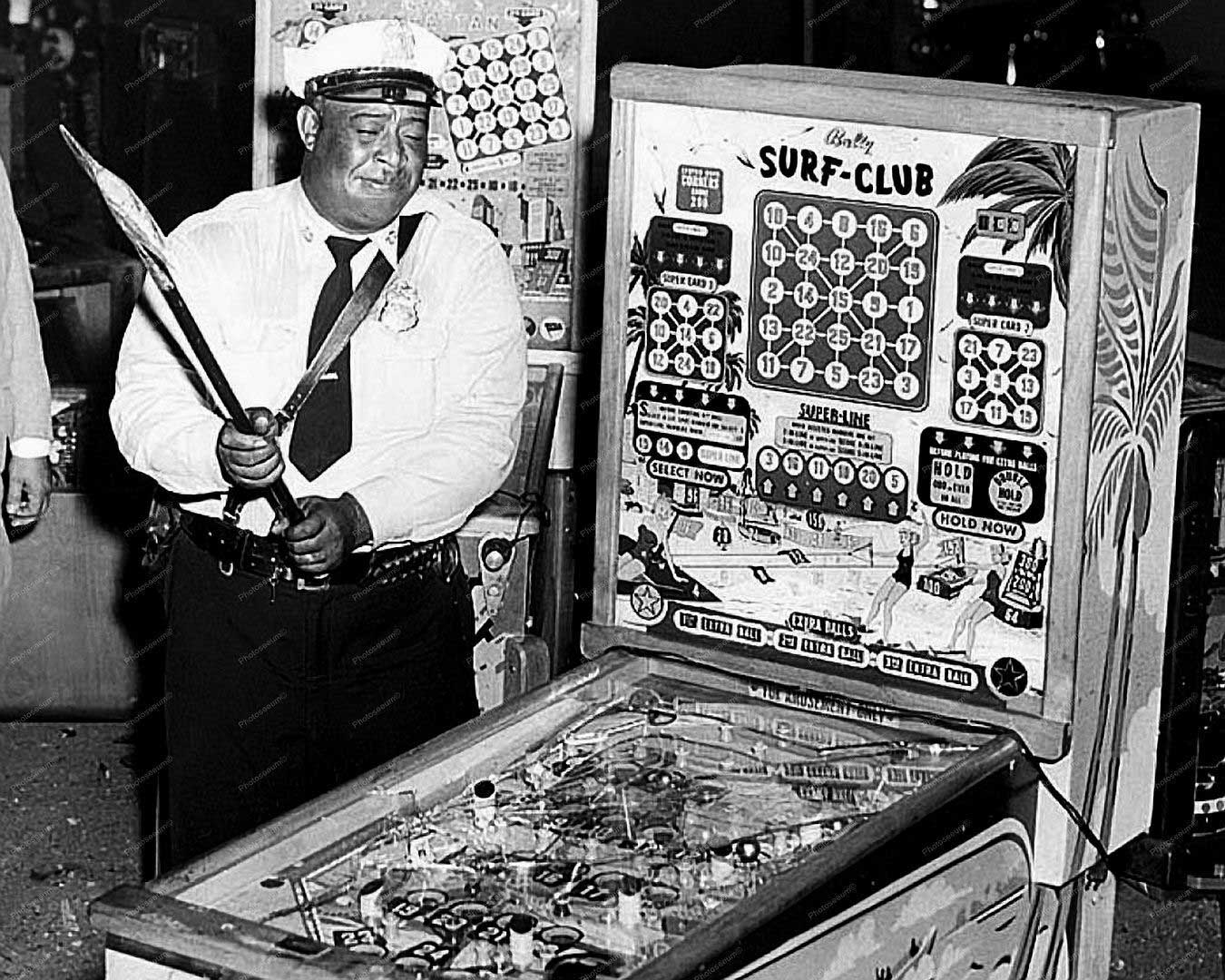
A Bally Surf Club pinball machine, circa 1954, about to be smashed by one of New York’s finest, during pinball’s Golden Age. (Image courtesy of eBay)

The Golden Age: 1948-58

Following the war, however, pinball’s Golden Age was born, and the game’s popularity soared.

Historians generally agree that the game’s very best years came between 1948 and 1958, with D. Gottlieb & Co. inventing the flipper in 1947. Those early flippers were much smaller than the ones with which we’re familiar today, invented in the 1970s.

In addition to pinball’s growth and development, however, also comes controversy leading up to those Golden Age years. Up to that point, betting on pinball games was commonplace, and in the early 1940s, New York City banned the game. Other major U.S. cities followed suit, including Los Angeles, New Orleans, and Chicago, where most pinball manufacturers operated and where the mob has a stronghold on the industry.

New York City’s mayor went out of his way to make it known that the game was unwelcome in the “City That Never Sleeps.”
“The police raided multiple public spaces with these machines, such as bowling alleys and amusement centers,” according to the Betson article. “NYC’s Mayor Fiorello LaGuardia gathered with police chiefs and smashed these pinball machines in front of the press.”
New York City’s ban was finally lifted in 1976.


anyone with a quarter in their pocket Bob Dylan

Anyone with a quarter in their pocket ... Bob Dylan

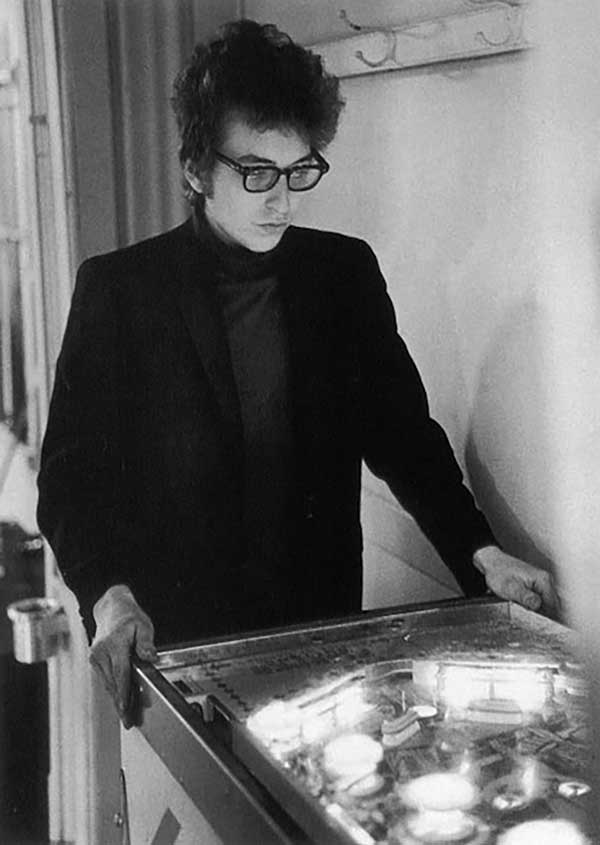
Pinball remains a cheap form of entertainment, available to anyone with a quarter in their pocket. Pictured: Singer Bob Dylan, playing pinball in 1965. (Image courtesy of dangerousminds.net)

“Sure plays a mean pinball”

One of pinball’s largest pop culture moments came in February 1969, when The Who recorded their hit song “Pinball Wizard,” featured on their rock opera album Tommy, released that same year. Written by Pete Townshend, the song is sung from the perspective of an unnamed pinball champion, who sings of the incredible skill displayed by Tommy Walker, the title character of The Who’s rock opera by of the same name:

He ain’t got no distractions
Can’t hear those buzzers and bells
Don’t see lights a flashin’
Plays by sense of smell
Always gets a replay
Never seen him fall
That deaf, dumb, and blind kid
Sure plays a mean pinball

The decade of the 1970s saw the pinball industry struggle as video games began to take hold on the public’s attention – and their dollars. D. Gottlieb & Co., once a domineering force in pinball, went out of business as competitor Bally and Williams developed themed pinball machines based on popular movies and TV shows, including The Twilight Zone, Starsky & Hutch, and Charlie’s Angels. An Addams Family pinball machine, made in 1992, remains the company’s most popular, with more than 20,000 units made. Musicians and bands saw pinball machines bearing their likeness, too, including KISS, Jefferson Airplane, and Led Zeppelin.

By decade’s end, only one big company had survived the arrival of video games and video game arcades– Stern Pinball, creator of most themed pinball machines. The company continued to produce machines throughout the late 20th century and into the early 21st. They still build themed pinball machines touting TV shows and films today.

Keeping the game alive

Collectors and pinball enthusiasts keep vintage machines in good repair throughout the country. One family-owned business, Pinrescue.com, restores and sells vintage mechanical pinball machines from their New Jersey-based headquarters. Closer to home, the Iowa Pinball Club collects, restores, and preserves pinball machines and other coin-operated games, with buyers set up across the country (so the machines do not need to be shipped by the seller).

The Iowa Pinball Club celebrates its 20th anniversary in business this year.

Pinball lovers and seasoned players keep the game alive, too, with their participation in one of the many conventions and tournaments that take place each year. The largest is organized and sponsored by the International Flipper Pinball Association, which organizes events and competitions at the local, state, national, and international levels. According to the IFPA’s website, currently, the top two world pinball players are American, with Colorado’s Escher Lefkoff in second place (currently age 20, he occupied the top spot for years and has played pinball since the age of five). In first place is 19-year-old Jason Zahler of New Jersey, who has played since the age of 7, born nearly a century after the modern iteration of the game was invented. And, according to the IFPA’s calendar, Tulsa, OK, will be the site of several tournaments in 2024.

“These memories come flooding back”

Pinball’s popularity and ability to thrive in the age of video games boils down to one secret: memories.

“What is driving the boom? Much of it is nostalgia,” according to a May 2023 article on games.slashdot.org. “A generation raised on pinball in arcades in the 1980s and 1990s are now at an age where they have disposable income, and kids with whom they want to play the games they played as children.”


Aaaayyyy! Actor Henry Winkler poses with a Nip-It pinball machine

Aaaayyyy! Actor Henry Winkler poses with a Nip-It pinball machine

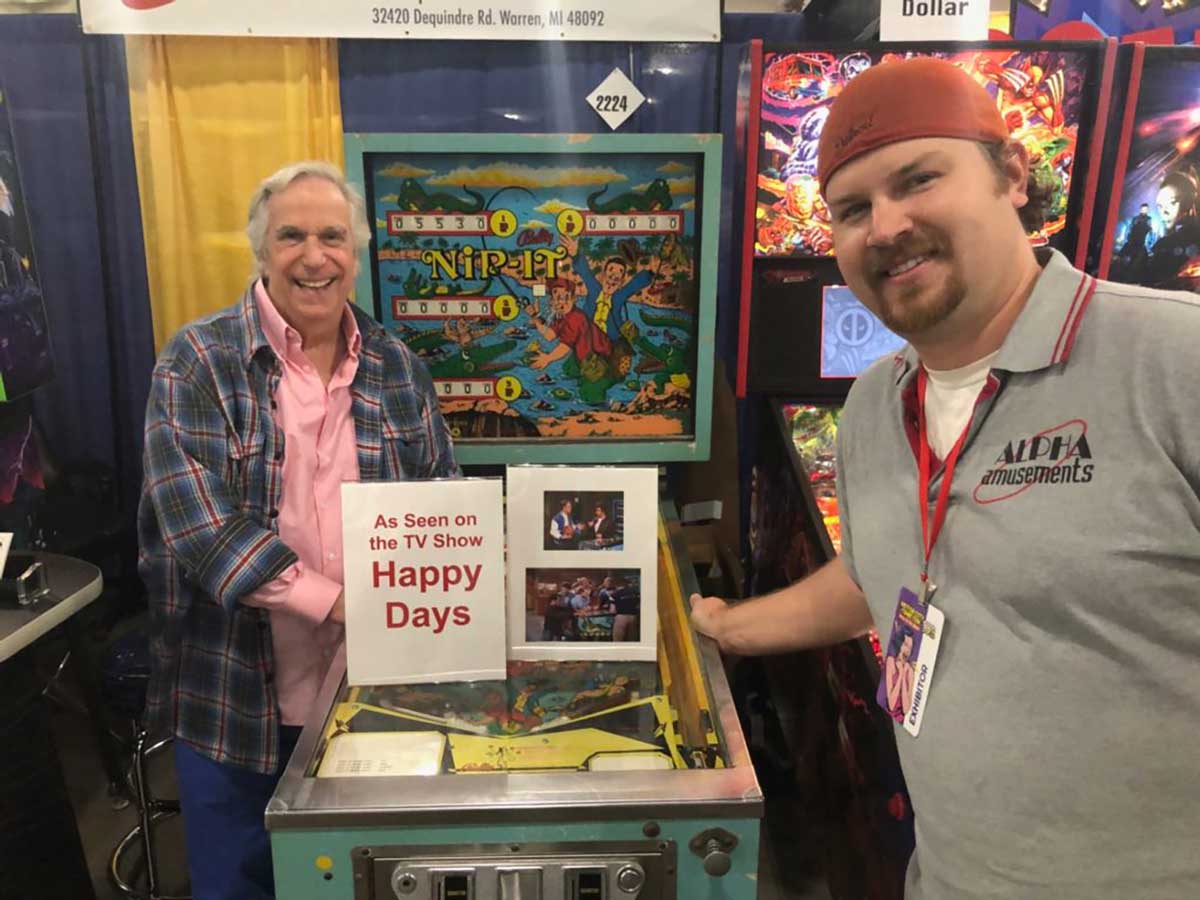
Aaaayyyy! Actor Henry Winkler poses with a Nip-It pinball machine at a pop culture convention in 2019. Released by Bally in 1973, the pinball machine is similar to the one played by the Fonz in “Happy Days.” On the right is convention vendor Chris Pascaretti. (Image courtesy of John Pascaretti and replaymag.com.)

A woman plays pinball

A woman plays pinball

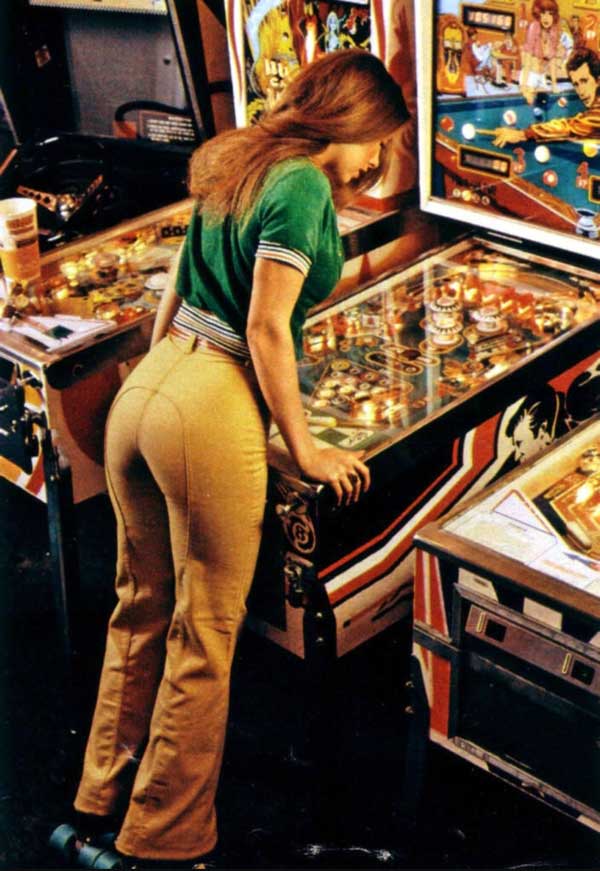
A woman plays pinball in an arcade in the late 1970s. (Image courtesy of Reddit)

In Las Vegas, the Pinball Hall of Fame resides in a 27,000-square-foot building close to the iconic “Welcome to Fabulous Las Vegas” sign. The building, home to restored machines from the 1930s through the 1950s, is ground zero for that nostalgia, says owner Tim Arnold, quoted in a May 2021 article by Kerry Callahan on the PR website The Feast of Friends.

“(Visitors) walk past a machine that they’ve completely forgotten about,” Arnold said. “They see it again, and all these memories come flooding back. And they just lock up. They’ll sit there and point at the machine [and say], ‘So this is the machine I was playing the first time I kissed a girl,’” Arnold said. “We see that every day

Posters promoted car-sharing

A 1978 advertisement

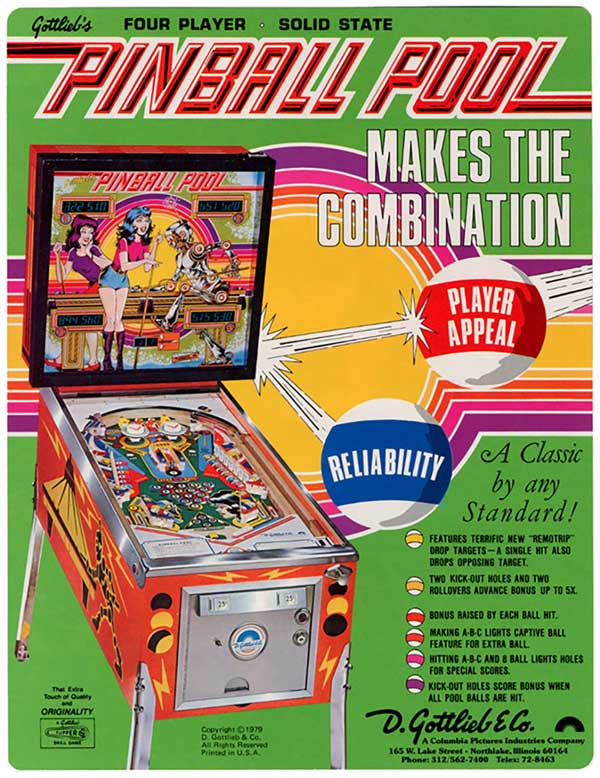
A 1978 advertisement for Pinball Pool from Gottlieb. (Image courtesy of Vintage Industrial Style

Pinball players flock to KC for championship

Kansas City welcomed pinball players and enthusiasts alike in late January for the International Flipper Pinball Association’s Annual IFPA State Championship Series finale.

More than 1,000 players from across the U.S., in both men’s and women’s categories, descended on the 403 Club, the venue that hosted the event.

A Jan. 19 article on the website of KSHB 41 quotes the owner of the venue.

“When I tell people that we host the Kansas State Pinball Championship, they’re like, that’s such a thing?” said Artie Scholes, the owner of 403 Club. “Yes, it is.”

With players as young as 8 – Scholes’ son, Oliver -- competing during the action, the event proved to be a draw for enthusiasts of all ages. 

For more information on this and other tournaments, visit www.ifpapinball.com.

The Reason for the Season Nativity scenes from around the world depict birth of Christ

The Reason for the Season Nativity scenes from around the world depict birth of Christ

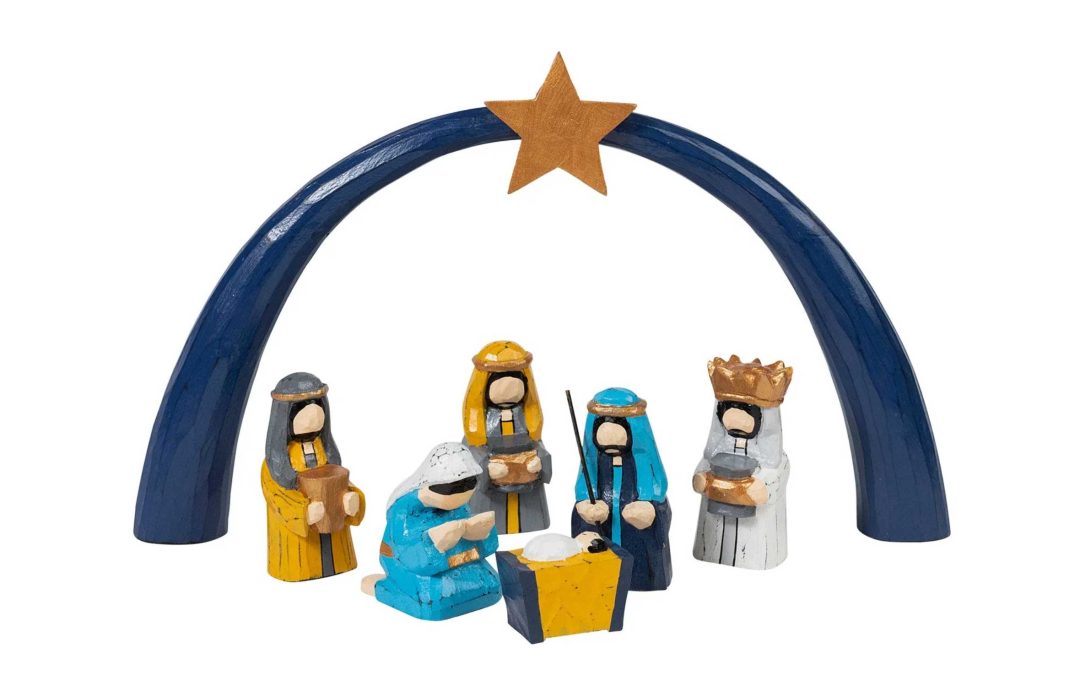
The Night Arch Nativity is beautifully hand-carved and painted by artisans in Indonesia. (image courtesy of TenThousandVillages.com)
December 2023

Cover Story

The Reason for the Season

Nativity scenes from around the world depict birth of Christ

by Corbin Crable

For centuries, the birth of Jesus has been depicted by cultures and countries on nearly every continent.

In fact, 2023 marks 800 years since the very first nativity scene was created in a small village in Italy. According to the National Catholic Register, St. Francis of Assisi, one of the world’s most beloved saints, created the nativity scene in 1223, likely inspired by time he spent in Jerusalem between 1219 and 1220.

“Seeing the holy sites of Christ’s birth, life, death and resurrection made them feel all the more real,” according to a December 2022 article by Hannah Brockhaus, “and he wanted to recreate that experience.”

Since then, other cultures have followed suit, with each nativity scene bearing its own special details that make it unique from others.

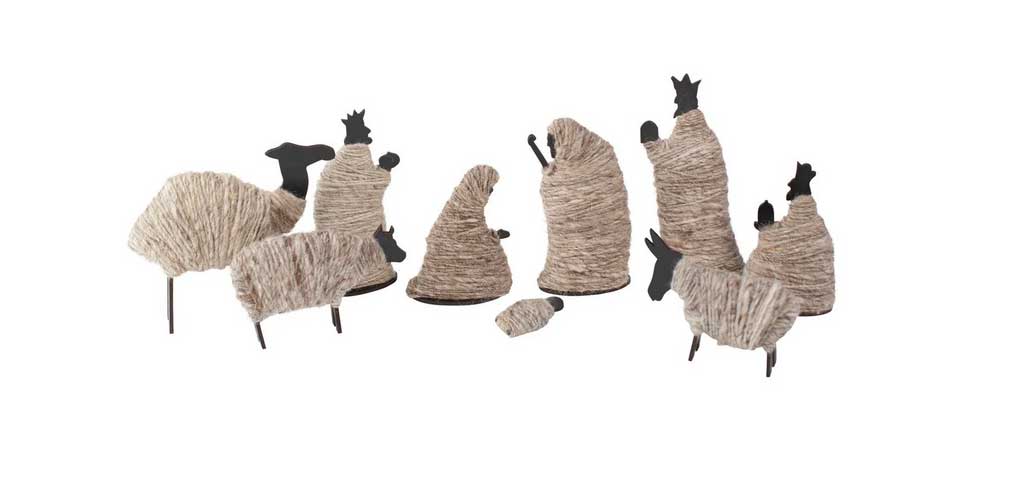
simple wrapped wool Nativity

Simple wrapped wool Nativity

This simple wrapped wool Nativity, handcrafted in the West Bank, is the perfect piece for a minimalist.

A centuries-old art


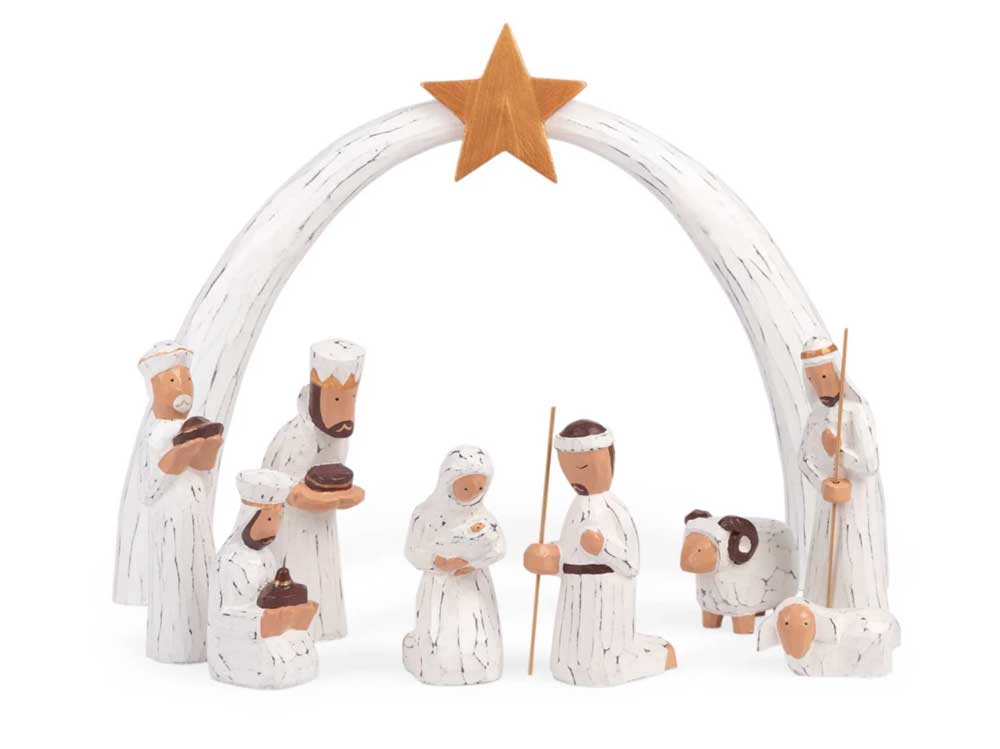
Every nativity set’s basic components are the same – figurines of Joseph, the Christ child’s Earthly father; Mary, his mother; and the newborn Christ. Beyond that, most sets include other figures from the story of Jesus’ birth, such as the three wise men bearing their gifts of gold, frankincense, and myrrh; barnyard animals (though none are mentioned in the Bible, one can assume some were present); and an angel only referred to in the Bible as “an angel of the Lord.” These figurines may be standing in a space designed to act as the manger in which Jesus was born.

One prominent vendor that has sold handmade nativity sets for nearly three decades is Pennsylvania-based Yonder Star (www.yonderstar.com). The merchant sells a variety of sets in many different styles, from cherry wood sets to those made of aluminum, from those smaller sets one can display in their home to larger outdoor sets that can be viewed by passersby.

The tradition of live nativity scenes, in which participants pose as Joseph, Mary, and the wise men, has existed in churches for decades and been a draw for houses of worship throughout the country.

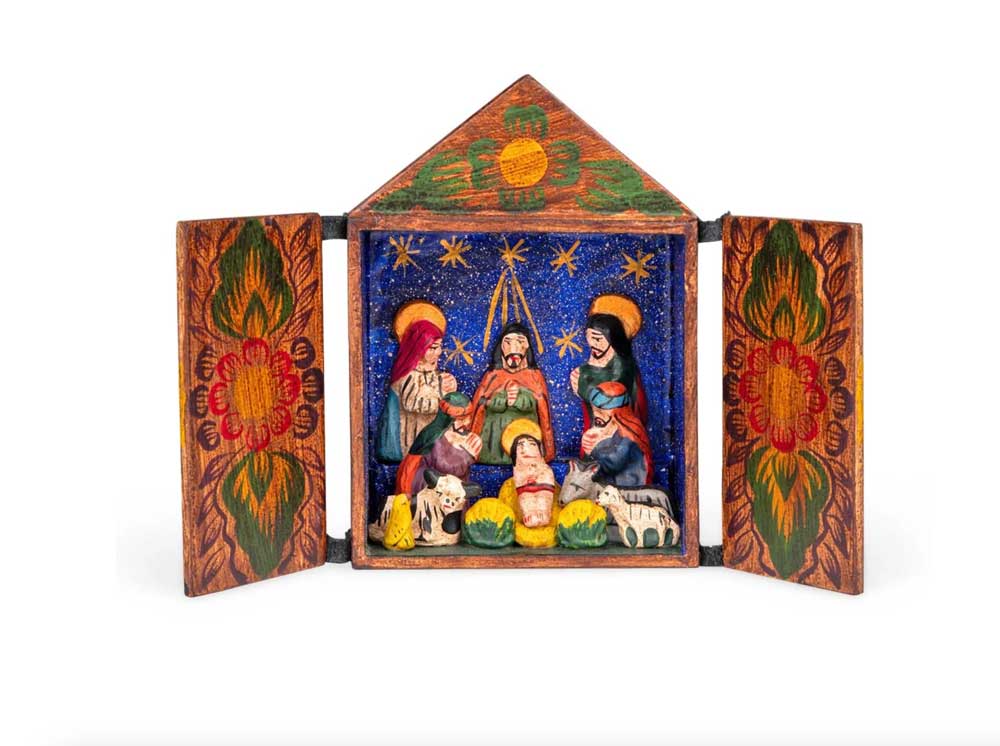
Retablos, or image boxes

Retablos, or image boxes

Retablos, or image boxes, portraying scenes of faith and daily life, were originally brought to Peru from Spain.

Albesia Wood Nativity

Albesia Wood Nativity

Albesia Wood Nativity is bright and beautifully handcarved from sustainably grown albesia trees by artisans in Indonesia.

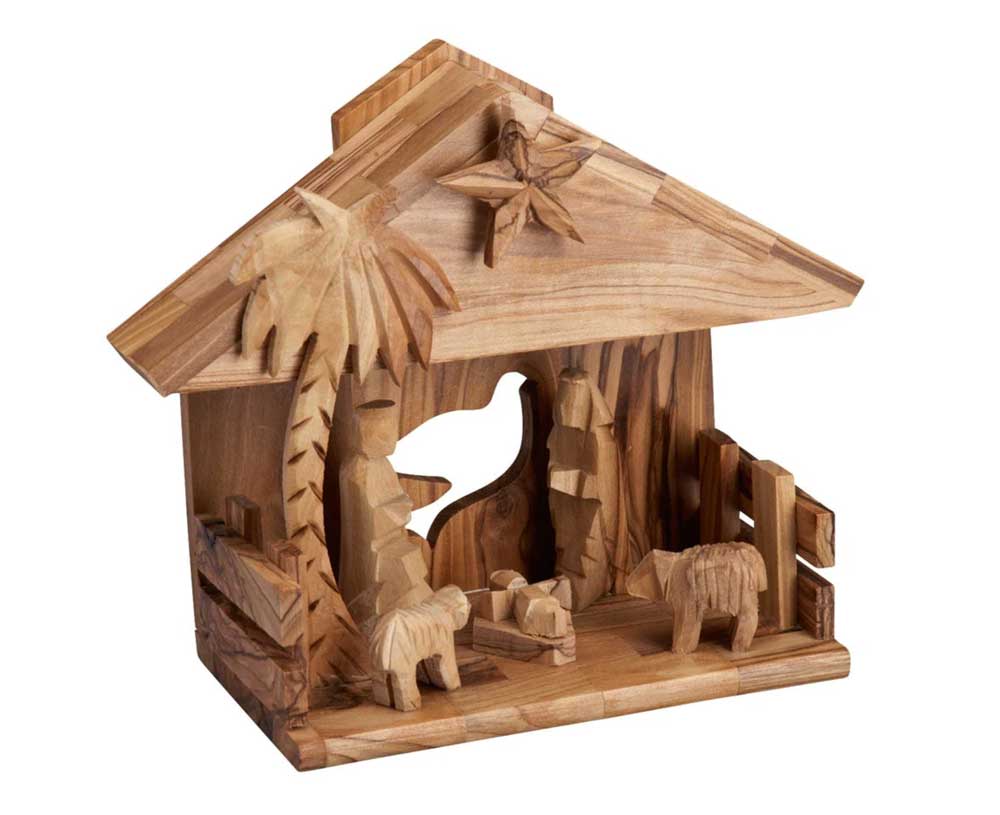
olive wood nativity

Olive wood nativity

This olive wood nativity playing "Silent Night" was handcarved in eit Sahour.

A way to honor the artisans


Fair-trade merchants such as Pennsylvania-based Ten Thousand Villages make it their mission to highlight the handmade crafts created by artisans in developing countries.

“As a pioneer of fair trade, we do business differently, putting people and planet first,” according to the company’s website. “That means you can trust that every purchase and donation you make directly impacts the life and community of its maker in an under-resourced community. Together we break the cycle of generational poverty and ignite social change.”

Nativity sets from African, Central, and South American countries are both colorful and creative, crafted with a variety of materials and in a variety of styles. In early November, the Overland Park location had a variety of nativity scenes on display.

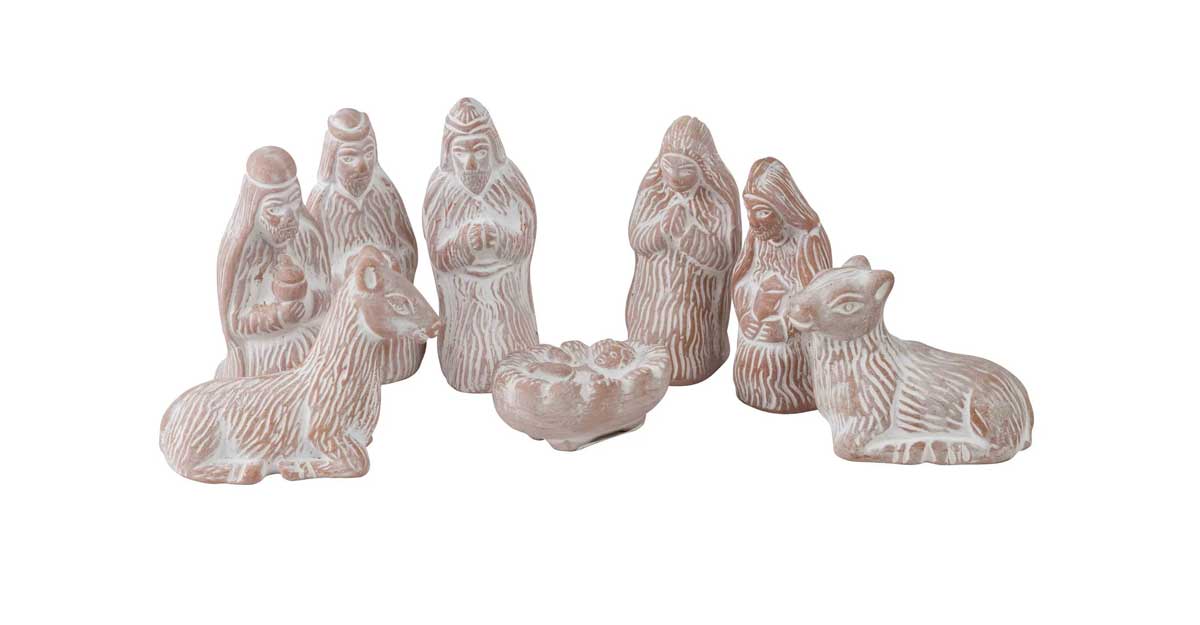
Silent Night Terracotta Nativity

Silent Night Terracotta Nativity

Silent Night Terracotta Nativity, handcrafted in Bangladesh. Whitewashed natural terracotta figures of Mary, Joseph and
baby Jesus in a manger with the three Wisemen and their gifts of Frankincense, Gold and Myrrh with two goats sitting by.
(All limages are courtesty of TenThousandVillages.com)

Among the most popular makers of Nativity scenes – Fontanini Gifts, based out of Italy, where Nativity sets are a large part of the culture. The family-run company, which has been making these sets for more than a century, sells Nativity scenes of all sizes, they’re considered exquisite works of art. As such, the sets can be expensive and thus slow to sell.

The original creator, Emanuel Fontanini, marked each piece he produced with a spider underneath; beginning in the 1980s, the pieces that make up each Nativity set bear a special fountain mark on the base.

Master sculptor Elio Simmonetti designed many sets made of papier mache between the 1940s and 1960s. After this time, sets were constructed using a nearly indestructible polymer resin; Fontanini Nativities are especially popular in American and European markets. The most rare Fontanini items bear the signature in ink of a Fontanini family member. Modern Fontaninis will come with a story card, unlike the older versions.

Collecting for a cause


Though nonprofit organizations and fair-trade businesses are known to sell nativities made in developing countries, one family is doing their part to support the artists who craft these pieces as well. In Utah, the Hyde family collects Nativity sets made in African, Asian, and Latin American countries. They sell some of the Nativities on their website, www.worldnativity.com.

“While contemplating what we could do as a family project to teach our children about charity and serving others, we had a very inspired thought,” Garrick and Ginger Hyde explain on the website. “We started buying Nativity scenes from artisans in developing countries as a means of helping the artisans generate income in a way that preserved their dignity. We thought we might buy a few Nativities, but now we have many.”

What started as a small project quickly grew into a business designed to help lift up those artisans, with the Hyde family selling Nativity scenes on their site.

“Along the way, we started buying extra Nativities from artisans around the world,” Garrick and Ginger write. “We sold the extras to our interested friends. We thought it would be a small project, but the response has been so high that we have sold more than 10,000 nativities from hundreds of artisans since 2005. Profits are given 100 percent to humanitarian ​causes and micro-credit projects in developing countries that benefit children and low-income adults. … The lives of these artisans are dramatically improved from the additional income.”

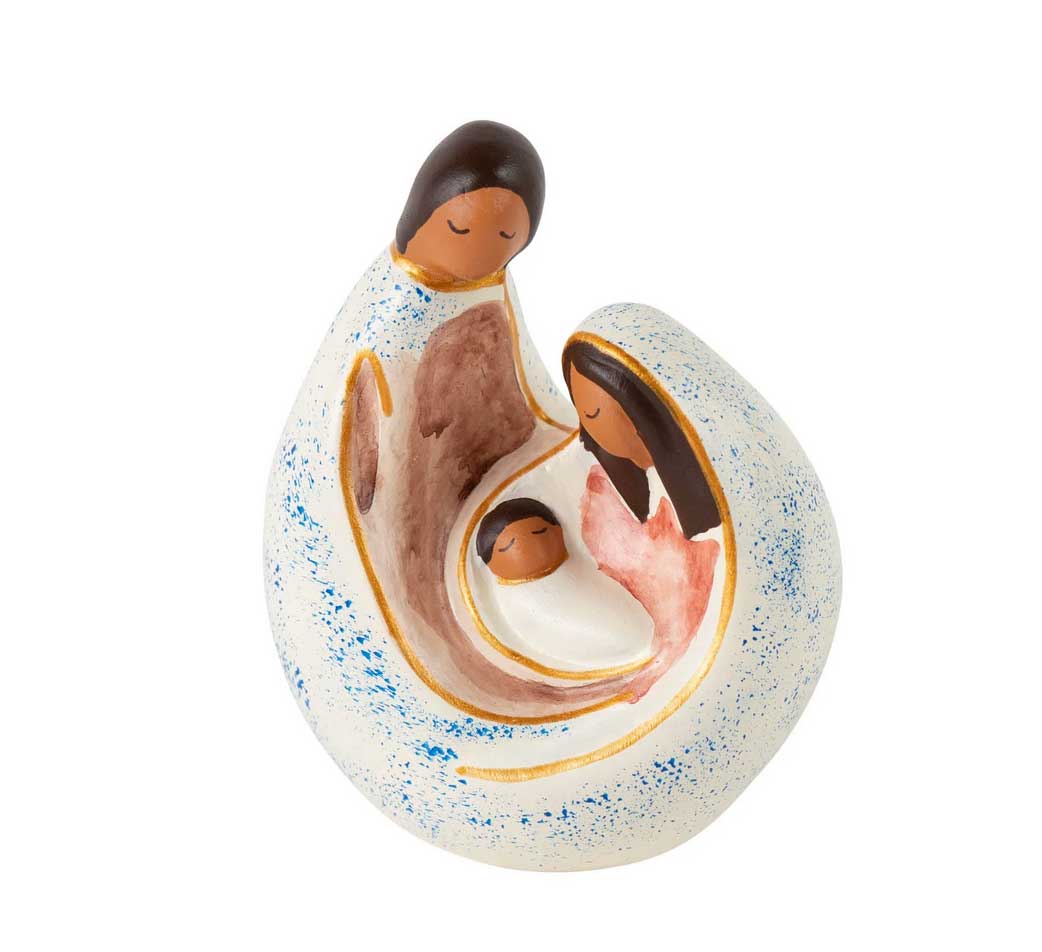
ceramic sculpture

Ceramic sculpture

Celebrating the arrival, this ceramic sculpture is beautifully handcrafted by artisans in Peru.

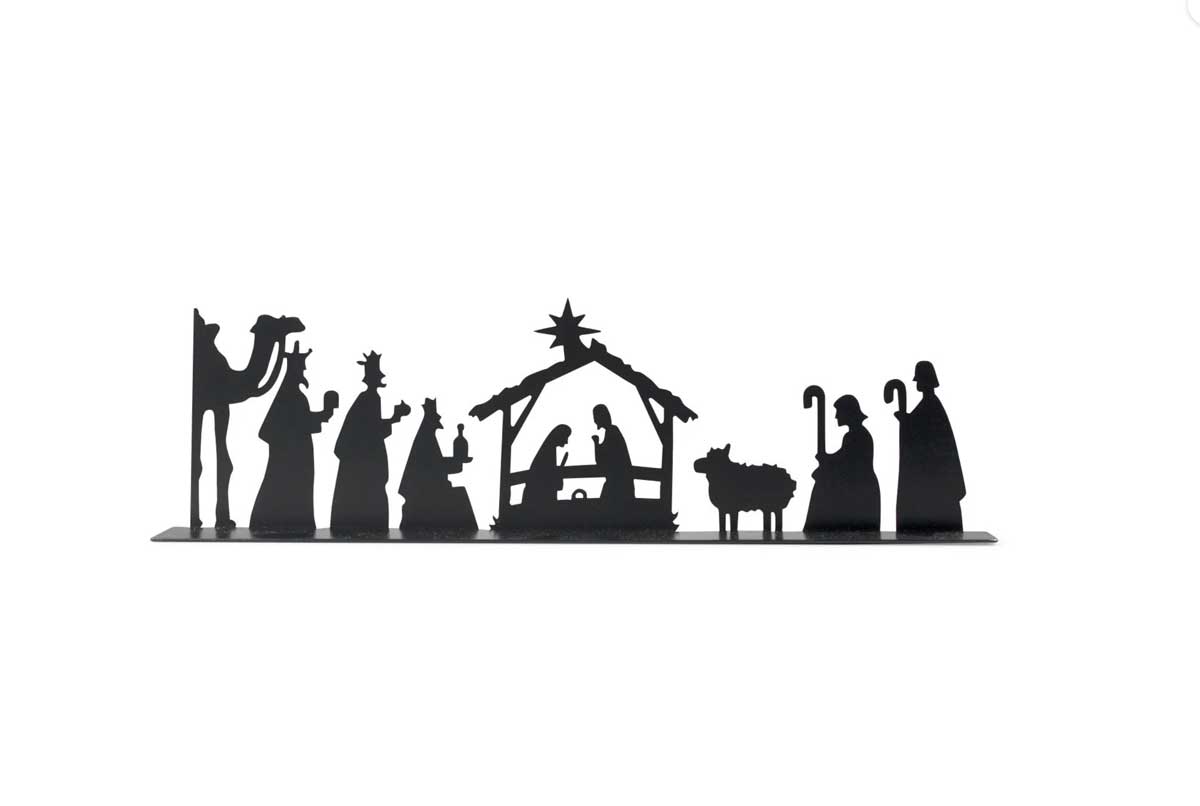
iron Silhouette Nativity

Iron Silhouette Nativity

Simple and sophisticated, this iron Silhouette Nativity is handcrafted in India.

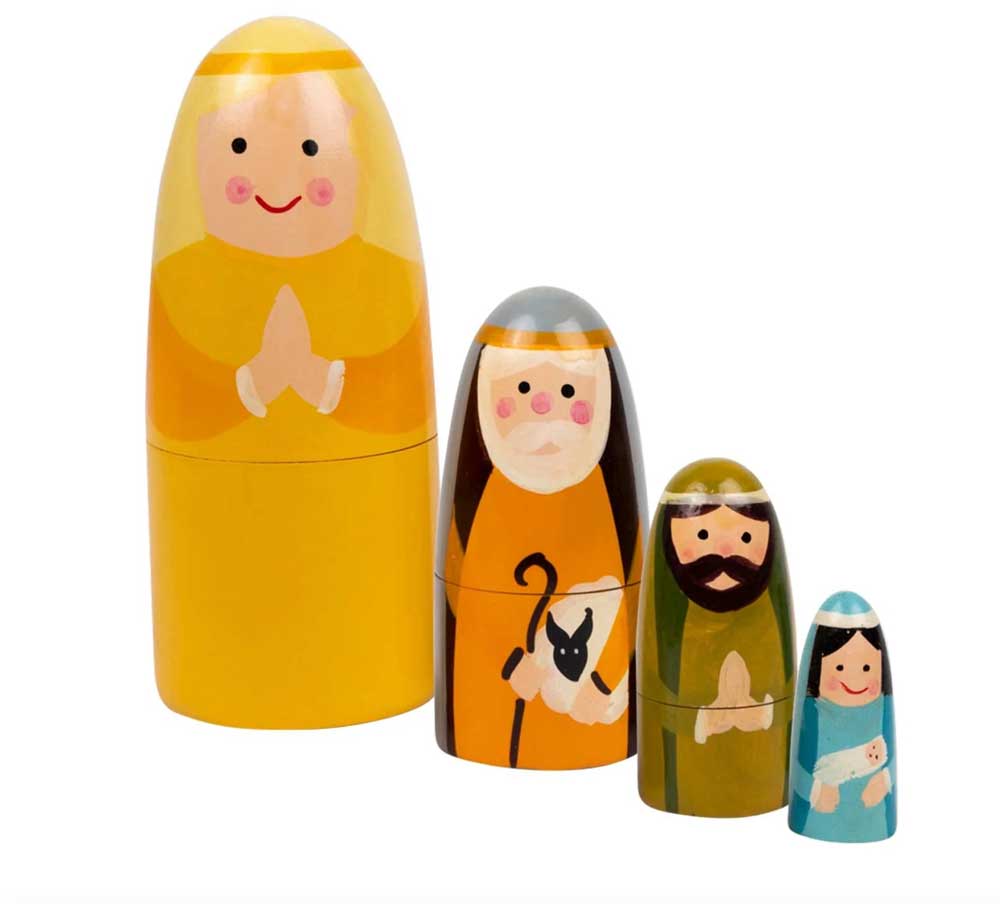
Nesting Doll Nativity

Nesting Doll Nativity

Nesting Doll Nativity, handcrafted in India.

The true meaning of Christmas


Such a story embodies the meaning of the season – helping your fellow man by engaging in charitable acts and thus becoming closer to God.

“The Nativity scene has always captivated people around the world,” explains the Franco family, another Italian merchant that specializes in Nativity sets. “Jesus was born by a simple woman and as son of a poor family. The poverty and the natural birth of God’s son enabled people to feel that he was one of them. They could identify with him.”

And according to Wellspring Christian Ministries, no matter the country in which a Nativity set is made, no matter their differences, the meaning behind each of these works of art is the same.

“In spite of the discrepancies depicted in most nativities and the Biblical account, the most important thing about a nativity is its message to the world,” the site states. “Because our sin requires a perfect sacrifice before a holy and just God, our Heavenly Father sent His own Son to earth as a man so that He could become that sacrifice.

Posters promoted car-sharing

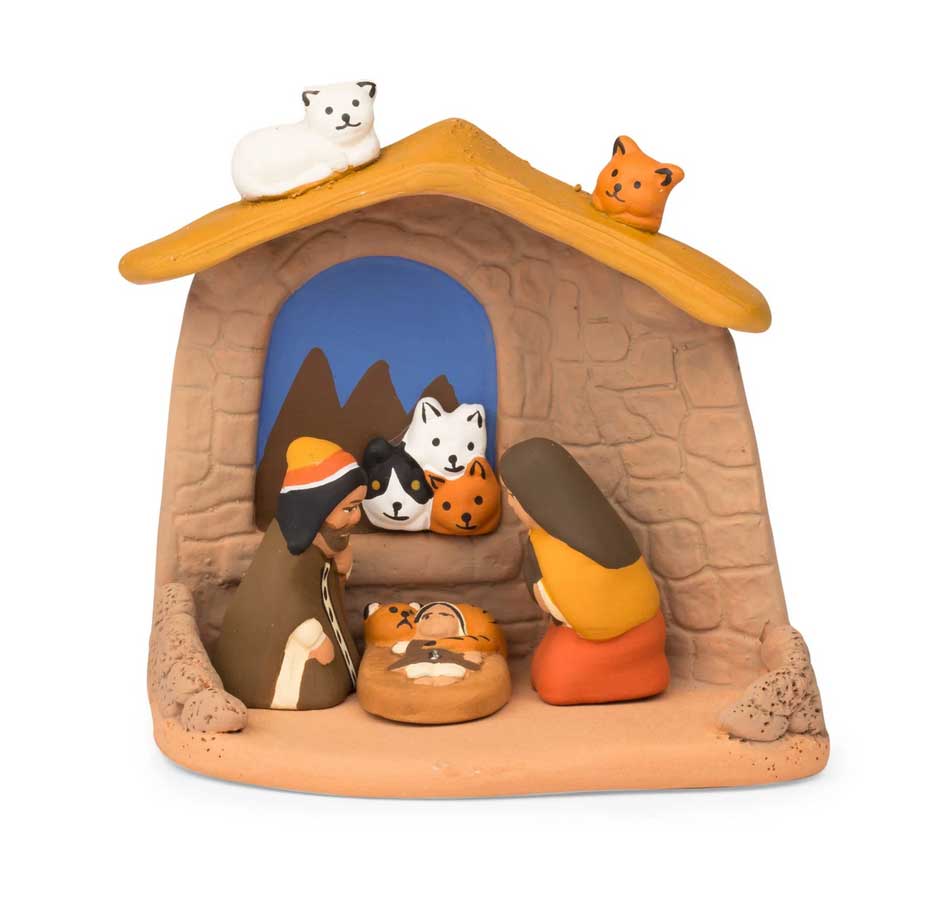
Cat lover’s ceramic Nativity

Handpainted cat lover’s ceramic Nativity from Peru.

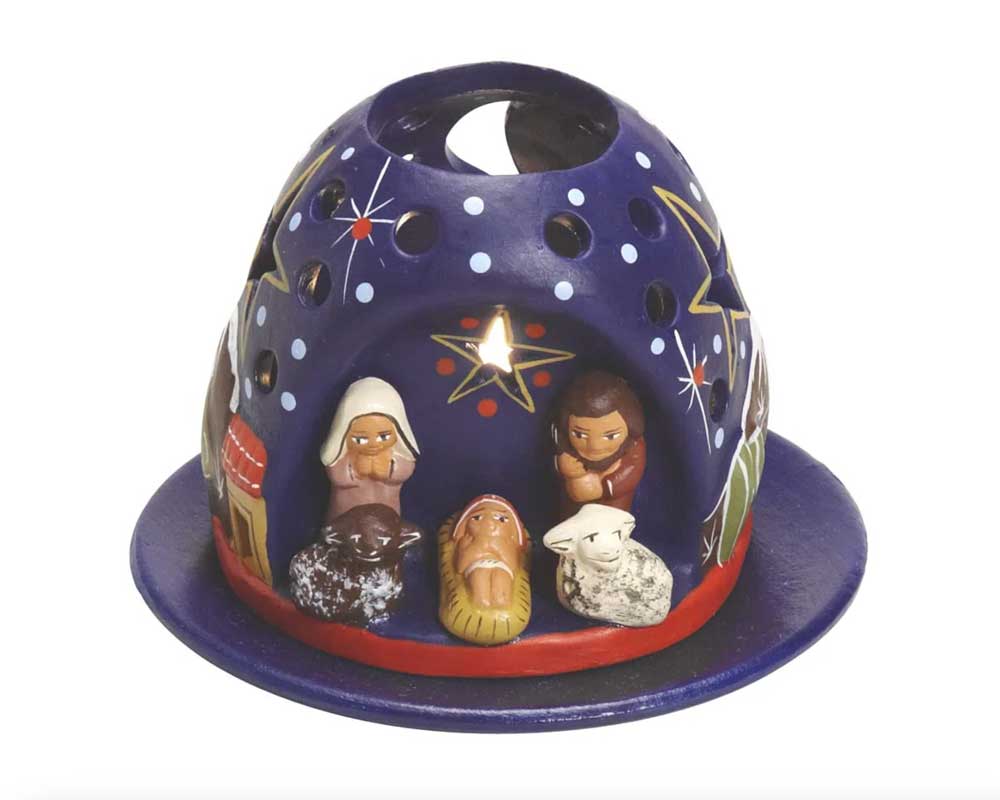
Mountain Tea Light Nativity

Mountain Tea Light Nativity

Mountain Tea Light Nativity, handcrafted in Peru.

Posters’ Persuasive Power U.S. propaganda during WW II attempted to rally Americans around war effort

Posters’ Persuasive Power U.S. propaganda during WW II attempted to rally Americans around war effort

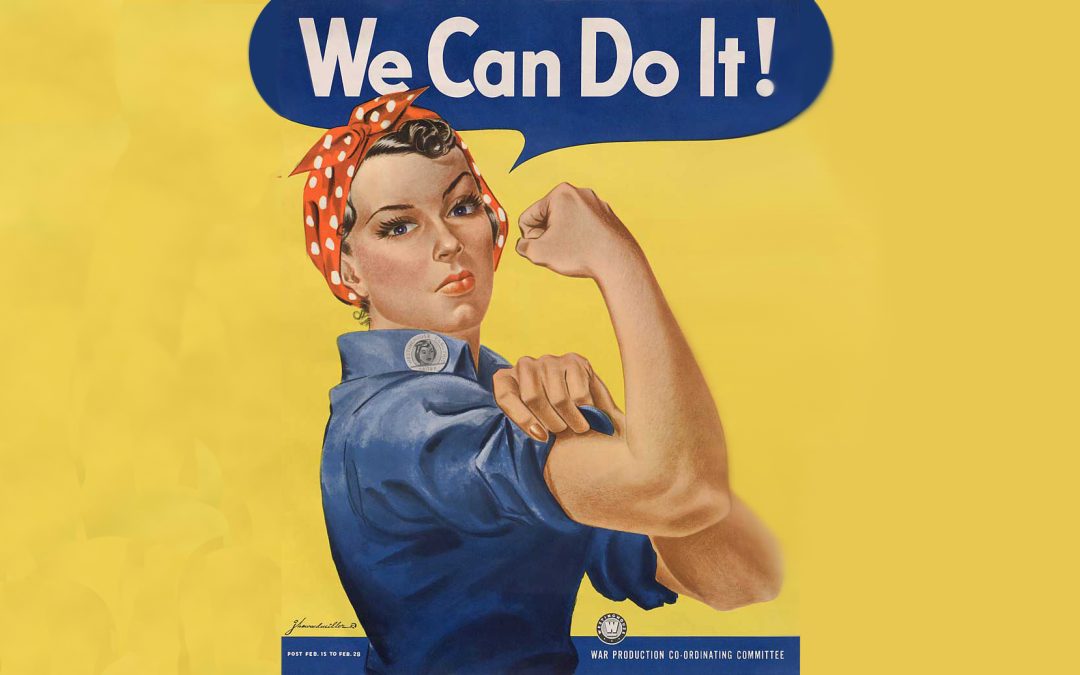
J. Howard Miller’s “We can do it!” poster was designed to boost morale among American women who went to work in factories and in shipyards during the labor shortage created by World War II. (Image courtesy of 1st Dibs)

November 2023

Cover Story

Posters’ Persuasive Power

U.S. propaganda during WW II attempted to rally Americans around war effort

by Corbin Crable

While the Second World War raged across the ocean, a battle for the minds of servicemen and everyday Americans was being fought at home.

The weapons employed in that fight included posters, brochures, and even movies and cartoons. And while they didn’t have the power to take lives, but they did have the power to shift public opinion.

“Persuading the American public became a wartime industry, almost as important as the manufacturing of bullets and planes,” according to an article from the website of The National Archives. “The government launched an aggressive propaganda campaign with clearly articulated goals and strategies to galvanize public support.”


Uncle Sam needs you


Combinations of dominant, strong, physically imposing figures and imagery along with calls to action comprised portrayals of American superiority and the need for civilians to do whatever they could at home to support their boys overseas. Meanwhile, American depictions of the Axis Powers – Germany, Italy, and Japan – painted America’s wartime enemies as sneaky, deceptive, evil racial and ethnic stereotypes in an attempt to instill anger and revulsion in American citizens.

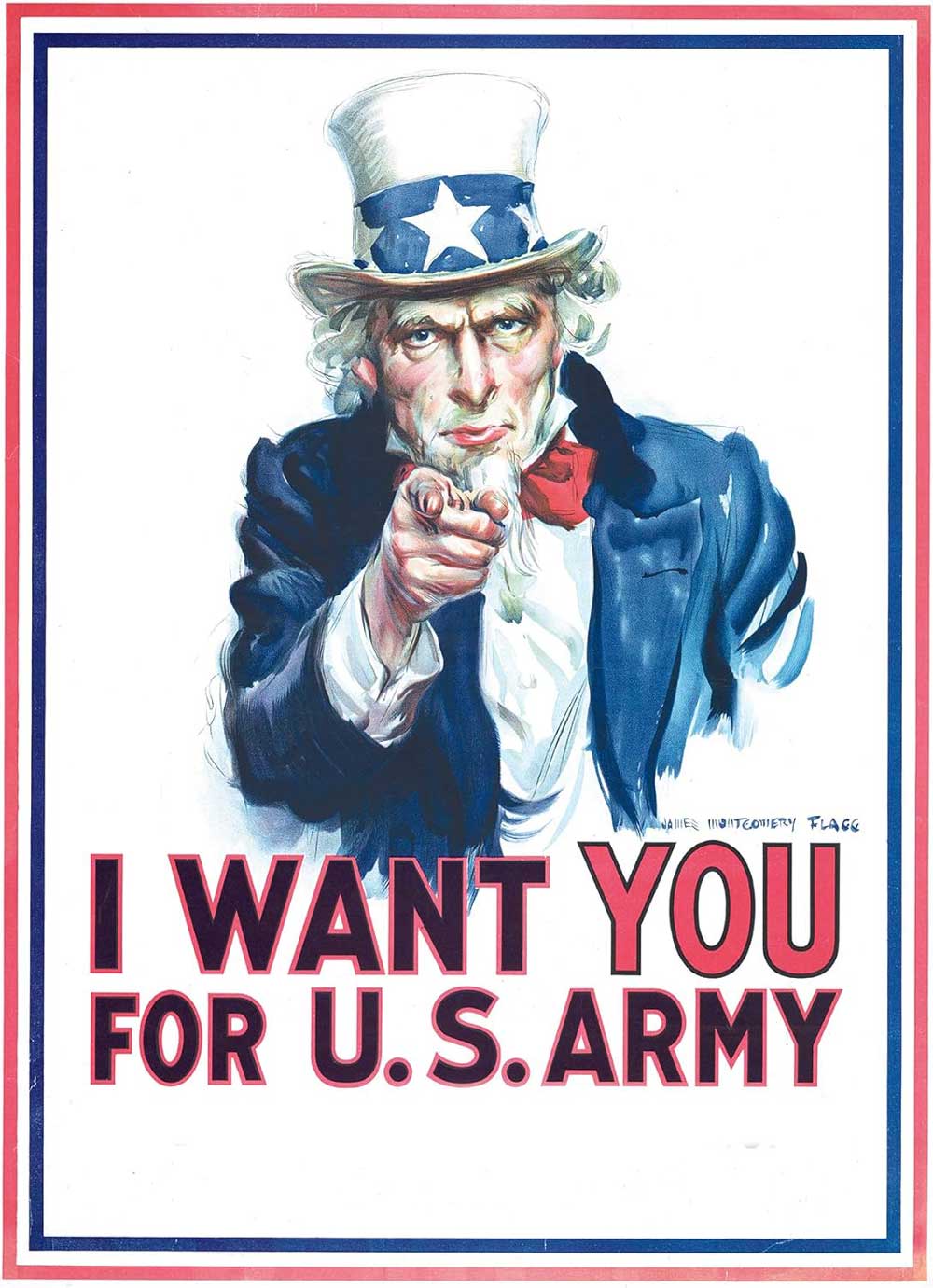
“I want YOU” poster in 1917

“I WANT YOU” poster in 1917

James Montgomery Flagg created the famous “I want YOU” poster in 1917, the year that America entered World War I. (Image courtesy of the U.S. Army)

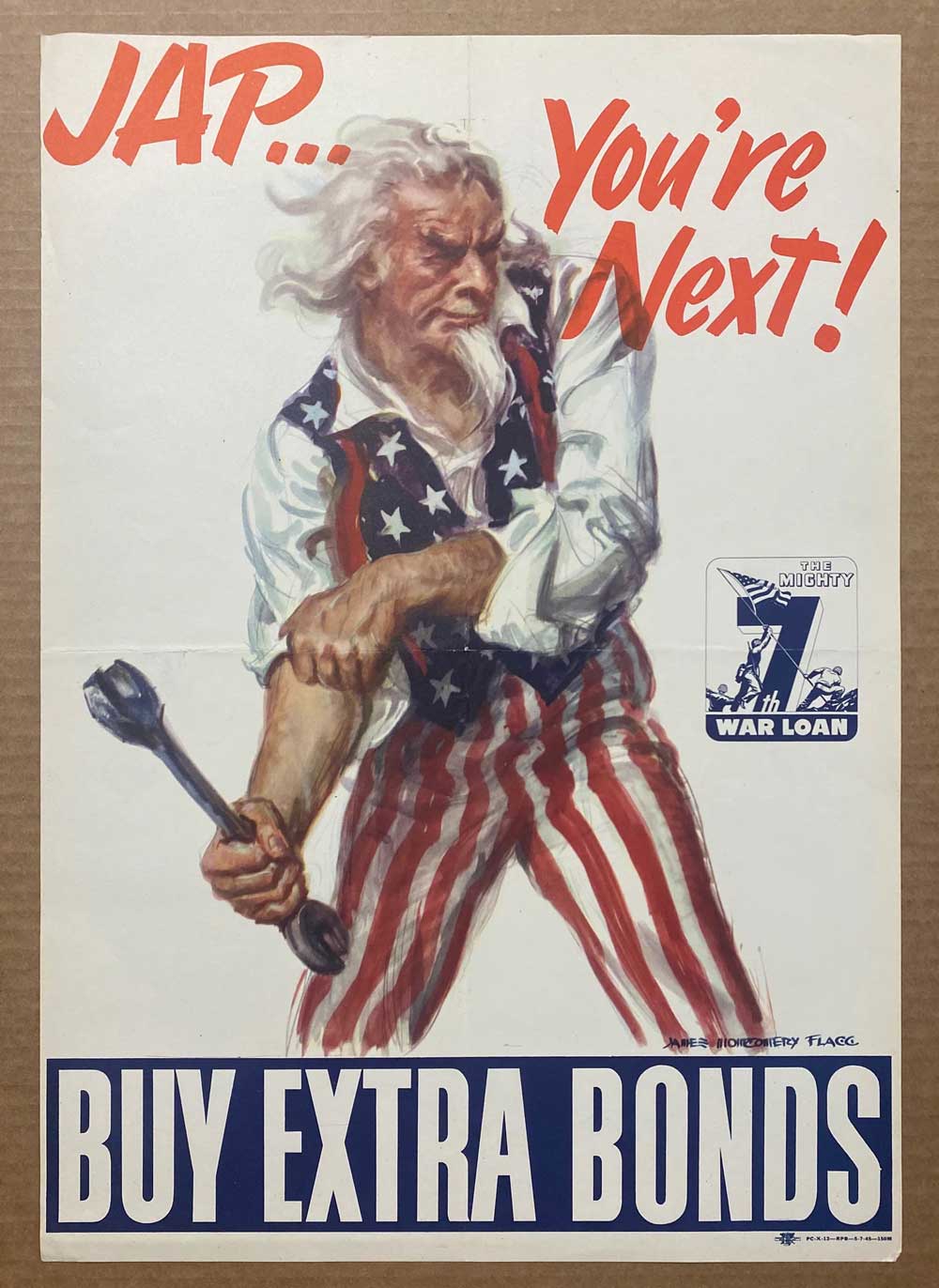
One of the most famous propaganda images wasn’t created during World War II, however. In propaganda posters, American might is most famously personified as Uncle Sam in the now-famous “I Want YOU to enlist for the U.S. Army Now” poster. In that image, created during the First World War by American artist James Montgomery Flagg, Uncle Sam is a white-haired man decked out in traditional red, white, and blue, but his message is direct, his eyes staring directly at the viewer to convey the serious and urgent nature of his plea. In another poster, Uncle Sam has shed his star-spangled top hat, his white hair wild and flowing as he rolls up his sleeves and wields a large monkey wrench as he threatens the “Jap” and urges his audience to buy war bonds, used to by the government to finance war operations without raising taxes too high.

“Masculine strength was a common visual theme in patriotic posters,” the National Archives article reads. “Pictures of powerful men and mighty machines illustrated America’s ability to channel its formidable strength into the war effort. American muscle was presented in a proud display of national confidence.”


Put down that sugar bowl


Besides calling on Americans to buy war bonds, American propaganda posters issued other calls to action that allowed civilians to help their servicemen – or at least to create the appearance of helping. Rationing of items such as sugar, butter, meat, gasoline, and even rubber was commonplace, fueled by the posters issued by the federal government. These items were badly needed by the troops, it was argued, and the American civilian’s willingness to ration them displayed patriotism and support of the military that fought for them overseas. Sugar was the first item rationed, and families across the country lined up at schools and other community gathering places to receive ration books that employed a point system, which allowed each family a certain amount of processed goods and a certain amount of perishable goods each month. These ration books can still be found in antique stores everywhere. Though propaganda posters attempted to drum up support for rationing, it was seen as a sacrifice Americans had to make if they wanted the defeat of the Nazis, who continued to march across Western Europe and conquer its countries in their wake.

Candles illuminate a large public display

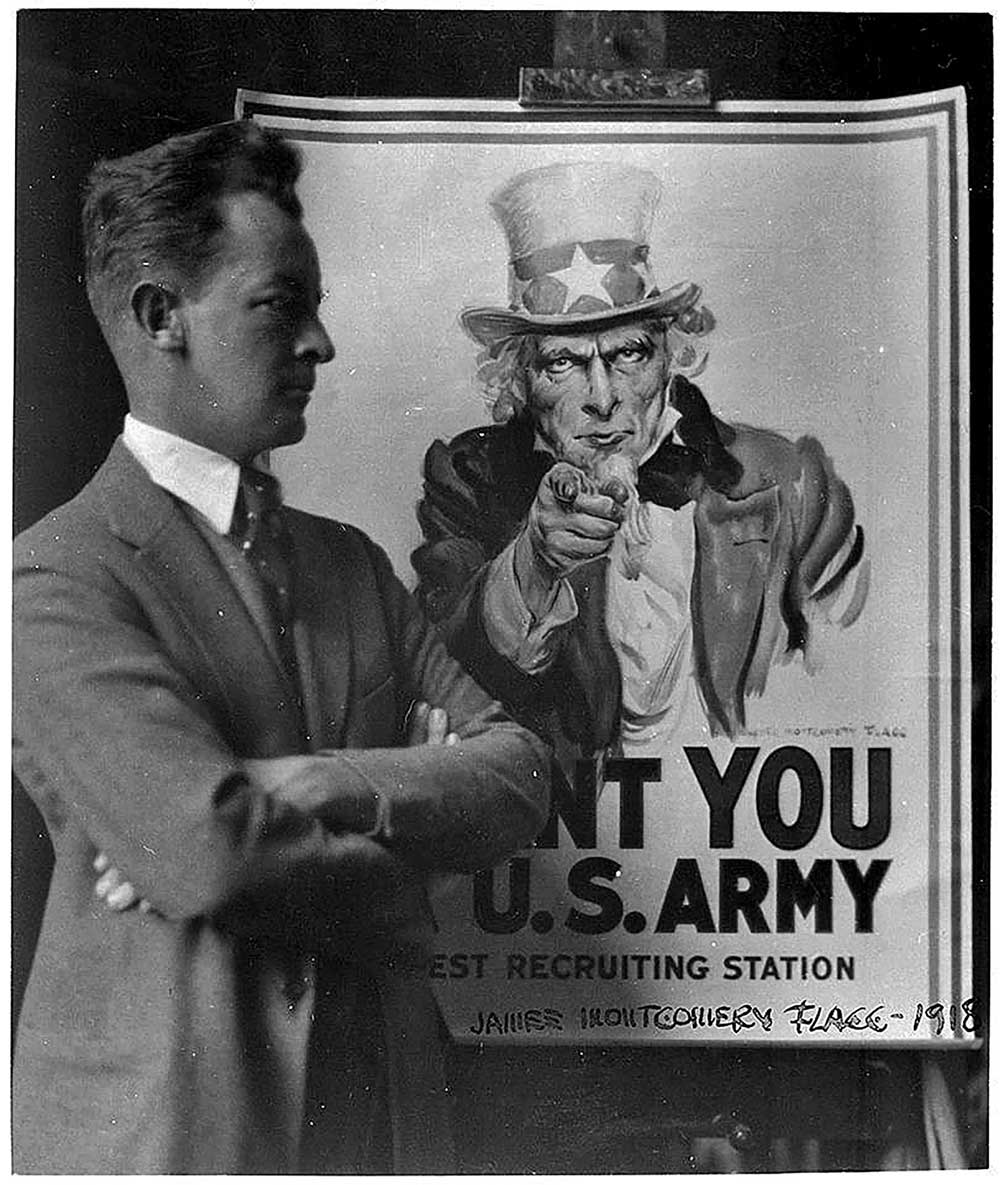
Artist James Montgomery Flagg

Artist James Montgomery Flagg poses beside his poster to encourage recruitment in the U.S. Army during World War I. (Image courtesy of the U.S. Army)

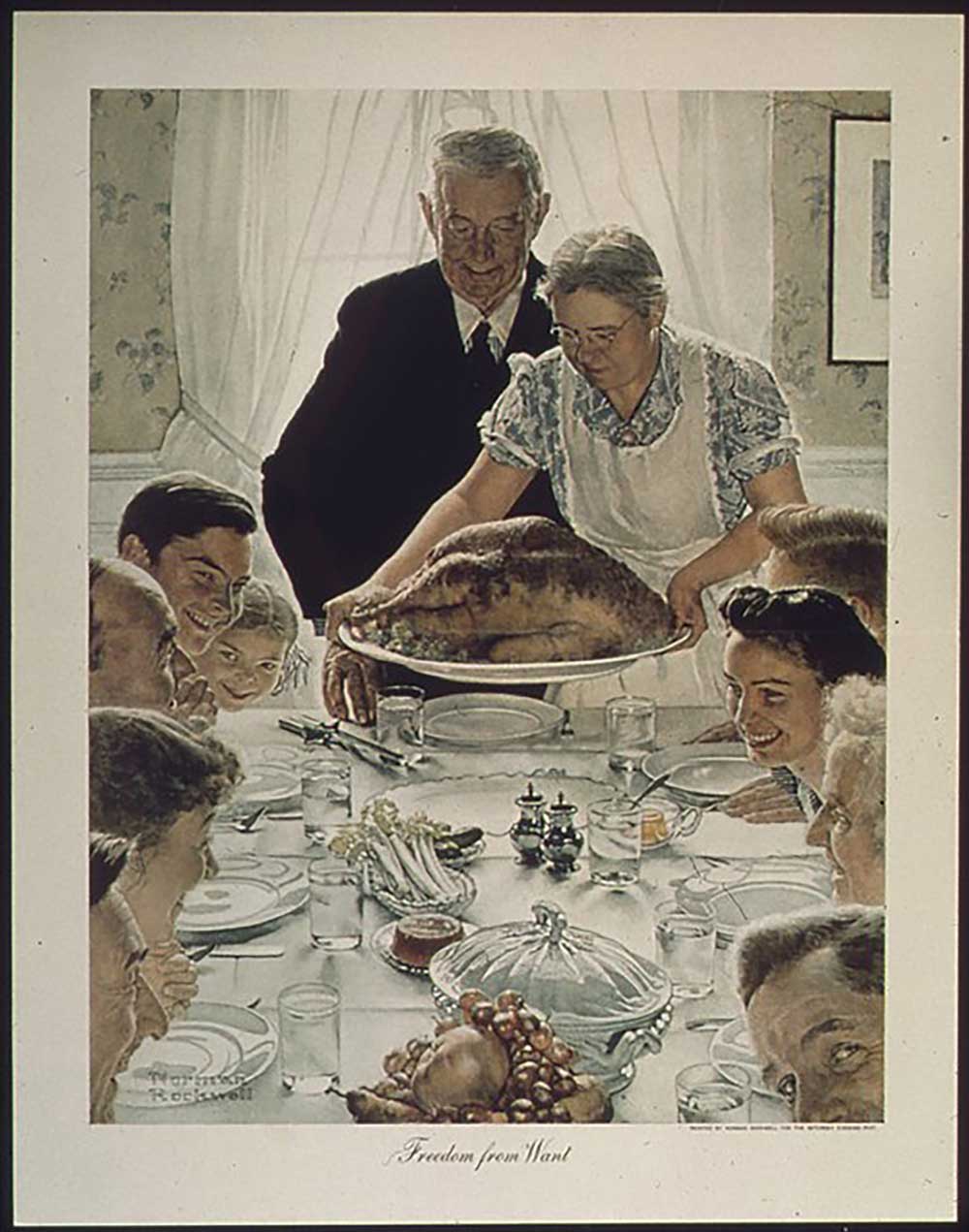
Norman Rockwell’s “Freedom From Want”

Norman Rockwell’s “Freedom From Want”

Artist Norman Rockwell’s “Freedom From Want” is one in a series of four oil paintings inspired by U.S. President Franklin D. Roosevelt’s 1941 State of the Union address. The four paintings ran in The Saturday Evening Post; they were eventually distributed as posters and used in the government’s drive for war bonds. (Image courtesy of The Norman Rockwell Museum)

Buy Extra Bonds

Buy Extra Bonds

Flagg returned to his drafting desk to create this poster in 1945. (Image courtesy of The Ross Art Group)

“Food was in short supply for a variety of reasons: much of the processed and canned foods were reserved for shipping overseas to our military and our Allies; transportation of fresh foods was limited due to gasoline and tire rationing and the priority of transporting soldiers and war supplies instead of food; imported foods, like coffee and sugar, was limited due to restrictions on importing,” according to the website of the National World War II Museum in New Orleans. “Because of these shortages, the U.S. government’s Office of Price Administration established a system of rationing that would more fairly distribute foods that were in short supply. Every American was issued a series of ration books during the war. The ration books contained removable stamps good for certain rationed items, like sugar, meat, cooking oil, and canned goods. A person could not buy a rationed item without also giving the grocer the right ration stamp.  Once a person’s ration stamps were used up for a month, she couldn’t buy any more of that type of food. This meant planning meals carefully, being creative with menus, and not wasting food.”

A Victory Garden

A Victory Garden

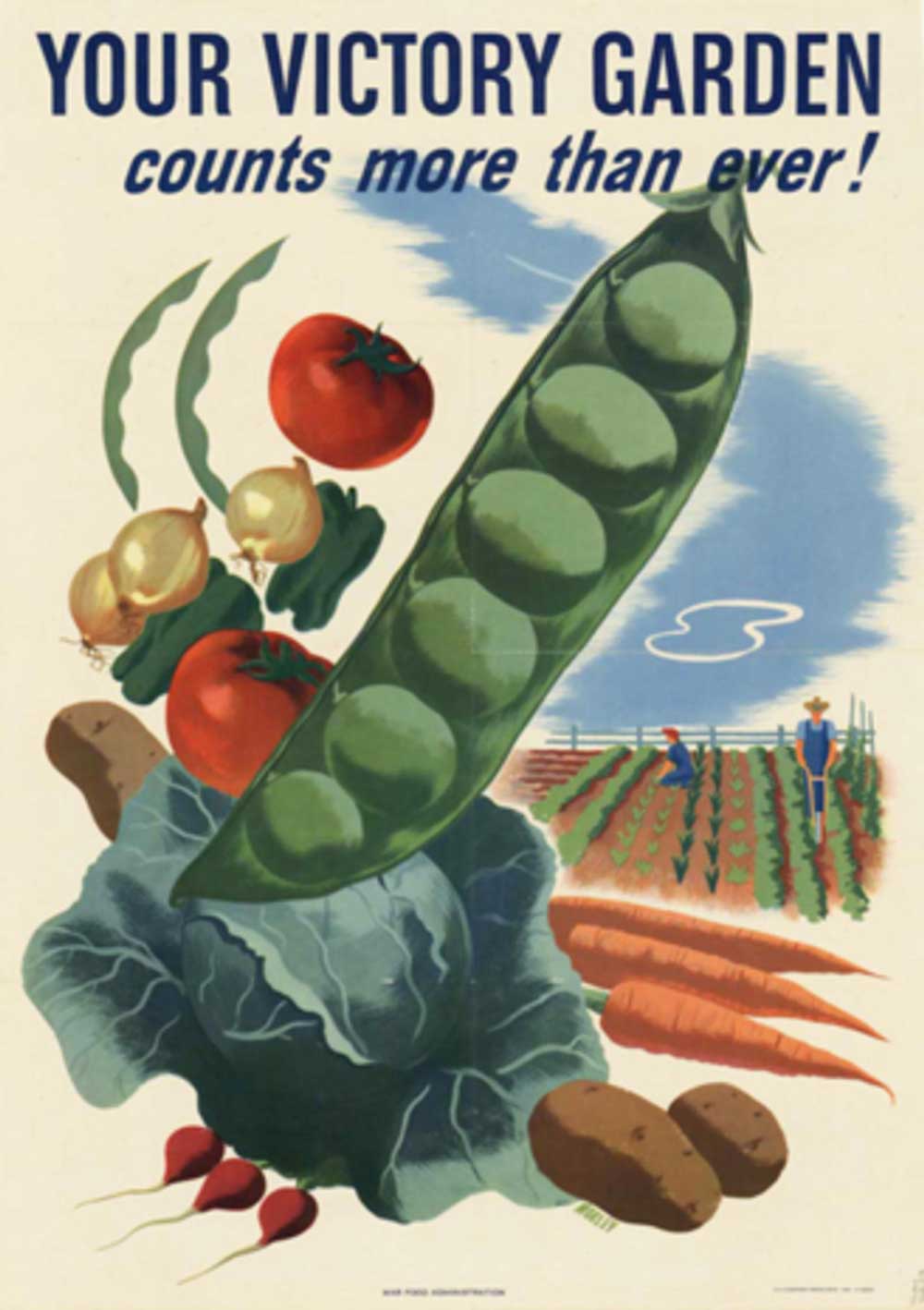
A Victory Garden was one way everyday Americans could help soldiers win the fight overseas. Poster produced in 1943 by artist Hubert Morley. (Image courtesy of CBS News)

Vegetables for victory

Propaganda posters instead encouraged Americans to grow their own war gardens, rebranded as “victory gardens.” The purpose of this program, devised by the federal government, was to “free up agricultural produce, packaging, and transportation resources for the war effort, and help offset shortages of agricultural workers,” according to the website of The National Park System. Communal gardening was especially encouraged – everywhere from public land to vacant lots to city rooftops.

Propaganda posters also touted a solution to the labor shortage caused by the war – employing women in the nation’s factories to produce ammunition and war supplies to be used in the war effort. From this shift of women from the home to the workplace came the now-famous image “We Can Do It!” poster of a young female worker, made by artist J. Howard Miller and designed to boost morale among the nation’s female workers. The poster and “Rosie the Riveter” image – though it was never referred to as such during the war – became icons synonymous with the feminist movement in the later half of the 20th century.

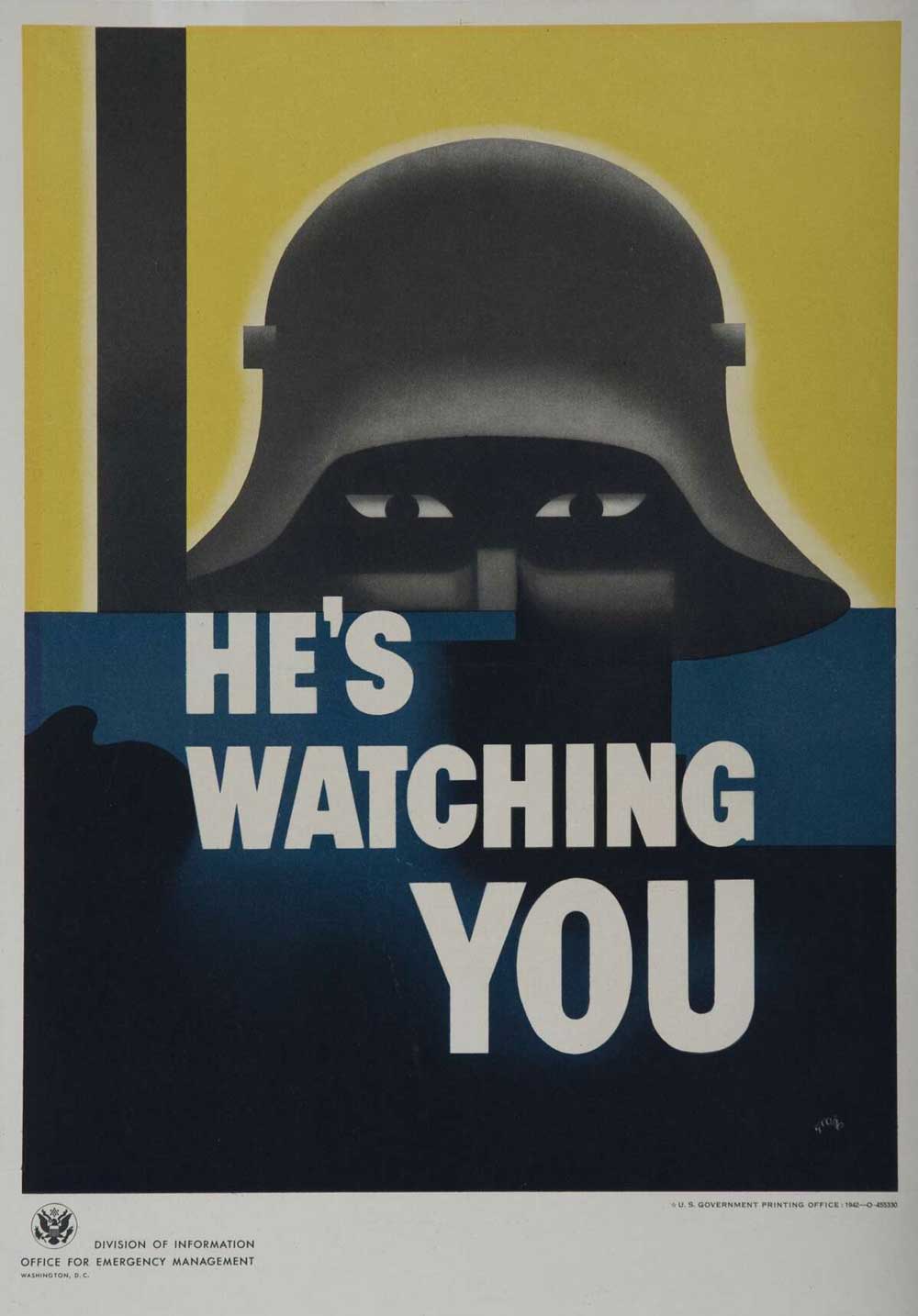
In addition to encouraging the elimination of waste in most facets of daily life, making sacrifices for the greater good, and expressing the power of American military forces, propaganda posters during World War II also served to caution their audience. They instilled fear in Americans by portraying the enemy, the acts of atrocity committed by the Axis powers, and their overall sinister nature. They convinced us that danger was lurking around every corner, and that complacency equaled peril.

“Public relations specialists advised the U.S. government that the most effective war posters were the ones that appealed to the emotions,” The National Archives article explains.

Beware of the enemy

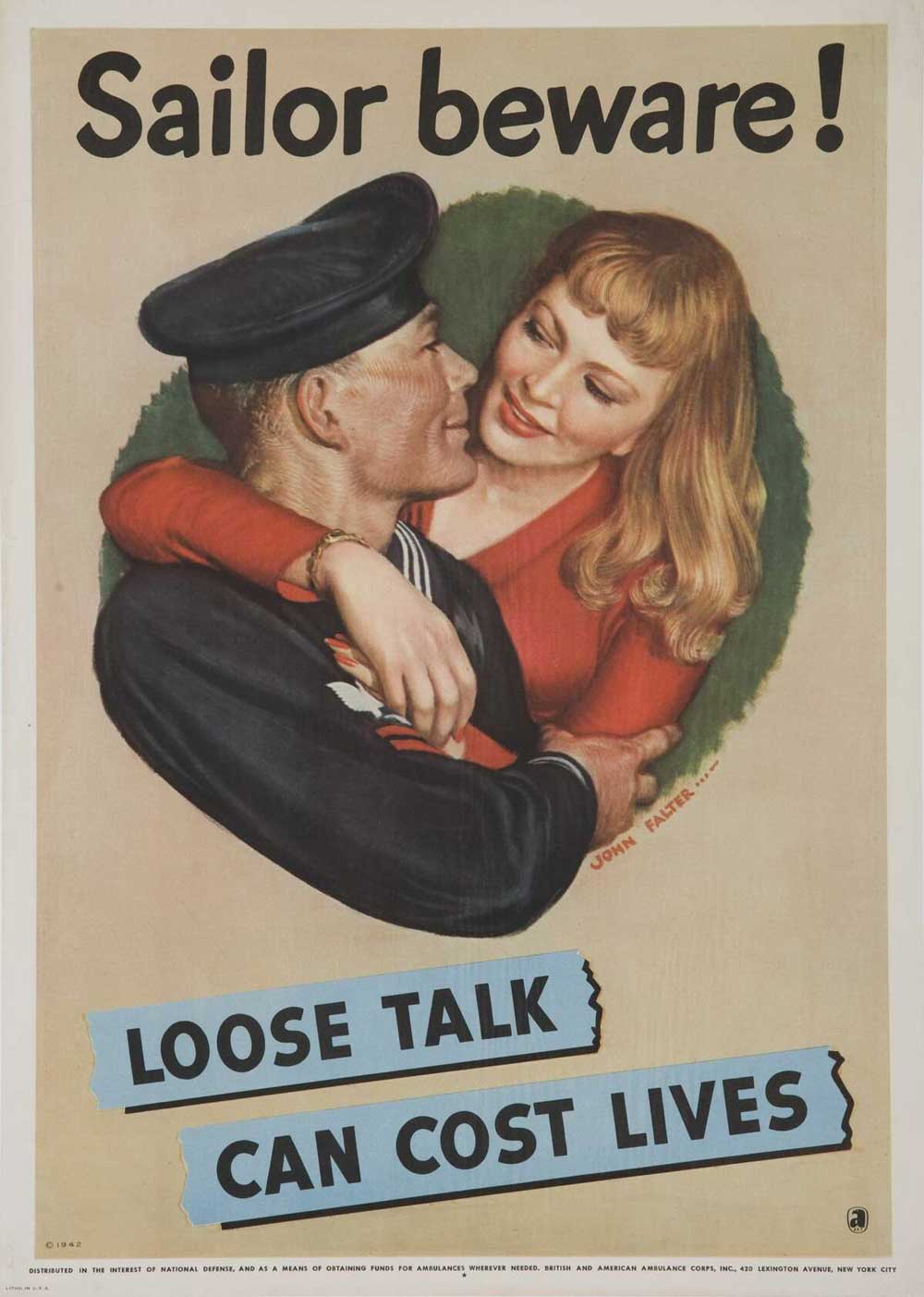
Posters also warned Americans to always be aware of their surroundings and warned them against sharing any sensitive information. After all, you never know when a spy is listening.

“Concerns about national security intensify in wartime. During World War II, the government alerted citizens to the presence of enemy spies and saboteurs lurking just below the surface of American society,” according to The National Archives. ’Careless talk’ posters warned people that small snippets of information regarding troop movements or other logistical details would be useful to the enemy. Well-meaning citizens could easily compromise national security and soldiers’ safety with careless talk.”

Those posters that didn’t make us feel proud of our country and exploit that patriotism by encouraging sacrifice were instead presenting caution – that the atrocities occurring in another land could just as easily happen on our shores, so always beware.

Mr. Capra goes to Washington

Posters, of course, weren’t the only medium through which propaganda spread during the war. The medium of film was a powerful tool that expressed many of the same sentiments to the public in newsreels shown in movie theaters before the main feature began.

The U.S. Department of War commissioned filmmaker Frank Capra to produce the series of seven propaganda films written to help American soldiers understand why the U.S. was involved in the war. The series, titled “Why We Fight,” was produced between 1942 and 1945.

sailors were reminded that careless words

Sailors were reminded that careless words

In this poster, “sailors were reminded that careless words shouldn’t be spoken to their female dates, who could be spies.” (Image courtesy of Chron.com)
Posters promoted car-sharing

Posters promoted car-sharing

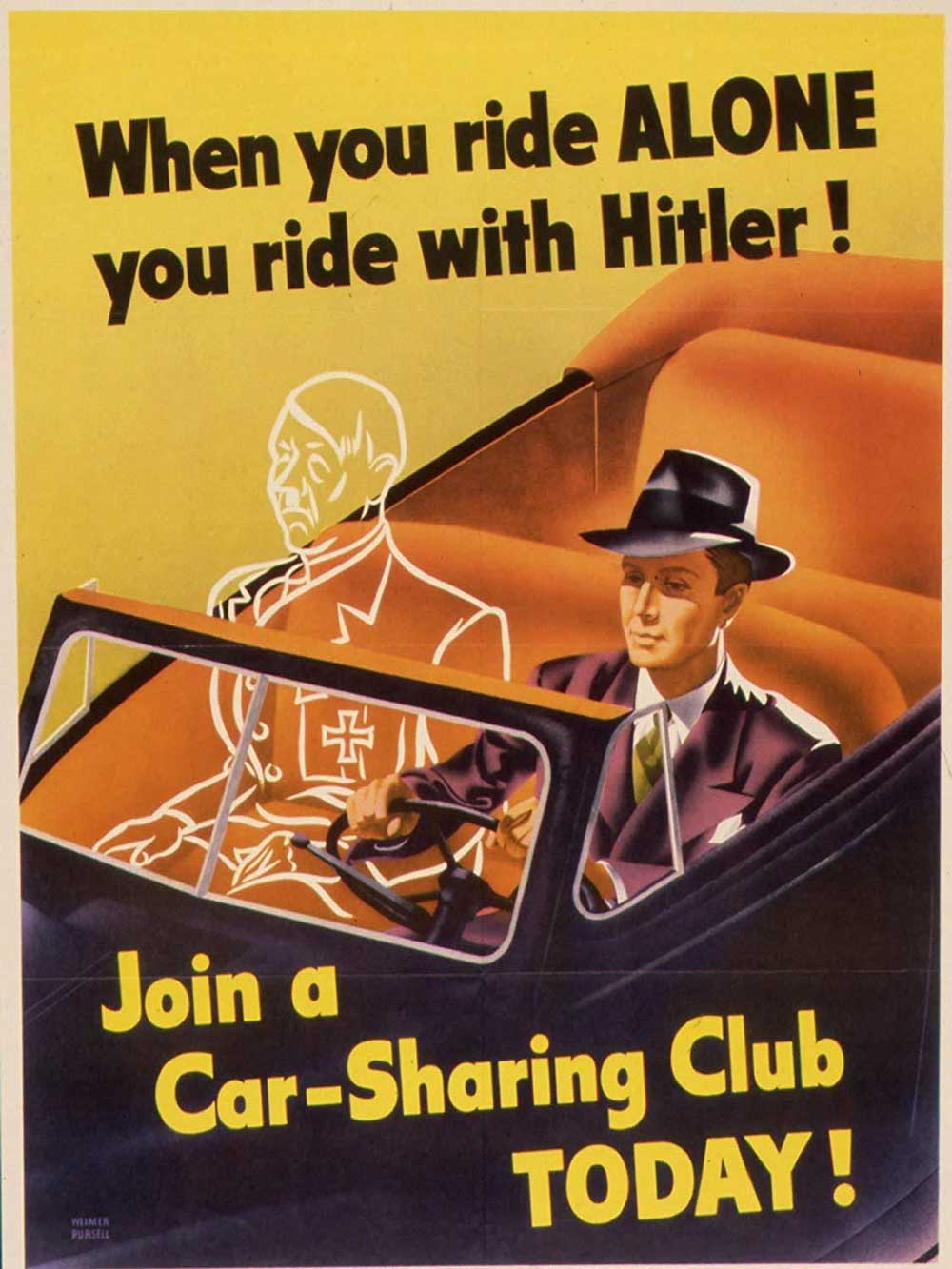
Posters promoted car-sharing clubs, which saved gas and rubber needed for the war effort. This poster was designed in 1943. (Image courtesy of Yale University)

While Hitler and the Nazis had their own propaganda filmmaker in Leni Riefenstahl, Capra was an Academy Award-winning filmmaker whose career had soared in the 1930s with films like “Mr. Smith Goes to Washington.” Capra, who would go on to direct the Christmas classic “It’s a Wonderful Life,” even teamed up with Walt Disney Productions for the series, with Disney producing the several animated segments in the films. Capra later said he intended for “Why We Fight” to stand as the American response to Riefenstahl’s nightmarish “Triumph of the Will,” a documentary that covers the Nazi Party’s 1934 rally in Nuremberg. An article in The Western Journal of Speech and Communication from author Kathleen German stated that the medium of film accomplished what printed material like posters and other literature could not – that it employed the viewer’s senses of sight and hearing, bringing the battle between good and evil to life for audiences living in a world that was receiving more and more of its information from visual sources with each passing year.
Though World War II ended in 1945, the military continues to produce posters, “not just to attract recruits, but also to send messages to troops, such as instilling values, promoting safety and preventing sexual assault,” according to the U.S. Department of Defense.


He's Watching You

A sinister-looking German soldier

A sinister-looking German soldier peers at the viewer. Such images were meant to instill fear in American civilians. (Image courtesy of Chron.com)
Honoring the dead Dia de los Muertos has colorful traditions, history in both Mexico, U.S.

Honoring the dead Dia de los Muertos has colorful traditions, history in both Mexico, U.S.

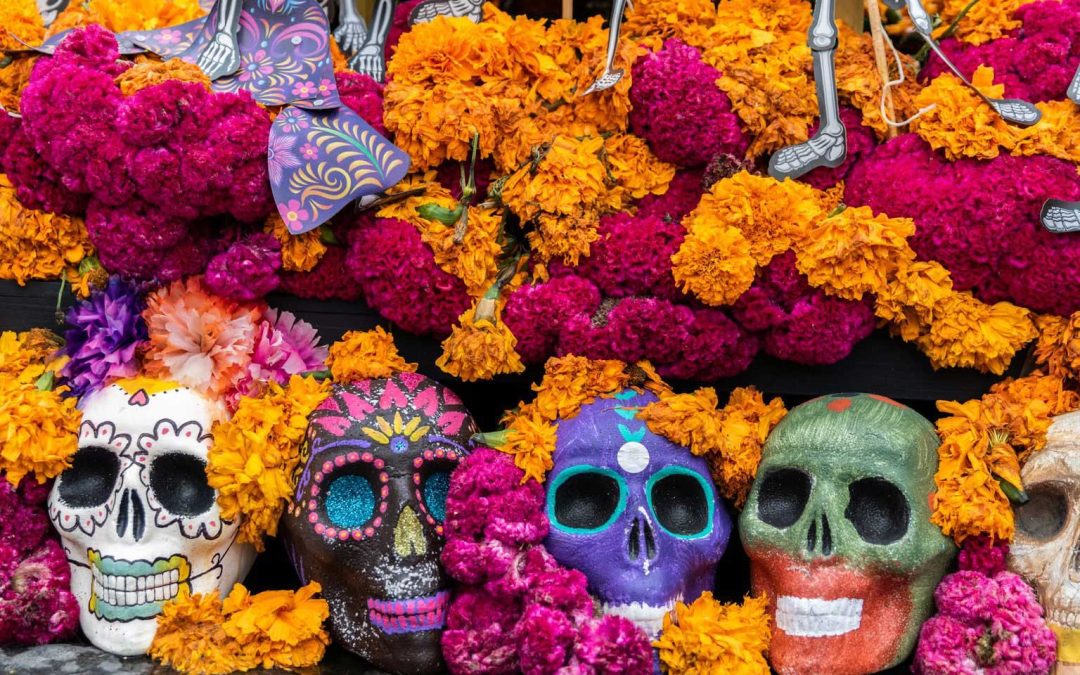
A row of colorful skulls sits surrounded by marigolds and other flowers. Both have been longstanding parts of the imagery and altar decoration during the Day of the Dead, or Dia de los Muertos celebrated every Nov. 1-2. (Image courtesy of Getty)
October 2023

Cover Story

Honoring the dead

Dia de los Muertos has colorful traditions, history in both Mexico ,  U.S.

by Corbin Crable

Very soon, get ready to enjoy a holiday with colorful costumes, delicious food, and celebrations centered around spirits.

No, Halloween enthusiasts, not that one – the other one.

Dia de los Muertos, or Day of the Dead, is a holiday with traditions thousands of years old that began in what is now known as Mexico but whose influence has spread to countries throughout the world, including the United States. Celebrated Nov. 1-2 throughout Latin America, the holiday is designed to honor departed family members and loved ones. Among those who observe the holiday, it is believed that the spirits of those loved ones return to visit their families.

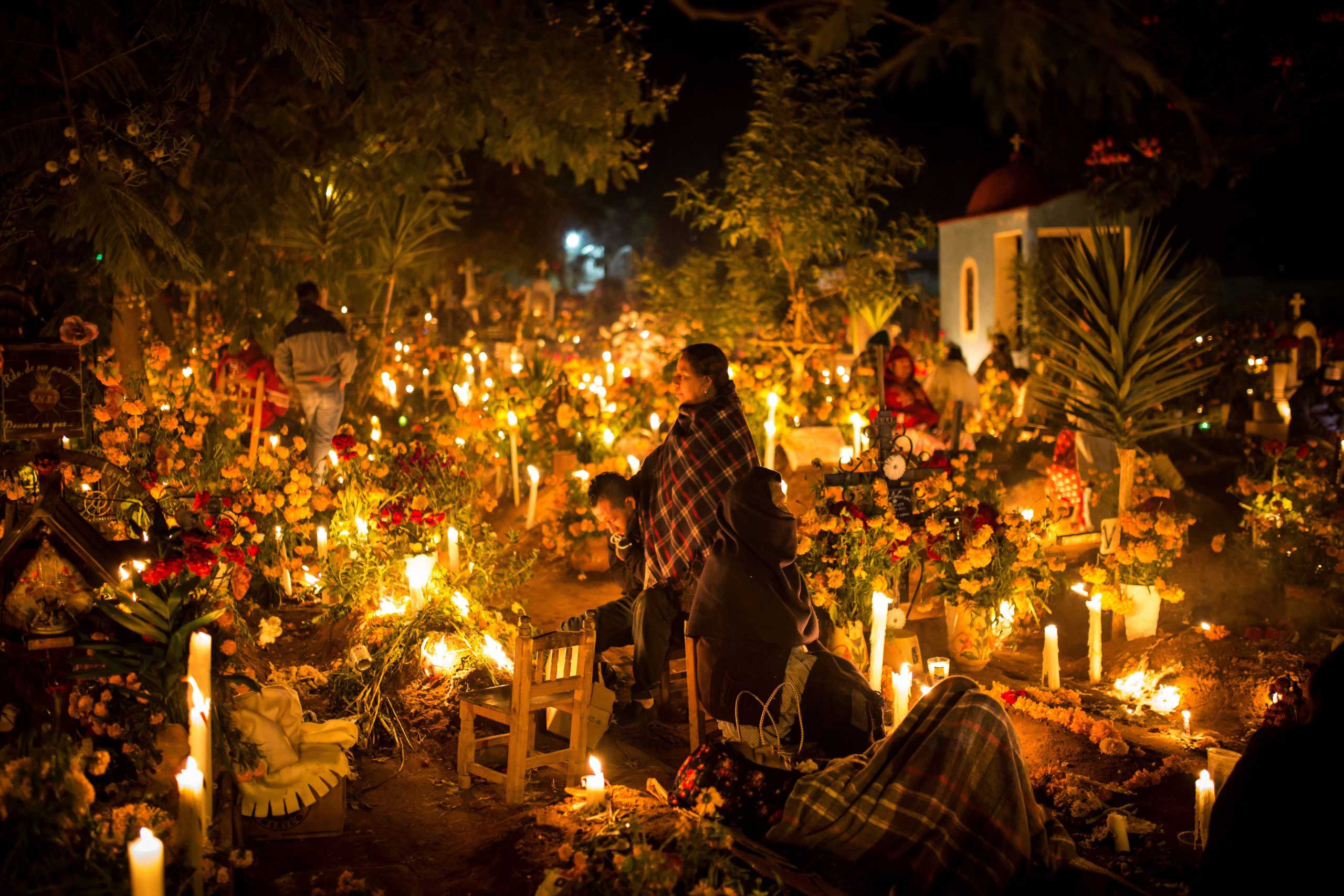
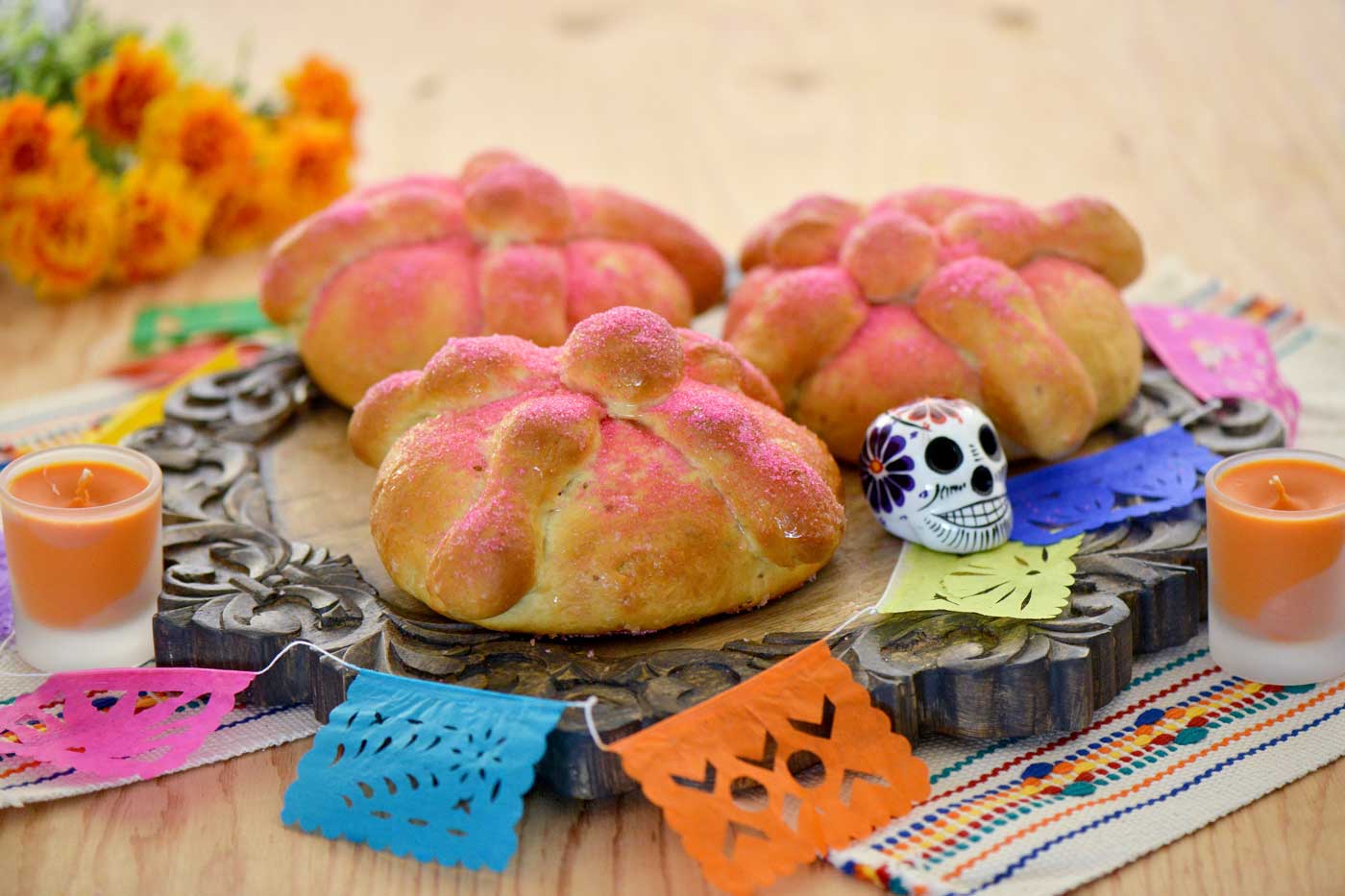
One of the largest components of the Day of the Dead is making gravesite offerings to the deceased. Family members will bring favorite foods and beverages to their loved one’s final resting place or at private or public altars (ofrendas) to nourish the spirit along its journey through the afterlife. Mexican women also will bake pan de muerto (bread of the dead), a sweet bread decorated with edible skulls made from dough, to be left at the gravesite. Many altars will also include flowers (such as marigolds, the flower most associated with the holiday) and scented candles, as it is believed that the fragrances will help guide the departed soul from the cemetery to their familial home.

For the living, in addition to paying tribute to their deceased family members, the day is filled with lots of music, dancing, food, and beautiful costumes.


Girl With Death Mask

Girl With Death Mask

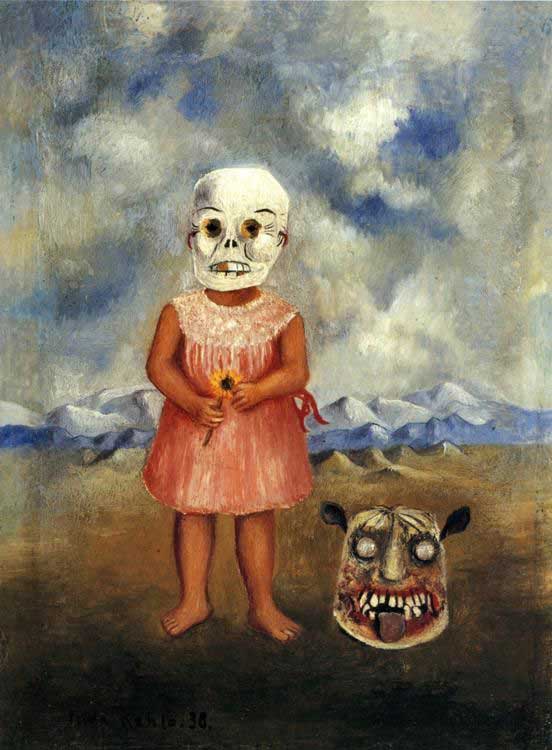
“Girl With Death Mask” by Frida Kahlo, 1938. (Image courtesy of Wilderutopia)

But first, a look back

The rituals associated with the Day of the Dead took root in Aztec and Mesoamerican cultures an estimated 3,000 years ago. In those ancient beginnings, the celebrations took place over the course of an entire month. With Spain’s brutal colonization of Latin America in 1519, however, the Spanish moved the holiday to coincide with the Catholic Church’s All Saints’ Day and All Souls’ Day, creating the tradition blended from indigenous and European celebrations to which we are accustomed today, according to an October 2022 article by Rebekah Mejorado of the Smithsonian American Art Museum.

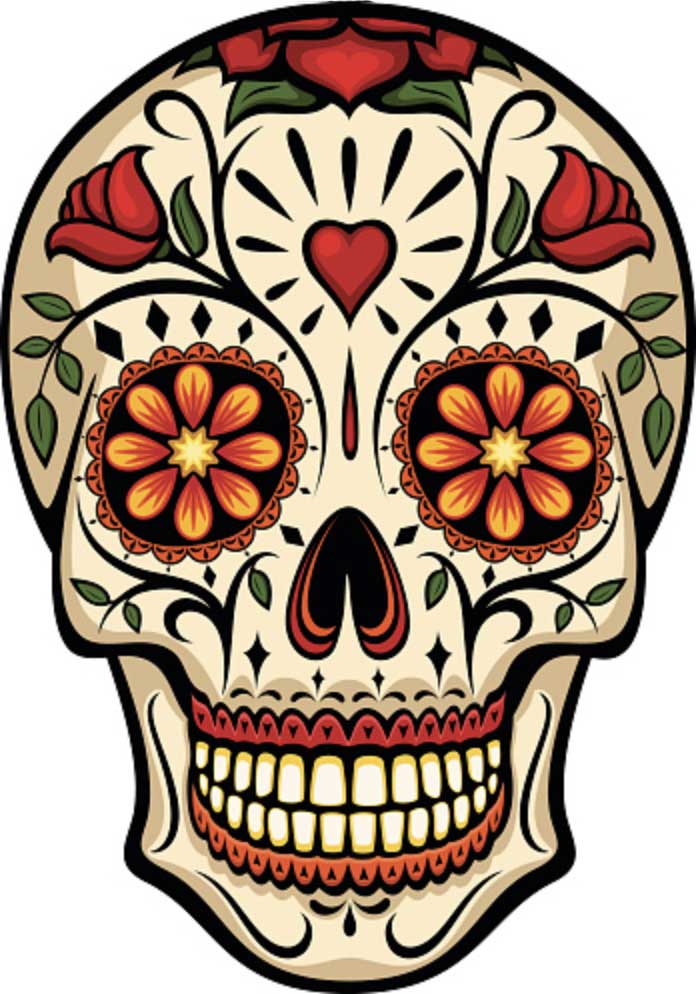
Perhaps no other imagery is more linked to the Day of the Dead celebrations than the “Calavera,” or skeleton. Unlike those skeletons appearing in imagery associated with Halloween, the Calavera is not meant to frighten or startle the viewer; instead, they are figures associated with joy and celebration. The Calavera usually appears in Day of the Dead decorations and art as either a complete skeleton or only a skull – though many are made from clay and elaborately decorated, these skulls also can be edible, too, made from sugar.

“This face has a definite aesthetic: a skull, wearing a much-embroidered bonnet resplendent with flowers,” writes Simon Ingram in an October 2019 article in National Geographic. “This is La Calavera Catrina – the ‘elegant skull’ – often simply La Catrina.”

Candles illuminate a large public display

Candles illuminate a large public display

Candles illuminate a large public display for Dia de los Muertos in Mexico in 2021. (Image courtesy of upr.org.)

sugar skull
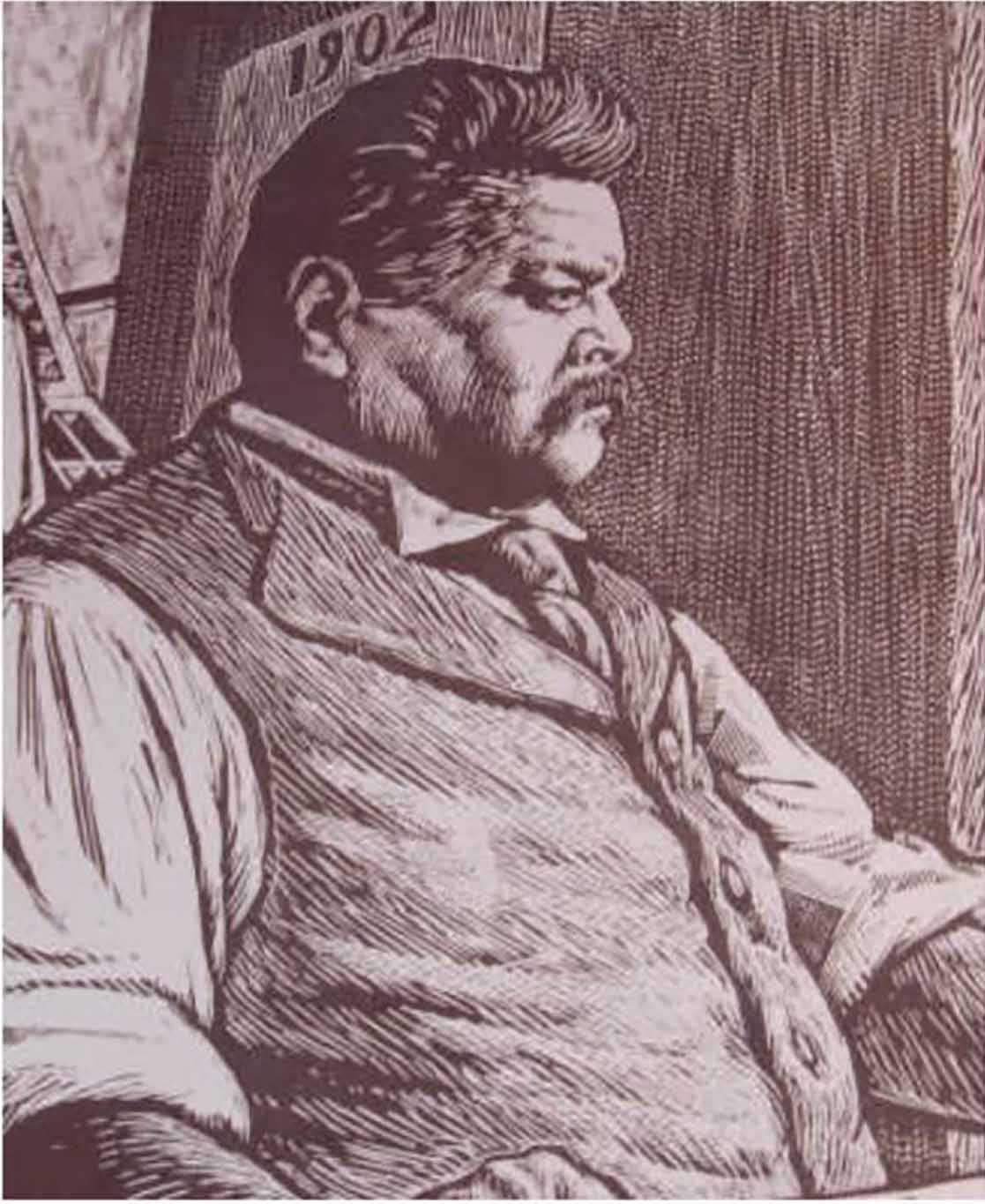
Jose Guadalupe Posada, the creator of La Calavera Catrina

Jose Guadalupe Posada, the creator of La Calavera Catrina

Jose Guadalupe Posada, the creator of La Calavera Catrina, the exquisitely beautiful skulls we associate with the Dia de los Muertos holiday. (Image courtesy of de10.com.)

Death as the great equalizer


A Mexican artist, Jose Guadalupe Posada, can be credited with creating the modern image of La Catrina more than a century ago. In the beginning, Posada’s figures weren’t solely associated with the holiday; he drew them to represent everything from “national tragedies, to current events and figures, to historical incidents and literary characters,” according to the National Geographic article.

“Posada’s sketches were sometimes prophetic-apocalyptic, such as that published in 1899 depicting a volcanic eruption, the foreground scattered with a chaotic funerary scene of Calaveras – including one rising from a grave.

The reduction of every person to bones, no matter of time, place, class or deed gave Posada’s images a homogenizing quality, the apparent message being ‘underneath, we are all the same.’”

Not just for floral arrangements

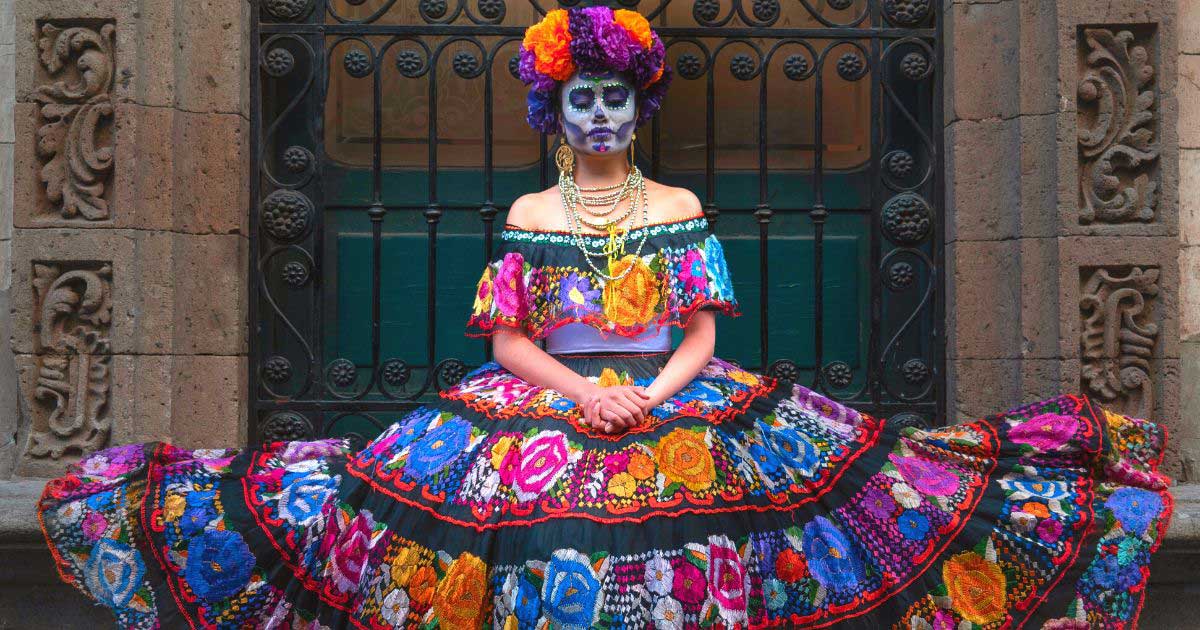
The vibrant color of Dia de los Muertos costumes contrasts with the faces painted like skulls

The vibrant color of Dia de los Muertos costumes contrasts with the faces painted like skulls, to make a combination that is truly eye-catching. Image courtesy of travelmexicosolo.com.

It’s only in the past 100 years that La Catrina has been incorporated into the joyful celebrations of the Day of the Dead, appearing not just in sugar skulls, but also in elaborately colorful costumes adorned with flowers and intricate designs. It can also still be found outside of Dia de los Muertos and in other places, such as the work of contemporary artists like Mexico’s Frida Kahlo and her husband, muralist Diego Rivera. Rivera’s 1947 mural Dream of a Sunday Afternoon, which appears in the historic center of Mexico City, depicts Posada’s Calavera Catrina as the central figure in the massive work, according to The Grace Museum in Abilene, TX.

The word “Calavera” also has a dual meaning when one refers to the Day of the Dead. Now associated with skulls and skeletons, in the 18th and 19th centuries, the word used to refer to a short, humorous poem, published on one’s tombstone to “poke fun at the living,” according to National Geographic. Today, the practice continues, with Calaveras being shared in both print and broadcast media.

Bring paper to the party

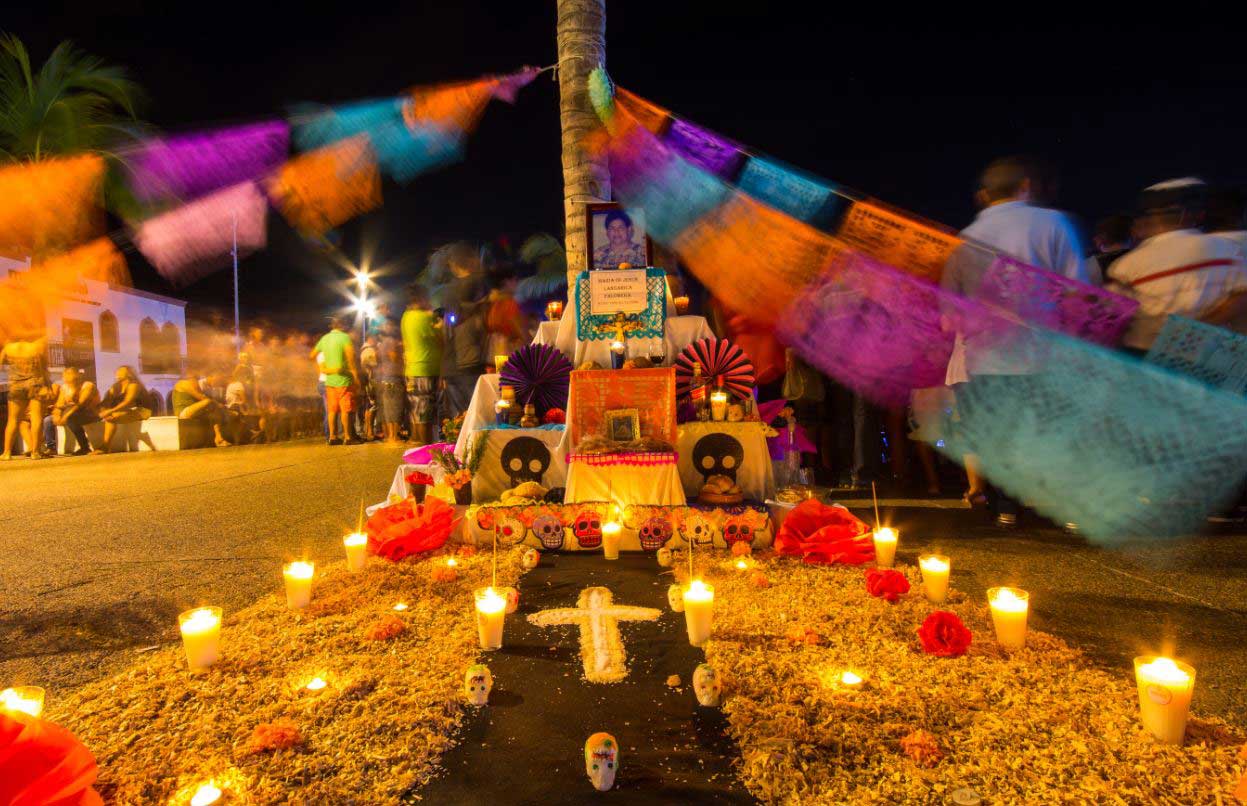
Another popular element of Day of the Dead festivities can be found in papel picado, or ‘pierced papers,’ colored tissue paper pierced with intricate designs using a knife and chisel. You can see them strung up high over streets and on altars; because they are made of tissue paper, these decorations represent the fragility of life. The themes presented in papel picado aren’t just limited to Day of the Dead celebrations, however. They also make colorful appearances for celebrations during Easter, and Christmas – even quinceaneras, baptisms, and weddings.

“Most papel picado is machine-cut today in order to mass-produce these detailed decorations, but only a few artists still continue to cut sheets by hand using a variety of chisels and knives to complete up to 50 sheets at a time,” according to California’s Chapman University.

A public altar erected for Dia de los Muertos is decorated with papel picado, or tissue paper decorated with intricate designs.

A public altar erected for Dia de los Muertos is decorated with papel picado

A public altar erected for Dia de los Muertos is decorated with papel picado or tissue paper decorated with intricate designs. (Image courtesy of Fairmont Mayakoba)

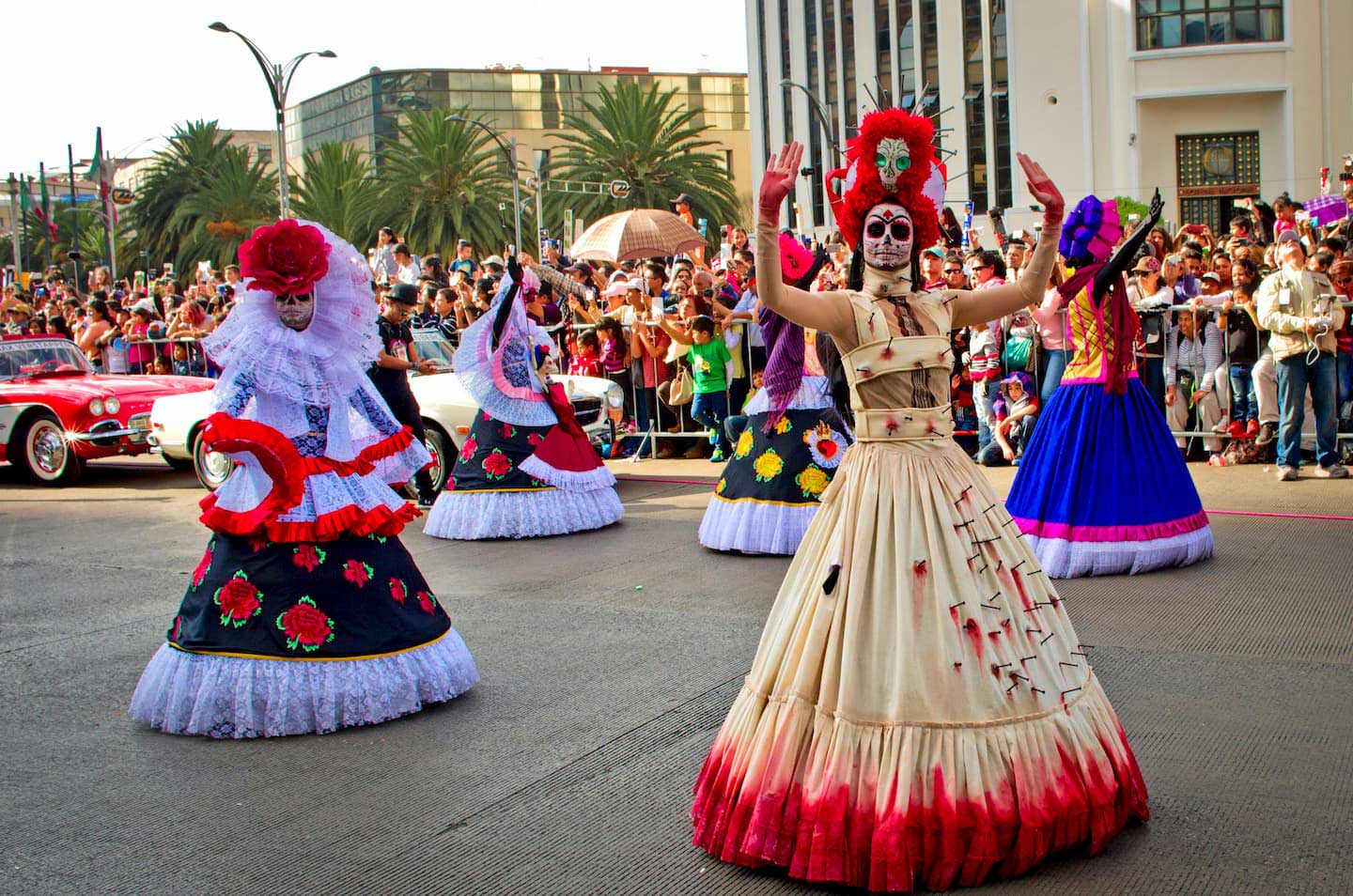
Dia de los Muertos parades

Dia de los Muertos parades

Dia de los Muertos parades occur around the world every year, with participants dressed in elaborate costumes. (Image courtesy of Facebook)

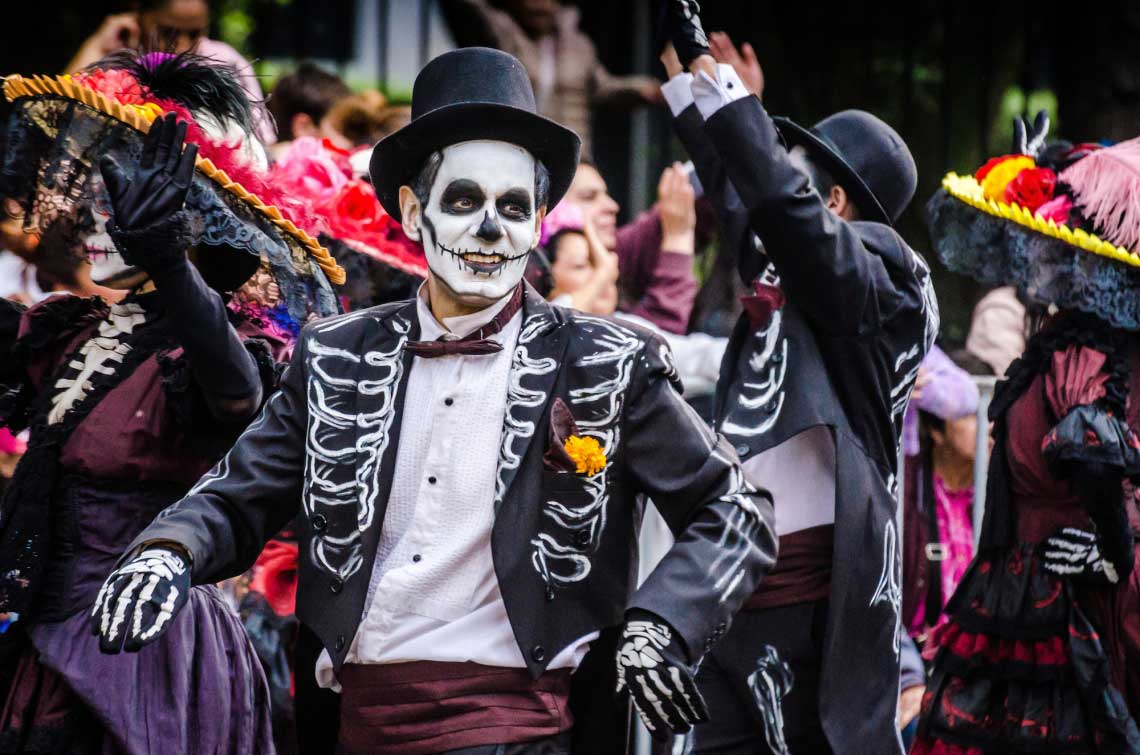
2018 Dia de los Muertos parade in Mexico City

2018 Dia de los Muertos parade in Mexico City

A participant in a 2018 Dia de los Muertos parade in Mexico City. (Image courtesy of The University of Arizona / Shutterstock)

It’s not ‘Mexican Halloween’

Though Day of the Dead festivities take place across the globe, here in the United States, it appears that celebrations of the holiday are especially grandiose the closer the state is in physical proximity to Mexico. States with high numbers of Mexican immigrants, including California and Texas, host themed parties every year, and other states with large celebrations include Louisiana, Florida, and even Illinois.

Closer to home, the holiday is still alive and well in states such as Missouri, where Kansas City’s Nelson-Atkins Museum of Art hosts an annual altar decorated by local artists and created in collaboration with local students, the local Mexican Consulate, and the Mattie Rhodes Center, a nonprofit organization offering wraparound services to individuals and families in Kansas City’s Hispanic community.
No matter where you choose to join the party and pay tribute to your dearly departed loved ones, just make sure not to ever call Dia de los Muertos “The Mexican Halloween.” Nothing could be further from the truth.

“Although dwindling in number, there are still many Americans who have never heard of Día de los Muertos (or Day of the Dead). Those who have heard of it, but don’t really know much about it, sometimes refer to it as ‘Mexican Halloween,’” according to an Oct. 30, 2017, article on USAToday.com. “While Halloween and Day of the Dead do share common roots, they are totally different holidays.”

To learn more about Dia de los Muertos, visit The Smithsonian Institute’s Mexican Museum at www.mexicanmuseum.org/dia-de-los-muertos.

pan de muerto

Pan de muerto

An example of pan de muerto, or bread of the dead. (Image courtesy of Nibbles and Bites)

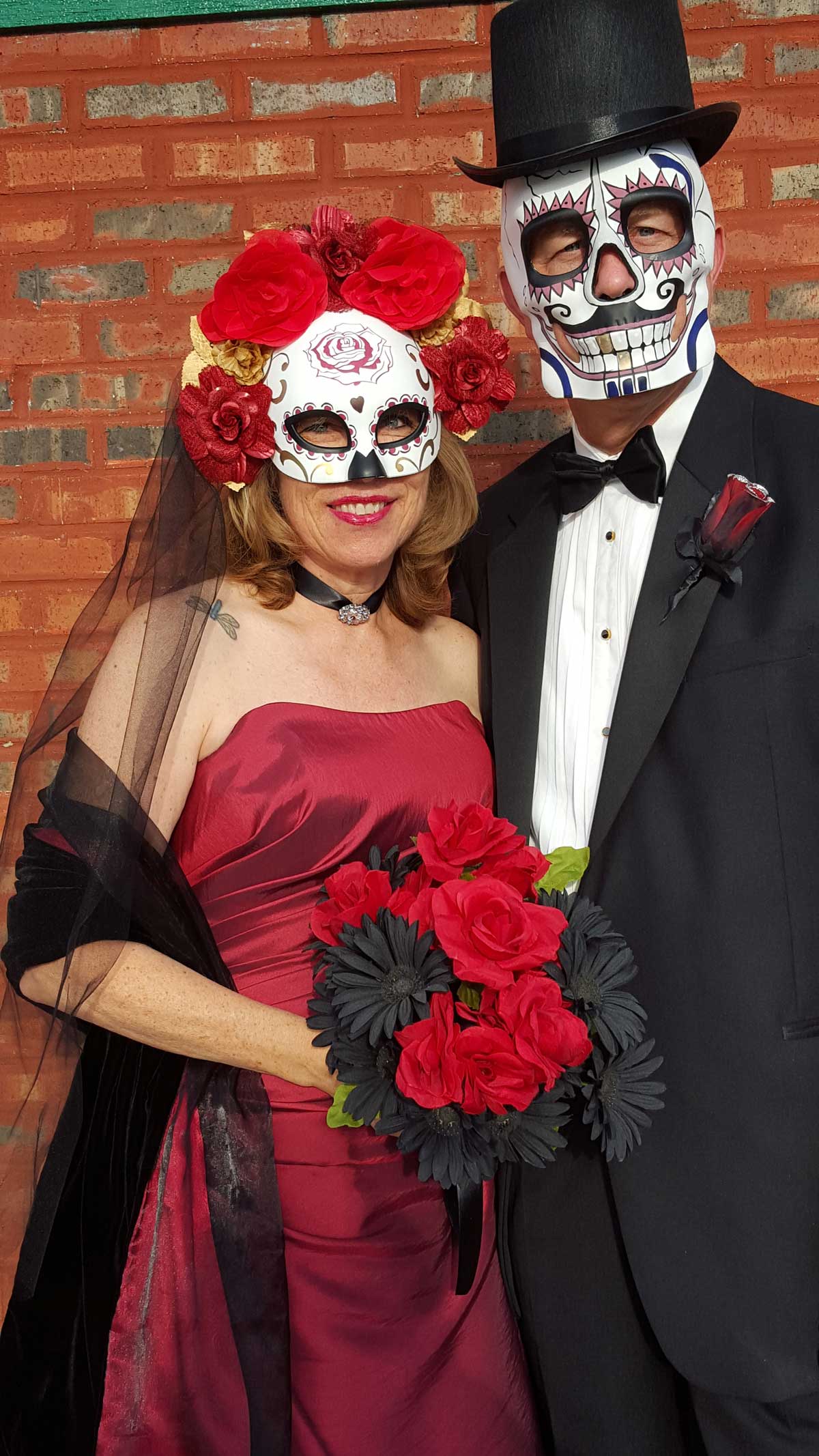
Big fans of Day of the Dead

Big fans of Day of the Dead

Big fans of Day of the Dead, Publisher Patti Klinge and her husband Brian celebrated one year as a bride and groom. (Image courtesy of Patti Klinge)