
Father Time, Baby New Year have heralded passage of time over millennia

December 2025

Feature Article

Father Time, Baby New Year have heralded passage of time over millennia


By Corbin Crable


It’s always a delight to read about the first baby of the new year born in your city, state or region – a practice that has been tradition with local news sources until recent years. A symbol of a new year – and with it, hope, health, and prosperity – you might see babies clad in a diaper, top hat, and sash representing a new year in media or antique collectibles, usually accompanied by an old man known as Father Time, who symbolizes the end of the previous year with the passage of time.

Depictions of Baby New Year and Father Time have existed since long before the antique collectibles on which they appear. Like many of our modern-day traditions, they began in the ancient world; back then, however, they weren’t yet linked to the beginning of a new year but to the changing of the seasons instead. In ancient Greece, the baby symbolized the end of winter, the start of the springtime harvest season, and the resurrection of Dionysus, Greek god of wine, vegetation, and fertility, according to a 2024 article by Elizabeth Yuko on readersdigest.com.

Out with the old, in with the new

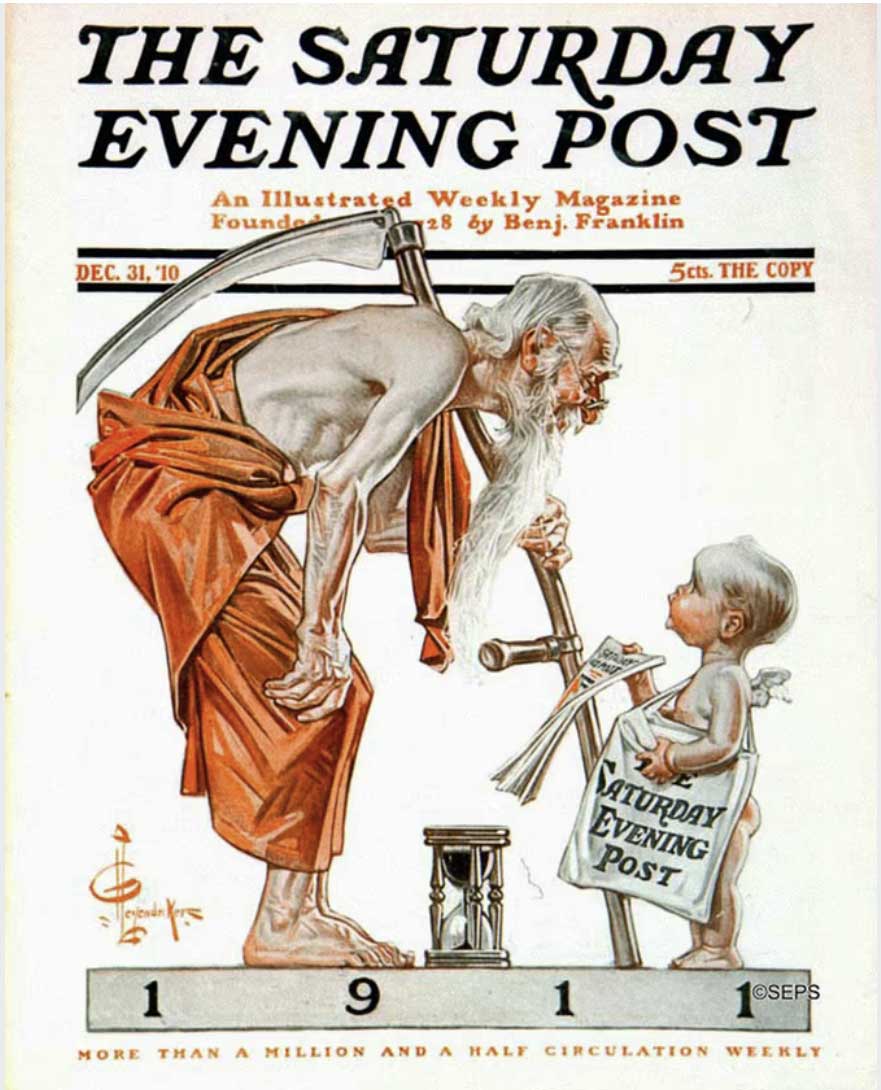
Yuko writes that the elderly, white-bearded image of Father Time is most likely drawn from Chronos, the Greek god of time, or the Roman god Saturn. Like Father Time, each was often depicted carrying a scythe, like the Grim Reaper. But (Prof. Daniel Compora of the University of Toledo) says that Father Time may have also been inspired by the two-faced Roman God Janus, who represented beginnings and endings, as well as life and death.” In many renderings, Father Time wields a scythe, itself a symbol of “the endurance of time, which eventually will ‘cut down’ all living things. In some of these renderings, too, he hands over an hourglass (and thus, his duties and responsibilities) to Baby New Year.

The image of these two characters came to the U.S. during the Victorian Era by German immigrants. Innovations in printing during the Industrial Revolution allowed for those images to be spread quickly and to a much wider audience.

“The image and concept of Baby New Year became more widespread in both Europe and the United States during the Victorian era, thanks to the massive popularity of greeting cards and postcards,” Yuko writes. “Advancements in printing technology meant that colorful illustrations could be mass-produced. In addition to Christmas cards, people sent cards to wish others luck in the new year — many of which were adorned with pictures of Baby New Year, sometimes alongside Father Time.”
 

Gingerbread cookies

In this Saturday Evening Post cover welcoming the year 1911, Father Time bestows to Baby New Year his knowledge gained over the course of the past 12 months. (Image courtesy of the Saturday Evening Post)
Gingerbread cookies

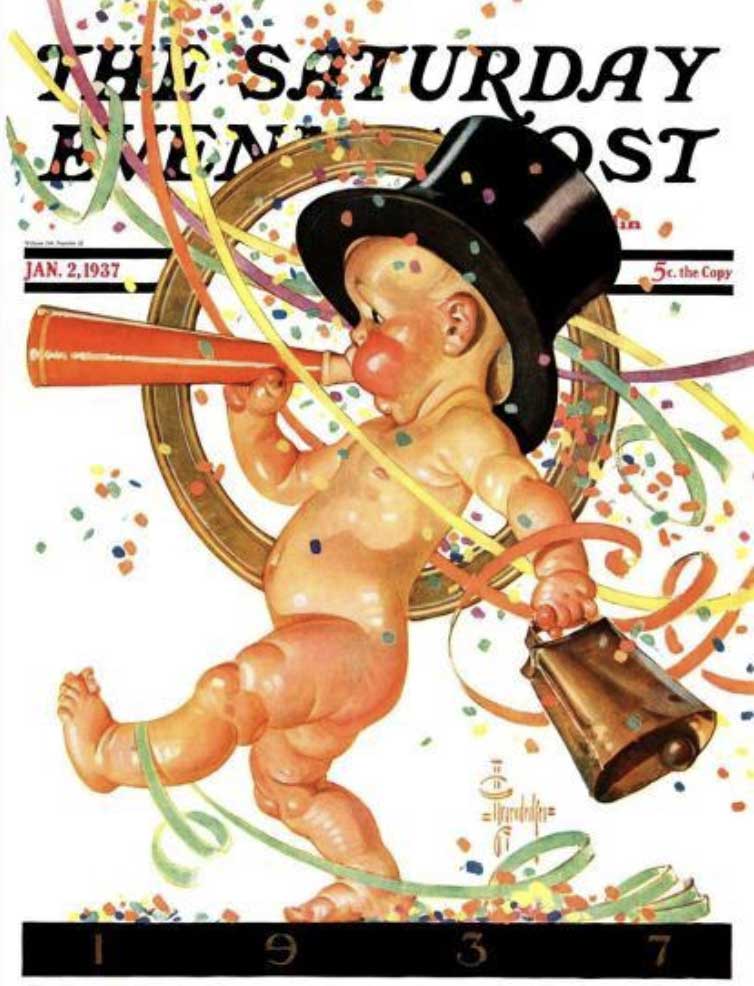
IThis cover of the Saturday Evening Post, published in 1937, was one of dozens penned by illustrator J.C. Leyendecker, who also acted as a mentor to artist Norman Rockwell. (Image courtesy of the Saturday Evening Post)


In ephemera and media

At the turn of the century, both figures would be regularly printed on greeting cards and postcards (many of which sell on a variety of websites today for just a few dollars apiece). Americans in the 20th century would come to recognize Baby New Year and Father Christmas thanks to the talents to illustrator J.C. Leyendecker (a mentor to Norman Rockwell); Leyendecker drew the pair of characters for the Saturday Evening Post between 1907 and 1943.

The two characters leaped off the printed page and onto the small screen in 1976, with the release of the stop-motion animated film “Rudolph’s Shiny New Year,” in which Father Time and Santa Claus join forces to rescue an escaped Baby New Year named ‘Happy,’ who ran away after being teased by others for having big ears, according to a 2021 article by Ashley Leath on countryliving.com.

Compora, Yuko writes, says that though we stil recognize these two iconic characters today, we now associate the new year with our own goals and aspirations instead.

“The spirit of rebirth or renewal is still present, but people apply it to themselves instead of looking for an artistic representation,” Compora says in the Readers Digest article. “That’s why people begin the new year with resolutions designed to improve their lives.”


Contact Corbin Crable at editor@discovervintage.com.
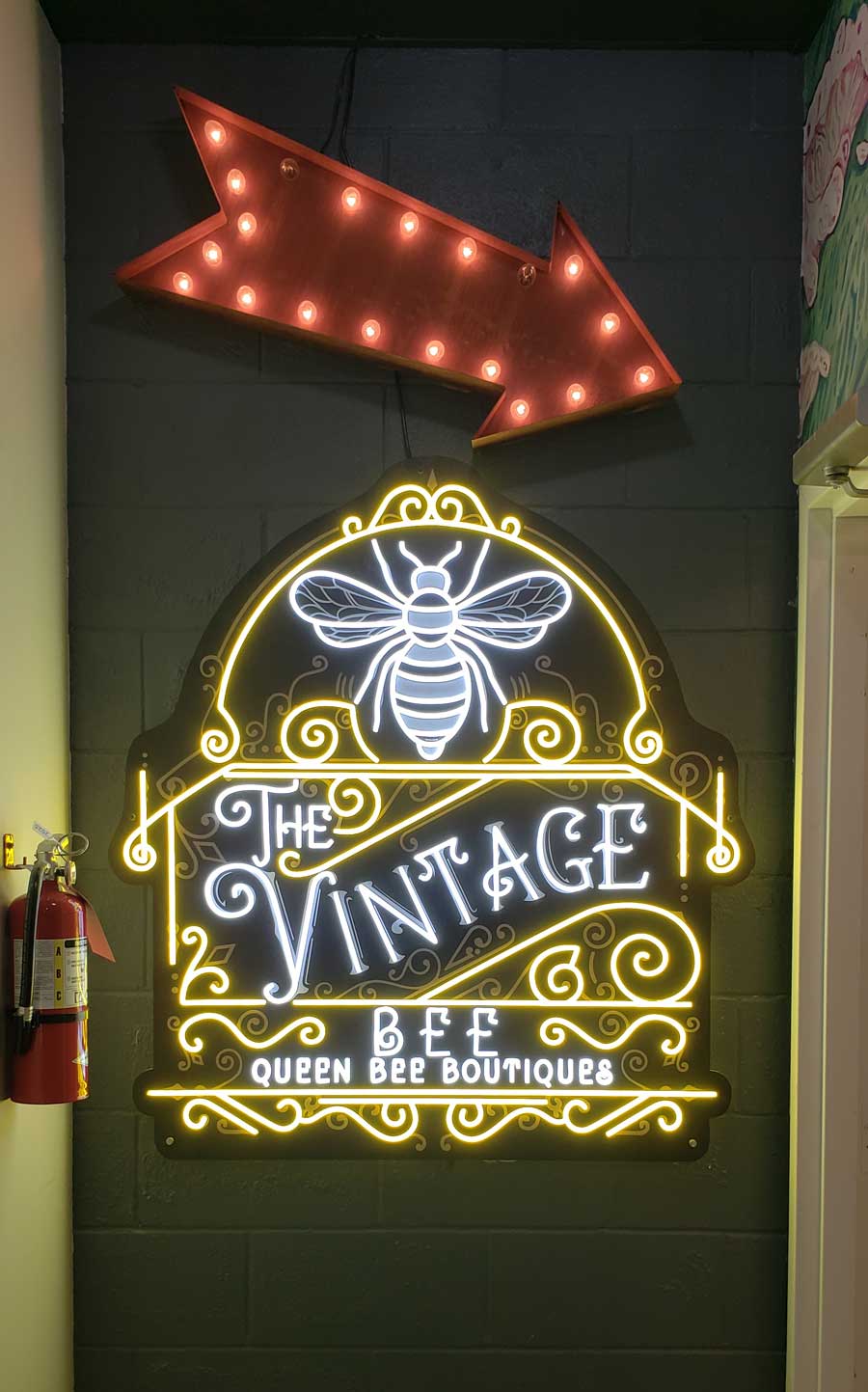
 

A Honey of a Store: Queen Bee Boutiques, Vintage Bee offers lots of local shopping under one roof

September 2025

Feature Article

A Honey of a Store: Queen Bee Boutiques, Vintage Bee offers lots of local shopping under one roof


By Corbin Crable


When it comes to the magical combination of offering boutique and vintage items under one roof, you could call Casie Bateman the Queen Bee.

The Blue Springs, MO, store she co-owns with husband David, Queen Bee Boutiques and The Vintage Bee, boasts a staggering combined 34,000 feet of retail space.

“We’re one store, with two different retail places within the store – boutique and vintage,” Bateman explains. “We are really the only place that does that.”

On any given day, you’re likely to see Bateman working the floor, greeting customers and chatting with vendors while David works behind the scenes, balancing the books. Joining Bateman in what she calls her ‘hive’ are two managers among a little fewer than a dozen employees. Tasked with overseeing the store’s operations and social media and marketing, those trusted managers keep the store buzzing with activity.

David and Casie say they still get plenty of time with their daughters — Maisy, 12; Story, 8; and twins Delilah and Haven, 3.

“The twins were actually the determining factor for me to start my career up,” Bateman recalls. “I was traveling, doing sales for software companies, and David is a real estate investor. We decided that we can make this amazing thing, and now we’re helping a lot of families by doing this because we have nearly 300 vendors in the store and we have a positive impact on the community.”

That impact is growing quickly. The Batemans just bought the store next door and want to open a bistro in that space within a year. The store has already experimented with offering food, with one of its vendors offering coffee and pre-made meals for purchase. Eventually, Bateman says she and David would like to add live music nights and board game nights to enhance customers’ shopping experience.

Bateman says her store’s impact also extends to helping others in Blue Springs learn new skills, as well as the ins and outs of entrepreneurship.

“We partner with Hillcrest Transitional Housing. We even give one of its residents a free space; she is housed in the The Vintage Bee, and she makes candles,” Bateman explains. “All of her sales go back into her own pocket.”

Later this year, too, Bateman says, the store will partner with a local high school to create a program similar to the TV show “Shark Tank.”

“The kids will make things and become entrepreneurs,” Bateman says of the upcoming Hive and Thrive Mentor-ship Program. “So we have been doing things with Hillcrest for months now, and the high school program will be this fall.”

Gingerbread cookies

Follow the signs to the lower level to find The Vintage Bee vendors with an amazing variety of vintage and handmade items for sale.

Gingerbread cookies

Second Saturdays at The Bee is Kansas City’s newest must-visit shopping event, happening every month at Queen Bee Boutiques & The Vintage Bee in Blue Springs. Each Second Saturday transforms our 34,000 sq. ft. shopping destination into a vibrant, community-focused experience featuring live music, food trucks, and an ever-changing lineup of pop-up vendors. With over 250 local makers, boutiques, and vintage curators all under one roof, shoppers can browse everything from fashion and home décor to rare antiques and one-of-a-kind gifts.

Every month brings a fresh theme with special activities, photo-worthy moments, and surprises, plus a huge plant sale hosted by Pop-Up Plants KC. It is the perfect outing for families, friends, and anyone who loves to shop local.

Queen Bee Boutiques and The Vintage Bee are open seven days a week; for more information, call 816-988-8023 or visit www.facebook.com/queenbeeboutiqueskc.


Gingerbread cookies

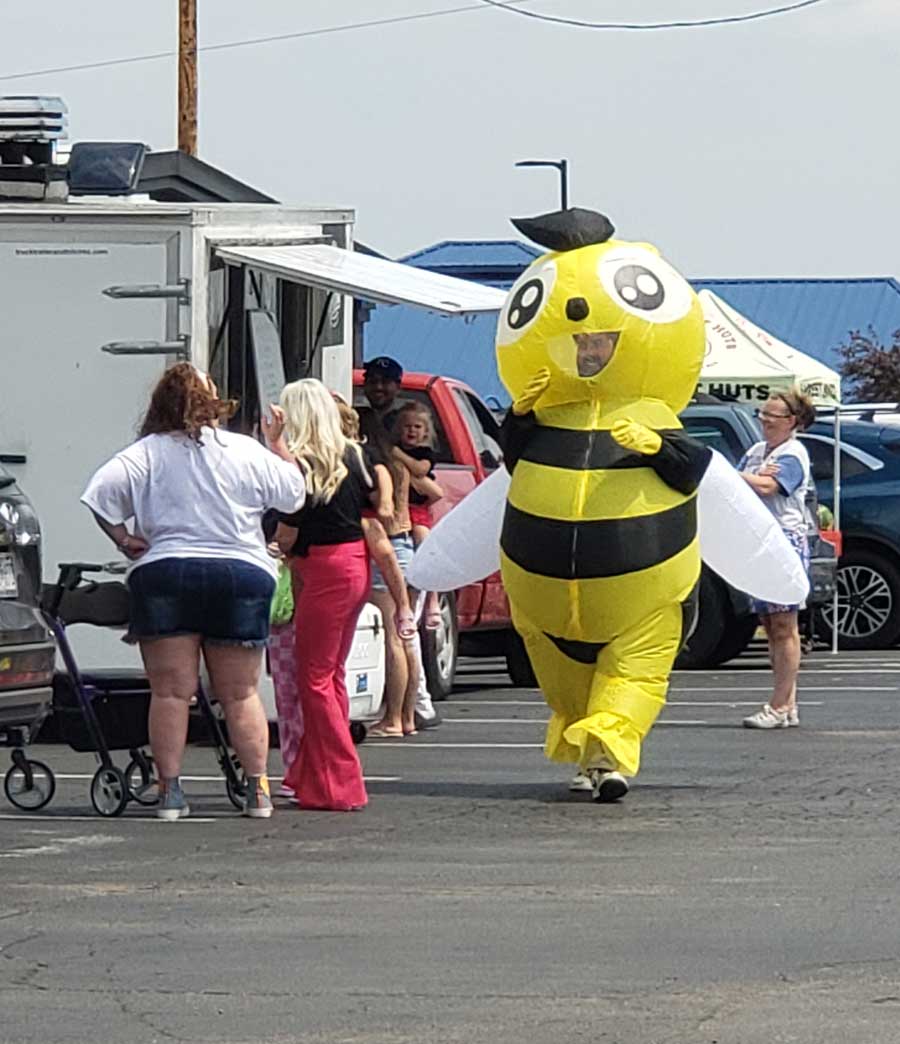
David, wearing the giant bee suit, buzzes around to entertain visitors.

Gingerbread cookies

It’s a familty affair at Queen Bee. Above, Casie and David Bateman pose with their children, Delilah, Haven and Maisy. (not pictured, daughter Story, 8).


So far, Bateman says, she has been humbled by how well the store has been received by Blue Springs shoppers and the city’s Chamber of Commerce alike.

“The Blue Springs community has been so supportive. The vendors have done an amazing job of coming out for us every single day. The shoppers have been great, and so have the local businesses and charities.”

Bateman is passionate about shopping locally, and Queen Bee Boutiques and The Vintage Bee offer the ultimate opportunity to invest dollars and other support into the community.

“Our overall theme is that we want people to become successful and more confident. And the world needs more small businesses,” she says. “When you shop locally, you’re supporting your teachers, neighbors, police officers, people trying to further themselves.

That success, Bateman adds, will have a noticeable effect.

“If you’re trying to do good in your community, that good will come right back to you. It makes a positive impact around you. And you’re keeping your community interesting, you’re pouring into the families around you. It’s pretty impactful,” Bateman says. “You can focus on supporting your community by supporting small businesses. When you are shopping in a small business, you are investing in someone’s dream. People need to remember that. It’s easy to shop big brands, but by shopping locally, you’re investing in your community.”


Gingerbread cookies

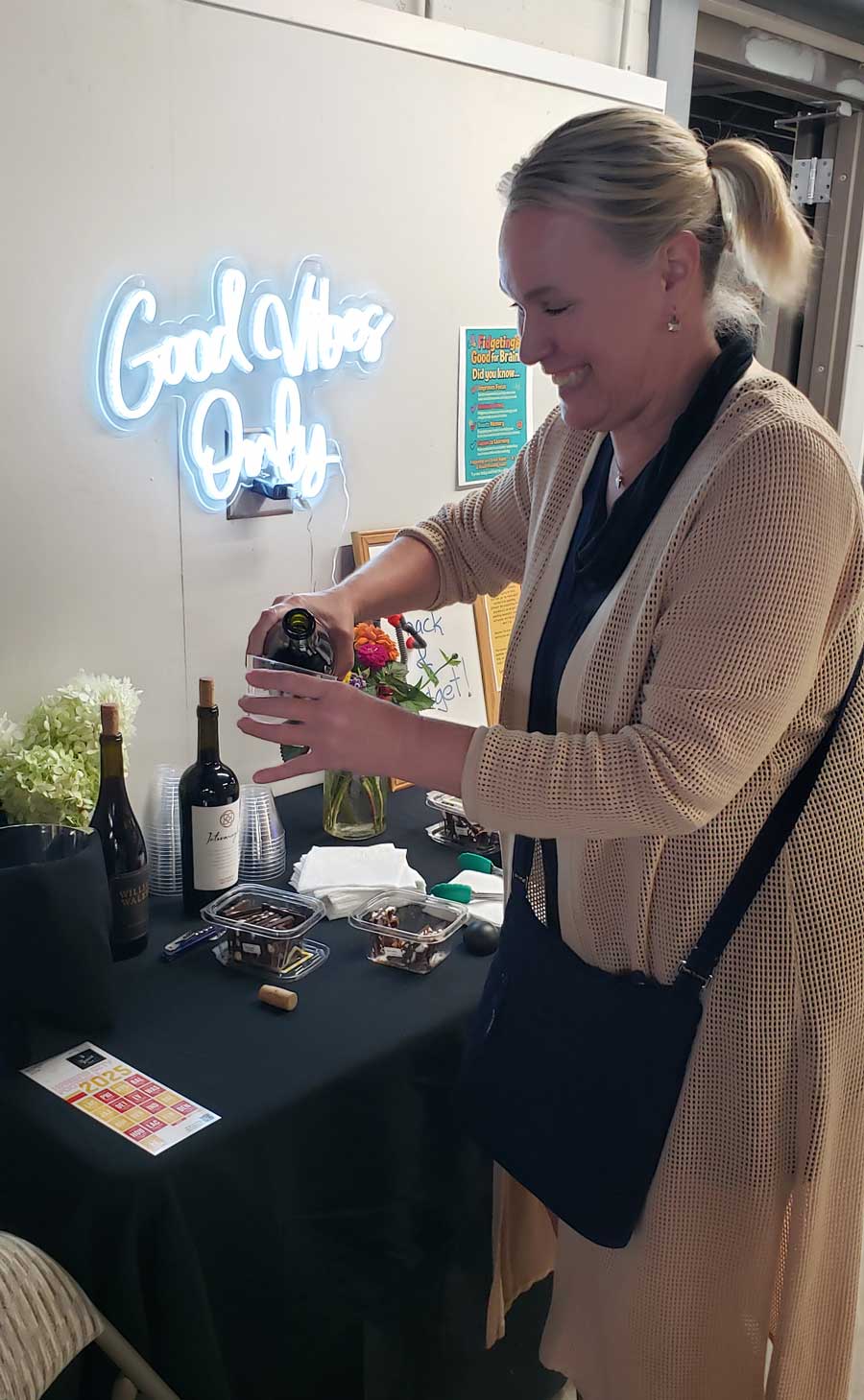
Grab a glass of wine to sip as you shop or a piece of chocolate to nibble. Friend Marcela Nitschke helps out with the wine.

Gingerbread cookies

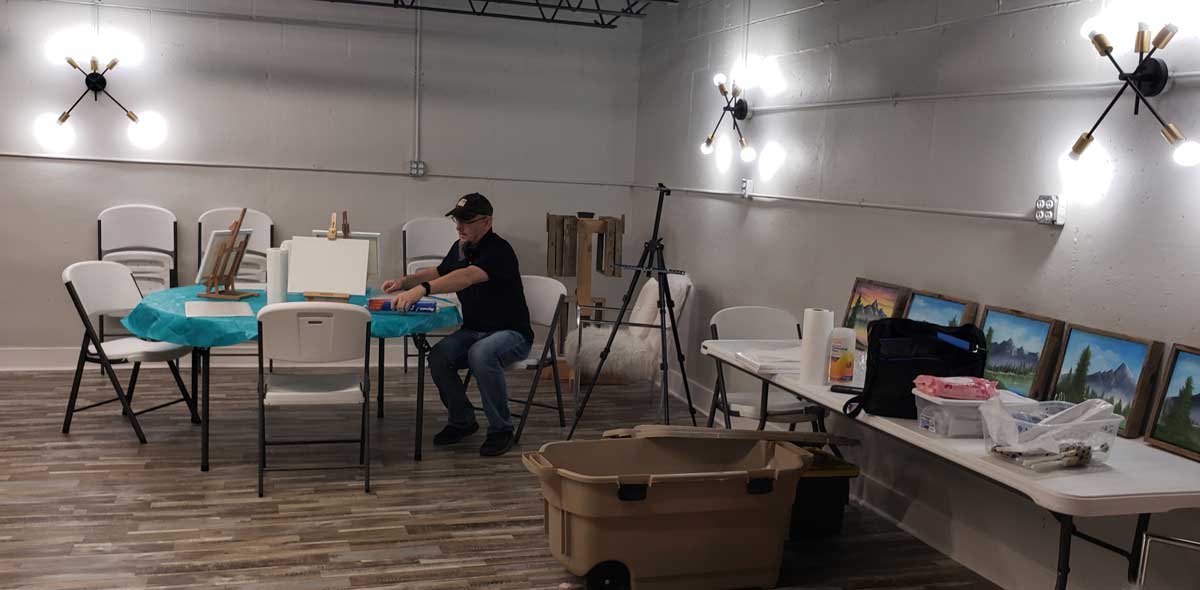
Matt “Coach” Abele prepares for the painting class.

Gingerbread cookies

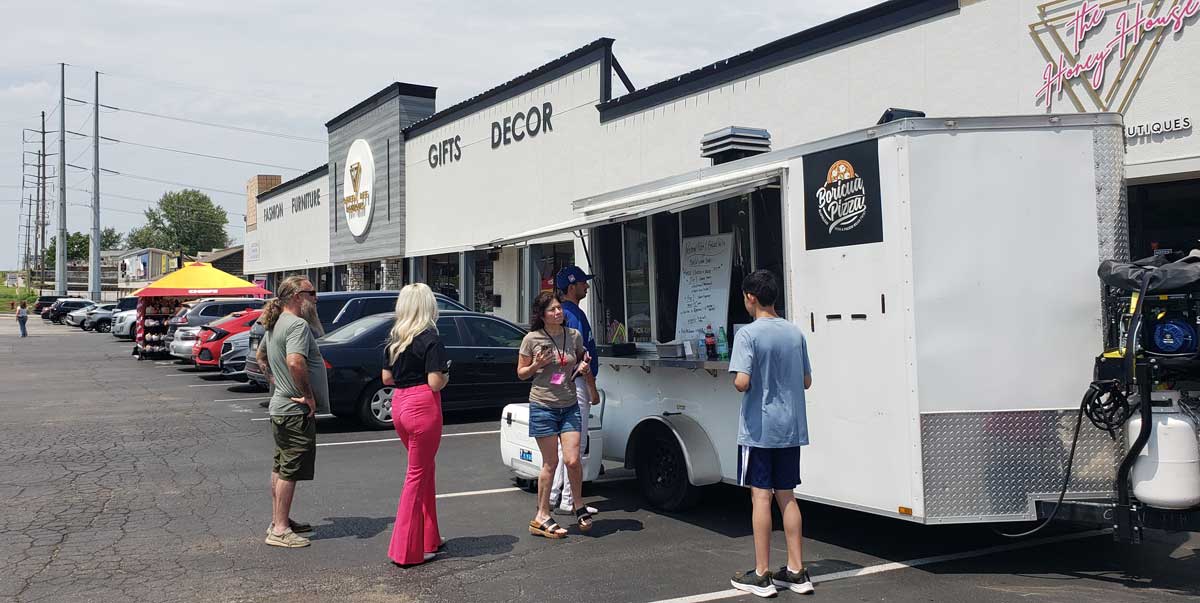
Local food truck vendors provide delicious lunch options for shoppers.

Contact Corbin Crable at editor@discovervintage.com.

 

Mardi Gras… all parades lead to Easter?

March 2025

Feature Article

Mardi Gras… all parades lead to Easter?


By Patti Klinge


New Orleans’ Mardi Gras festival has been in full swing since Jan. 6 with revelers whooping it up ahead of the Lenten season, which is just weeks away.

The Louisiana city’s final celebration takes place March 4 on Fat Tuesday. The day before the start of Lent is filled with parties and celebrations throughout the U.S., and even in many other cities around the world.

Mardi Gras is rooted in the traditions of various cultures before the solemn season of Lent.

Mardi Gras season began Jan. 6, the Epiphany, but its duration changes each year based on Easter. It always ends on Fat Tuesday, the day before Ash Wednesday, which marks the start of Lent.

Fat Tuesday this year falls on March 4. Mardi Gras is French for “Fat Tuesday,” according to Merriam-Webster.

Historically, on Mardi Gras, people were meant to use “all the fats in the home before Lent in preparation for fasting and abstinence,” Britannica reports. Christians would consume rich, fatty foods, such as meat, eggs and cheese, before the period of Lenten fasting, according to the History Channel.

The first Mardi Gras festival in what is now the U.S. may have taken place on March 3, 1699, where New Orleans was founded, Mardi Gras New Orleans says, but other think it began in 1703 in Mobile, AL.

Catholics also call Fat Tuesday Shrove Tuesday or Shrovetide, the conclusion to Ordinary Time.

Famously, Brazilians and Venetians celebrate the holiday with parades, masks and costumes. In both Italy and Brazil, the festival is known as “Carnival.”


Gingerbread cookies

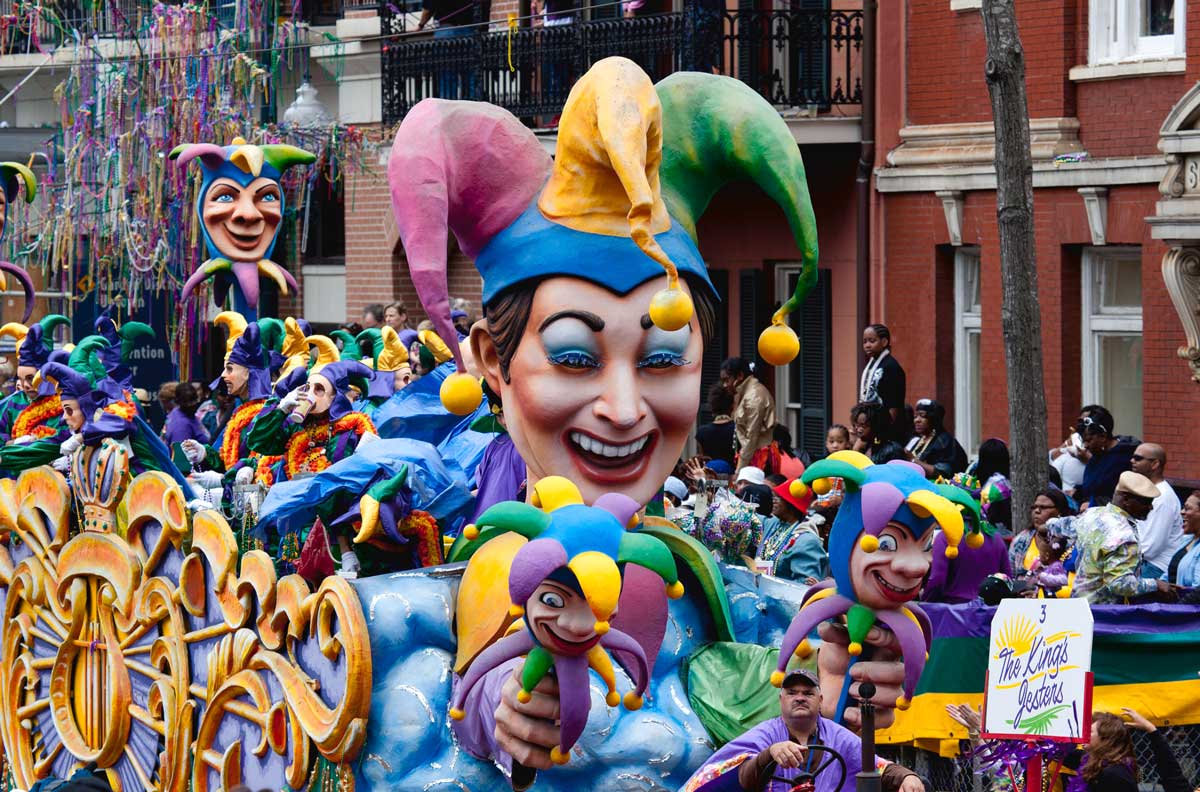
Revelers celebrating Mardi Gras in New Orleans, LA. (Image courtesy of Wikipedia)


Ash Wednesday is the first day of the liturgical season of Lent that falls 6½ weeks before Easter each year.
Members of the Catholic Church, ages 18 to 59, are required to observe Lent and fast on Ash Wednesday. Ash Wednesday and Good Friday are known as obligatory days of abstinence. Children 14 and older are expected to abstain from meat.

The observance of Ash Wednesday dates to the 11th century, according to the Vatican, but the tradition of marking one’s forehead with ashes is rooted in the ancient Hebrew custom of “clothing oneself in sackcloth and dusting oneself with ashes as a sign of penance,” according to Hallow, an app for Catholic prayer and meditation.

Many revelers wear purple, green and gold, the traditional colors of Mardi Gras. Others go all out, dressing in costume for parades and other festivities.

This article originally appeared on Detroit Free Press: “Fat Tuesday marks the end of Mardi Gras season and leads into Lent,” by Jalen Williams, Olivia Munson and Anthony Robledo.

For more about Mardi Gras history, go to Wikipedia.org and search on “MardiGrasInNewOrleans.”


Liberty, MO’s Clay County Museum: historic treasures hiding in plain sight

February 2025

Feature Article

Liberty, MO’s Clay County Museum: historic treasures hiding in plain sight


By Ken Weyand


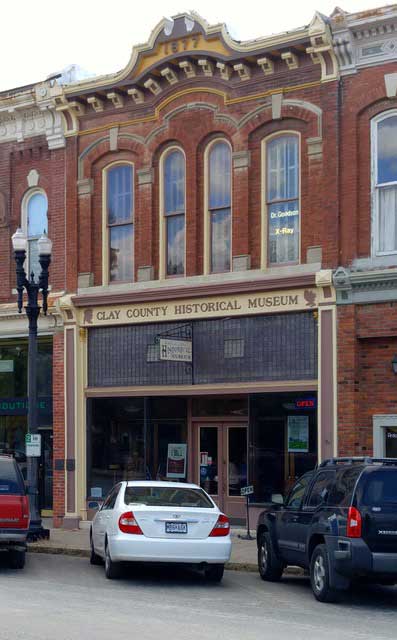
Most visitors to the Historic Square in Liberty, MO, walk past the old museum building at 14 Main St., unaware of the treasures of local history housed inside. Many stop to admire the window decor-ations created by a dedicated team of volunteers depicting various themes and changed periodically. A block on the side of the building indicates its origins to be 1877 – but that was the date of the building’s remodeling, after a fire damaged the original 1850s structure.
For most of its life, the building served as a drug-store, beginning in 1856 with the first druggist, W.A. Hall. Daniel Hughes Jr. partnered with Hall in 1870, bought him out in 1873 and remodeled the building four years later. In 1877 he sold the building to Joseph C. Simmons, whose name remains on the entry tiles.

Simmons installed a soda fountain just inside the front doors, but discovered it was more work than reward, and replaced it with a candy stand. Today the original soda fountain’s stools can be seen, and the candy stand has become a gift shop with a large variety of books featuring area history.

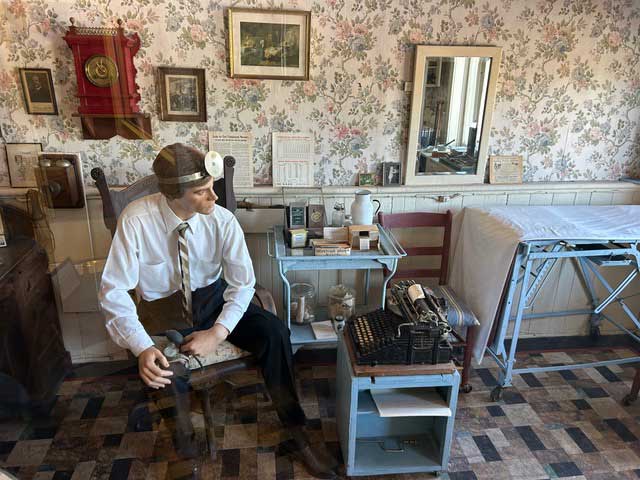
Dr. William H. Goodson practiced medicine on the second floor for 64 years. When he died in 1963, his office was preserved as it had been in 1920, with his original medical equipment, including many instruments the doctor fashioned by hand. It remains a popular visitor attraction.

The Clay County Museum Association bought the building in 1964. Today it is filled with historical artifacts from throughout the county. Its three floors preserve the memories of those who visited the doctor, bought penny candy or just stopped in to chat with the druggist around the old pot-bellied stove in the back room.

Artifacts include arrow points from area Native Americans, military items from the Civil War and both world wars, old appliances, musical instruments, toys, historic photos, posters, and much more. A rare harp piano can be seen on the second floor, along with a doll collection, period furniture, old documents, and other fascinating items. The lower level displays include a diorama featuring workers assembling stained glass in an early-day factory, an old-time loom, farm equipment, and a variety of interesting household items.

Visitors are greeted on the first floor by a centuries-old Spanish cannon from the Phillipines that once graced the old Court House lawn. In addition to a piano purchased in New York and brought to Clay County in the 1850s on a steamboat, visitors can see old toys, telephones, early-day costumes and countless other items to whet the appetite of any history enthusiast.

Closed in January, the museum reopens in February. Admission is free (with cash donations gladly accepted). Hours are 1-4 Monday – Friday and 10-4 Saturdays. For more information, visit www.claycountyhistoricalsocietymuseum.org.

Gingerbread cookies

The Clay County Museum building, on the west side of the Liberty Square, was built in the 1850s. The second floor was added in the 1870s. (Museum photo)

Gingerbread cookies

The second-floor doctor’s office, restored to the 1920 era, includes instruments made by Dr. Goodson. (Ken Weyand photo)

Ken Weyand is the original owner/publisher of Discover Vintage America,
founded in July 1973 under the name of Discover North.
Contact Ken at kweyand1@kc.rr.com.


Hayrides are a treasured autumn tradition

September 2024

Feature Article

Hayrides are a Treasured Autumn Tradition


By Corbin Crable


The hayride is a fun autumn activity to enjoy with your family or a group of friends, allowing you to enjoy the countryside, the changing colors of the leaves on the trees, and a beautiful sunset on a cool night. The activity isn’t as nearly as old as one might guess.

Hayrides have been around since the 19th century, when innovations in transportation allowed people from urban areas to vacation in the countryside. Farmhands would transport hay bales using horse-pulled wagons, and farmers conceived of the idea of the hayride in order to celebrate the arrival of the autumn season. More recently, they’re organized to make a little extra money for their farms during months that might see little to no activity.

In those days, visitors would sit atop the 15- or 20-foot-tall bales of hay piled onto the cart pulled by the horse – sounds like a recipe for accidents, doesn’t it? In the decades following, they would simply sit on a surface strewn with straw, the carts now pulled by tractors.

“Back in the day, especially in small-town America, there were family farms everywhere. If you didn’t live on a farm, you almost certainly had an uncle, neighbor, or friend who did,” writes a blogger who only calls herself ‘Staz’ and manages storiesbystaz.com. “They’d fire up the tractor, hook it to a wagon, and throw on a few bales of hay or straw for seating, and you were good to go.”

Much like a trip to the beach, after which you’d end up finding sand in your clothing for days, hayrides offered a similar pitfall – hay everywhere when you’d return home.

“Of course, the hay or the stray didn’t always stay neatly tucked in each bale. After a hayride, you might find pieces of straw in your shoes, your hair, or even in your underwear,” Staz writes. “Those pesky little straws and hay bristles might be sticking in a few unmentionable places. All that jostling around on the wagon could get those tiny straws stuck in the most unusual places.”

Though a sunset hayride would offer a picturesque view of the horizon, the blogger says hayrides after dark are especially exciting, especially around Halloween, with the possibility of spooky mischief peeking at you from behind each tree or over there in the pumpkin patch.

“Sometimes we went on hayrides to a pumpkin patch, or we had what were called haunted hayrides. There were hayrides with bonfires after the ride, or Halloween parties,” she writes, adding that if you were lucky, you might even get to ride through a covered bridge. “There were late-in-the-season rides and the adults would cut down a Christmas tree and tie it to the wagon for the ride home.”

Though hayrides could provide a good jump-scare or two during the autumn and Halloween, they also make for a romantic date for a pair of sweethearts.


Gingerbread cookies

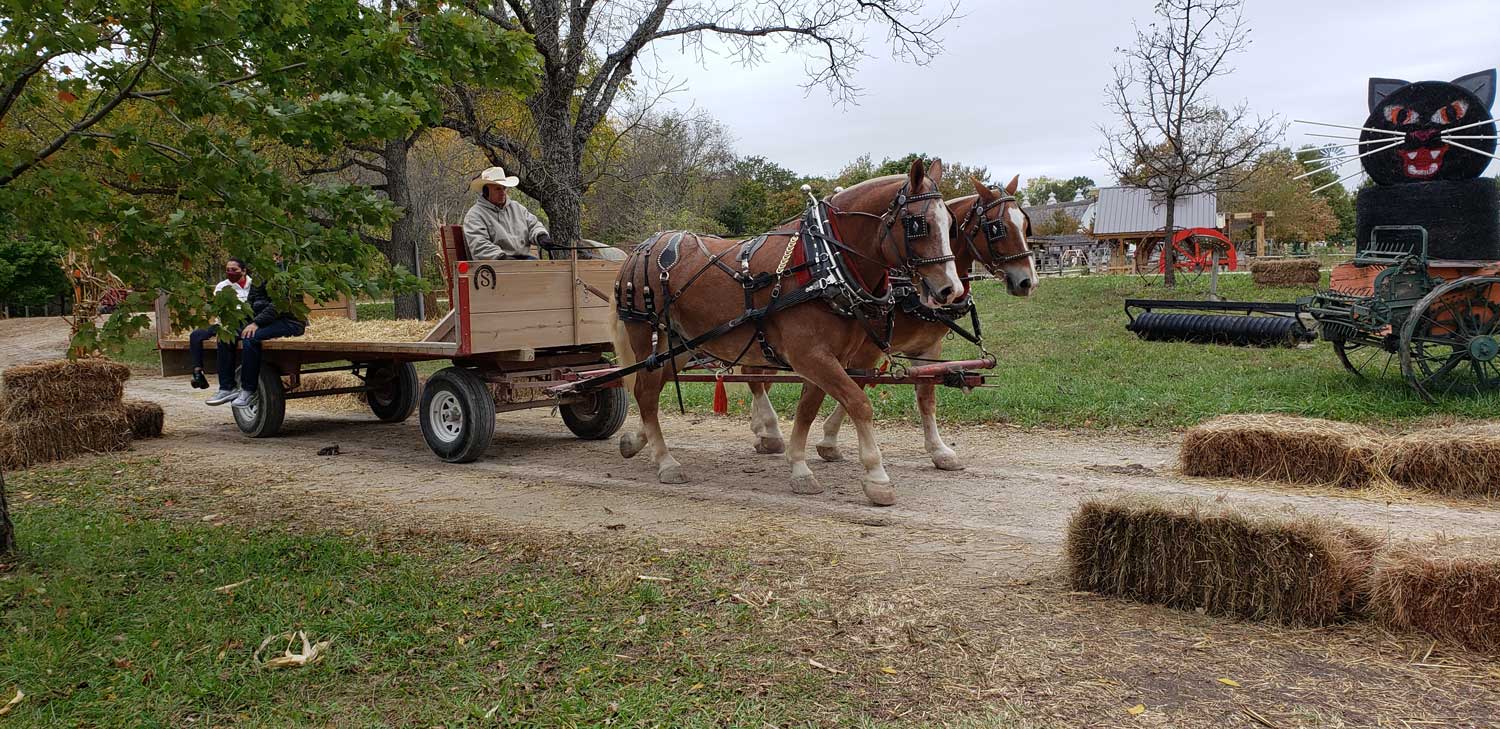
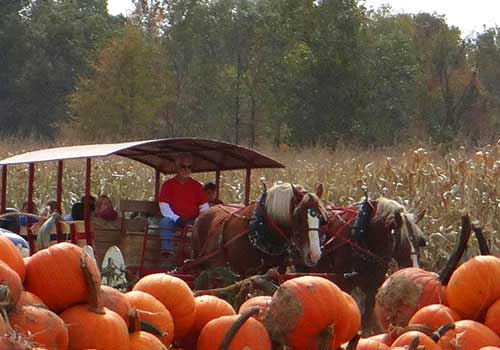
The hayride out to the pumpkin patch is one of the highlights of attending “Pumpkin Hollow” each fall at Deanna Rose Children’s Farmstead in Overland Park, KS. (Photo by Patti Klinge)

Gingerbread cookies

A hayride winds through a pumpkin patch, one of the most popular sites for this family-friendly fall activity. (Image courtesy of Shaw Farms Market)

“When you got older, kids would pair up to make out,” Staz writes. “Some would slide down between the bales where adults couldn’t see them.”
Hayrides might seem like an endangered activity today, mostly due to lawsuits filed by adults whose children were injured or who even fell off the cart.

“In all fairness, hayrides could be dangerous,” Staz observes, “but like so many other things, people might have gone a little overboard to make them safe.”

Many parents fondly remember an autumn hayride with their children as a beloved tradition.

“One of my favorite childhood memories is my first hayride at the old Benjamin Ranch in South Kansas City. So when our oldest was a toddler, I couldn’t wait to take her on her very first hayride. I still love thinking about that sunshine-y day as the horses slowly drew us around the trail, even as I clutched at her wiggly body to keep her from crawling off the wagon,” writes Jane Martin on kckidsfun.com. “Fortunately, as the kids got a little older, the rides became easier – and much more fun. I’ll never forget the joy in my son’s 3-year-old face when he first realized the horses were moving the cart!”

Now, the hayrides that are still offered are usually relegated to a few laps around a small property. But for those who remember the hayrides of years past, there’s no comparison.

“Hayrides were one of many fun activities we enjoyed back in the day,” Staz says.


Gingerbread cookies

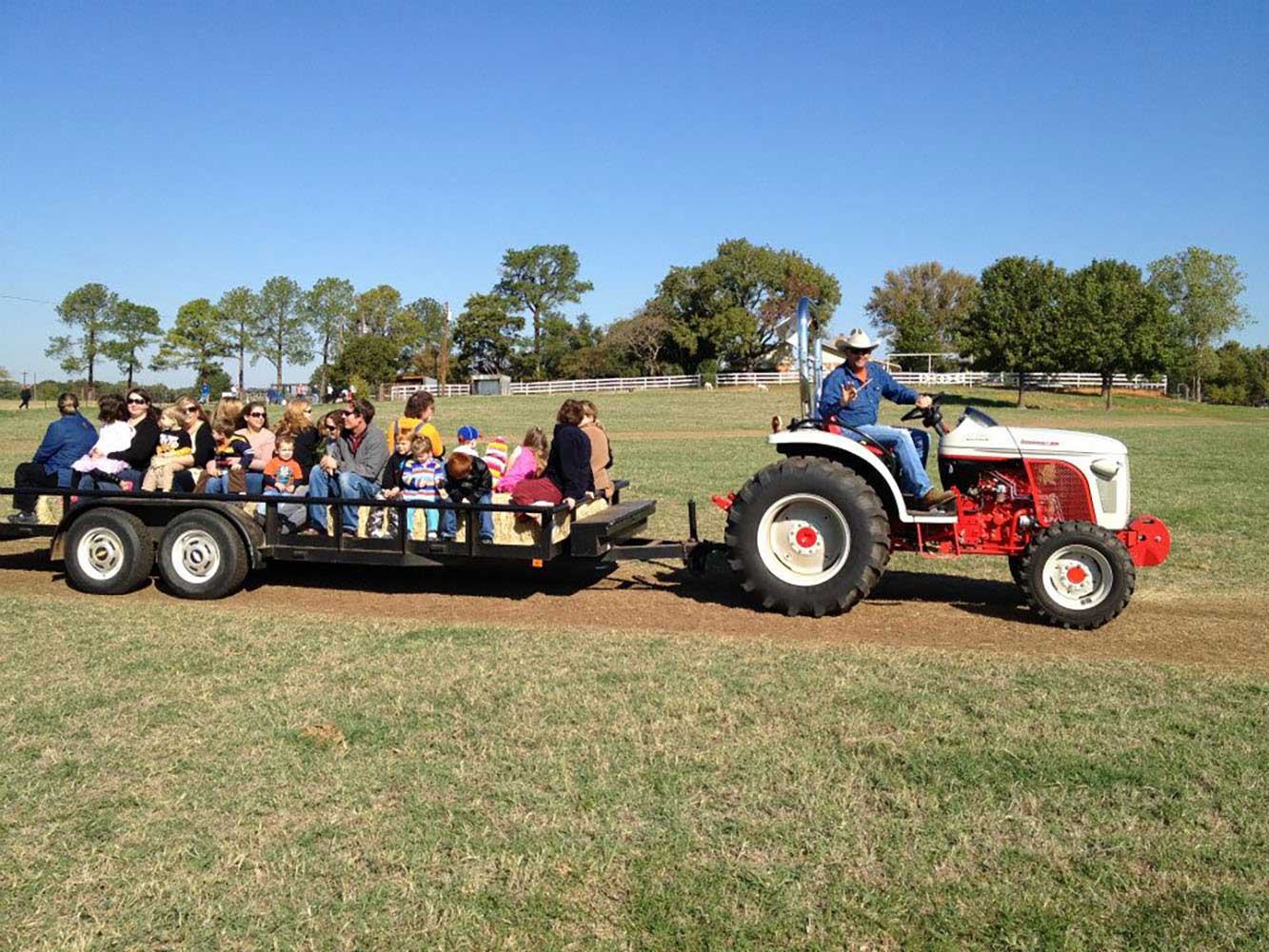
Many farms or small businesses in rural areas offer hayrides for kids and families, especially during the fall season. (Image courtesy of Hall’s Pumpkin Farm / Facebook)

Contact Corbin Crable at editor@discovervintage.com.