
April 2026
Good Eye
You might see a geisha girl in a teacup
by Peggy Whiteneck
I purchased a Japanese lithophane (AKA lithograph) teacup at an antique mall several years ago. Unless it was marked as such or unless one looked carefully, it would have gone unidentified as a lithophane. Typically, lithophane porcelain included an image of the face of a Japanese woman in traditional hairstyle and kimono collar; the image was visible only when held up to a light. In teacups, the lithophane would have been visible when lifted to the lips for drinking. Many sources trace the invention of the lithophane process itself to the 1820s in France, when they were made in many options, including standalone portraits.
Much later, lithophane wares were popular with the Japanese export market and were made exclusively for that market, as Japanese buyers themselves had little interest in the somewhat kitschy form. They were made mostly from the late 1930s to 1950s (with some later examples also known).
According to Asian porcelain expert Jan-Erik Nilsson, lithophanes were found almost exclusively on the bottoms of teacups, even when there was an entire tea set of which they were part. He also has an interesting theory about why we don’t see these teacups prior to the late 1930s, i.e., before the invention of teabags: “there would not have been much use [for] a picture in the bottom of a cup since it would have been hidden by the loose tea leaves” (https://gotheborg.com/qa/dragonware.shtml).
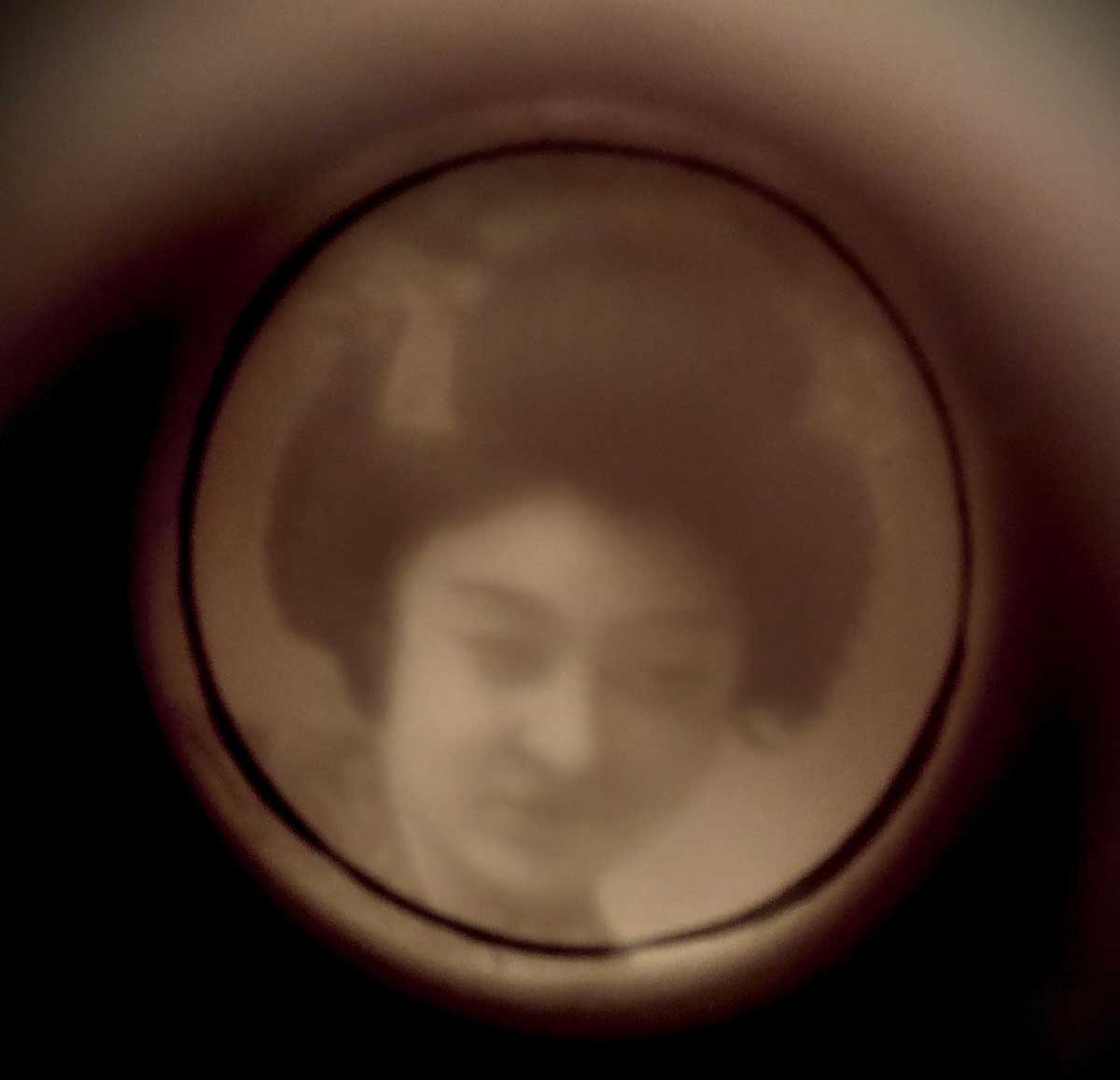
Hidden image in tea cup
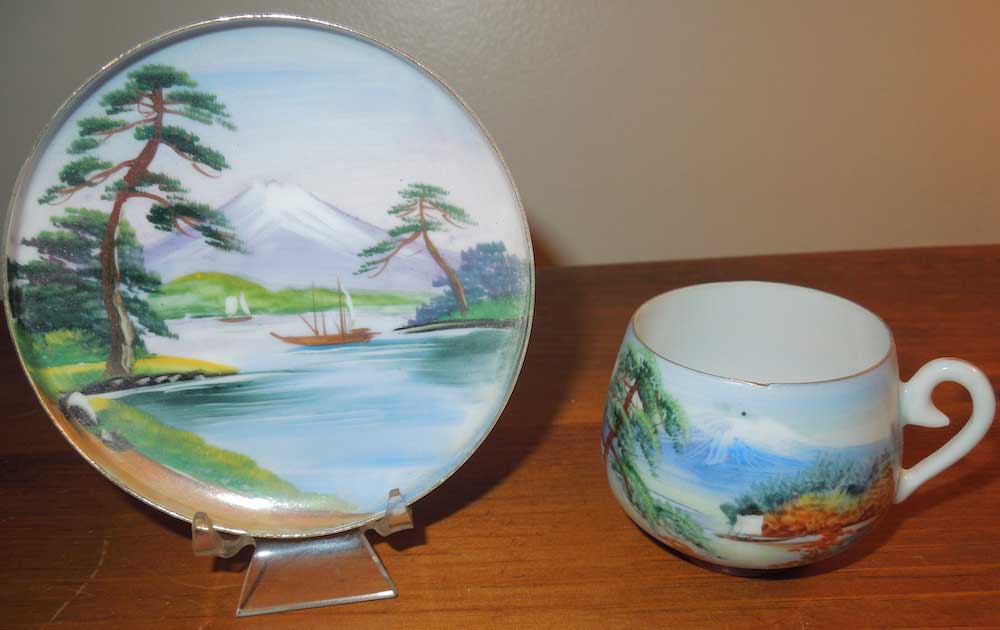
Noritake teacup and saucer
This Noritake teacup and saucer features a Geisha girl’s head as a lithophane image in the bottom of the cup. (Image courtesy of the author)
The scenery on the outer cups and on the saucers feature decoration that was made for a Western-taste market that would have been familiar only with the surface of Japanese culture, the quality of which painting is also variable from maker to maker (As a general rule in Japanese porcelain collecting, the more “white space” there is in the scenic design, the more likely it would have been marketed to residents of Japan themselves; items made for export to Western countries tend to be lavishly decorated with no unpainted porcelain visible on the colored surface). Lithophane sets of this type are sometimes referred to simply as “geisha girl” porcelain. They were popular with American soldiers returning home from World War II (Relatively few of these lithograph tea sets featured images of naked ladies, in which case you couldn’t tell whether they were geishas or just some random well-endowed women!).
The lithophane image is made from different layers of porcelain that form the Geisha image when the bottom of the cup is held up to light. The image itself appears as a well-defined shadow when held to light, gray and/or black in the earlier images although later 20th century versions made beyond the 1950s began to feature color.
Many geisha lithophane wares were made in a moriage style, in which some of the external porcelain consists of raised enamels, which some have described as being akin to cake frosting. This style, if not carefully applied, can look messy. It works best when thinly and sparingly applied rather than thickly slathered on.
The Kutani mark in Japanese lettering is found on some of these tea items but, as in the teacup and saucer pictured here, without the country of origin because they were part of the trade to American servicemen. In other words, they were not exported, which would have required the country of origin in the mark.
Not every tagged item in an antique shop has been adequately or accurately researched. This is also true of online sales, some of which erroneously date geisha girl wares to the origin of the earliest lithograph production in the 19th century. Geisha lithophane porcelain is generally not expensive. Though there were entire tea sets made of it, many lithophanes in antique shops consist of single cups and saucers. These can be purchased for around $25; when you see prices on geisha girl porcelain in three figures, you should seek a coherent explanation from the seller for what makes that item that special.
Peggy Whiteneck is a writer, collector, and dealer living in East Randolph, VT. If you would like to suggest a subject that she can address in her column, email her at allwritealready2000@gmail.com.