
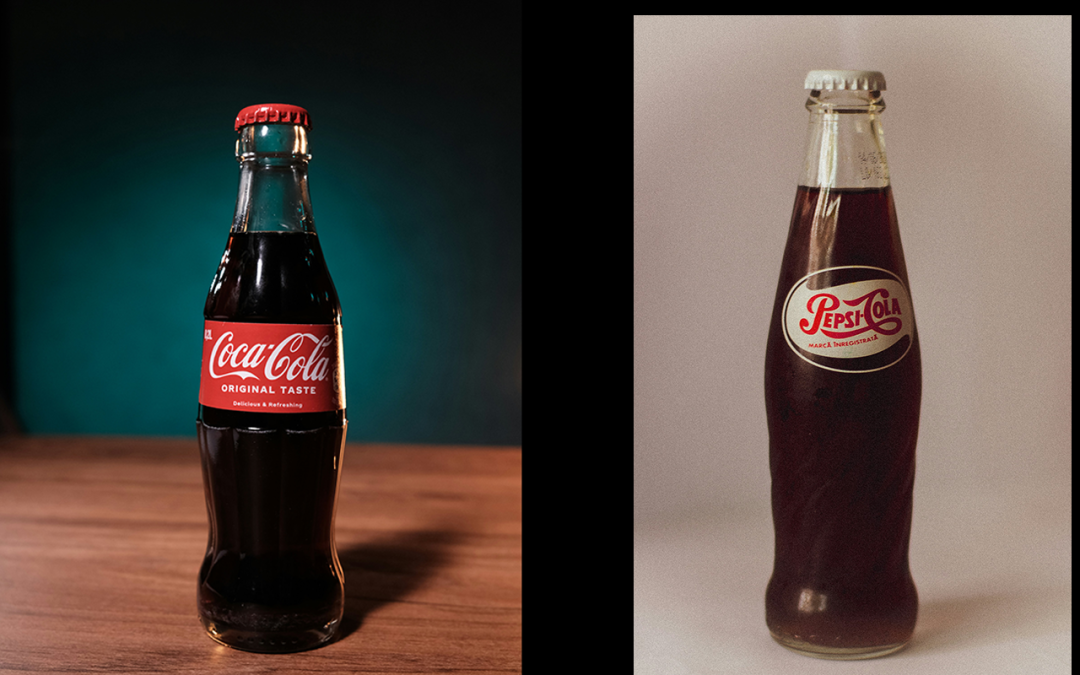
Photo by Fabian Schunk on Unsplash and Photo by Iulia Buta on Unsplash
March 2026
Everything Old
Coca-Cola’s not-so-secret ingredient
by Corbin Crable
Before we get into the history of Coca-Cola collectibles in this month’s issue, let’s address the elephant in the room – or, in this case, the adorable, anthropomorphic, digitally-created, white polar bear mascot in the room.
Growing up, the rumor that Coca-Cola originally contained cocaine made schoolchildren giggle and titter with surprise. It felt like a fun, naughty little secret, and now we were in on it. When you consider it, the tale kind of makes sense. How else were our parents and grandparents supposed to walk that five miles to school each day, uphill, in a foot of snow? Surely they had to have help in the form of a little liquid pep.
A July 25, 2021, article in USA Today reports that Coca-Cola’s original recipe included extract from the coca leaf, the plant from which cocaine is derived. The National Institute on Drug Abuse confirms that the beverage was originally marketed as medicine; at the time Coca-Cola was invented in 1886, cocaine was legal and could be found in many drugstore remedies. But from the beginning, the makers of Coca-Cola faced a quandary. If they admitted the beverage contained cocaine, they would be sharing the truth.
“The implication would be that they had removed it because it was harmful, which might even open the door to lawsuits. Besides, it was unthinkable to admit that Coca-Cola had ever been anything but pure and wholesome,” author Mark Pendergrast writes in “For God, Country and Coca-Cola.”
The company finally removed cocaine from the recipe at the dawn of the 20th century.
Today, we have no way of knowing how much cocaine the iconic beverage contained, though more liberal estimates place the amount at a staggering 3.5 grams.
Regardless, the “cocaine in Coca-Cola” issue remains one of those fun little topics of conversation that both shock and delight us. Next time you raise a glass or a can to your lips, give a moment of silent thanks to the U.S. Food and Drug Administration for its tireless oversight.
Pepsi’s ties to Old Hollywood
Even though I identify as a rabid Diet Coke fan, I suppose it’s only appropriate to share another fizzy factoid about rival Pepsi, the other party in the cola wars.
If you’re a Generation Xer, you’ll remember the 1984 Pepsi commercial snafu in which our very own “Voice of a New Generation,” King of Pop Michael Jackson, accidentally had his hair set on fire due to faulty pyrotechnics. But Baby Boomers and older will recall another famous face at the top of the company – none other than Hollywood Golden Age film star Joan Crawford, who was married to PepsiCo. President Alfred Steele from 1955 until his death in 1959. Following the sudden death of her fourth husband, Crawford was elected as PepsiCo’s first female member of the company’s board of directors and later was named the company’s goodwill ambassador. She retired from the board in 1973.
During his tenure at the helm of PepsiCo, Steele made good use of his wife’s star power; Crawford traveled the globe with him on behalf of the company, and Pepsi product placement unsurprisingly found its way into her later films. And though she was beloved by audiences, the soda brand also found its way into an explosive feud with Bette Davis, Crawford’s co-star in the 1962 camp-classic film “Whatever Happened to Baby Jane?” According to an article published in Harper’s Bazaar, Davis had a Coca-Cola vending machine installed in her dressing room as a way to taunt Crawford. Always one to rise to the occasion of petty revenge, Crawford later gifted Davis a Pepsi cooler on the film’s set.
In the realm of pop culture, the soda wars continue to rage on. Both of these global soda brands haven’t only become household names; they’ve proven to be merchandising juggernauts, with collectibles that command entire conventions. But that’s a story for another page.