
Photo by Viktor Forgacs – click ↓↓ on Unsplash
March 2026
Everything Old
A celebration of craftsmanship
by Corbin Crable
It seems like there’s a day and a month designated to just about every cause, awareness, and activity out there. This month, we honor the handmade with National Handmade Day, which is celebrated each year on the first Saturday in April. So grab your glitter and yarn, roll up your sleeves, and get ready to create.
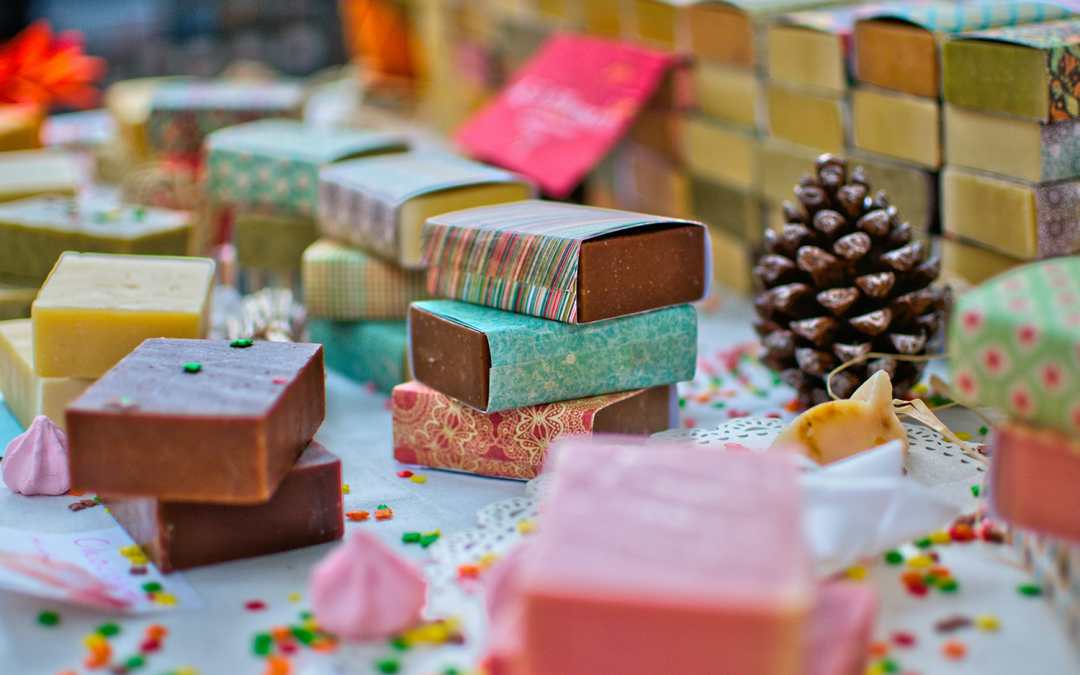
National Handmade Day is a time to honor the tradition of making unique, one-of-a-kind items with both your hands and your heart. Whether it’s toys, soaps, pottery, jewelry, baked goods, or woodworks, they are material expressions of an artist’s talents, made to bring a smile to the faces of family members, friends, or customers. These handmade products could be the continuation of a family tradition or a hobby you just decide to adopt on your own. Either way, they’re completely unique, creative items you’ve brought to life with the utmost care.
National Handmade Day was first celebrated in 2018, so the observance is still pretty new. The practice of creating goods by hand, however, has been practiced by our ancestors for millennia. In the centuries before the birth of Christ, potters and metalworkers in Greece created ceramics and items in bronze, each of them signed by their maker.
In the Medieval era in Europe, guilds formed, bringing these artisans together, everyone from weavers to carpenters. These guilds were founded to regulate prices and quality of product. During these years, crafters made making and selling their creations their entire livelihood.
Everything changed during the Industrial Revolution. Between the late 18th and early 20th centuries, inventions such as the power loom led to factories opening and the shuttering of smaller craft stores. Machines – and with them, the ability to produce a greater number of items in a shorter time span — threatened the livelihood of artisans whose income was dependent on sales of their one-of-a-kind items.
In the late 19th and early 20th centuries, however, figures such as American craftsman and furniture maker Gustav Stickley promoted the benefits and quality of handmade pieces over mass-produced goods, joining a movement designed to breathe new energy into handmade creations and to lessen the power given to machinery and automation (today, of course, authorized dealers of Stickley furniture can now be found across the U.S.).
Stickley himself sang the praises of working with one’s hands, saying that human hands alone can create the small details we often find and appreciate in crafts: “It should be the privilege of every worker to take advantage of all the improved methods of working that relieve him from the tedium and fatigue of purely mech-anical toil, for by this means he gains leisure for the thought necessary to working out his designs, and for the finer touches that the hand alone can give. So long as he remains master of his mach-inery it will serve him well, and his power of artistic expression will be freed rather than stifled by turning over to it work it is meant to do.”
Stickley’s message resonated throughout midcentury America, when, in the 1960s and ‘70s, arts and crafts saw another resurgence in popularity as both works of art and functional pieces made for everyday use. And for the past 20 years or so, that demand has thrived in cyberspace, with websites like Etsy acting as virtual storefronts for independent makers to sell their creations to a public hungry for the quality and beauty that can only be found in objects made by a person, not a machine.
For more than 50 years, this publication has promoted and celebrated the handmade arts and crafts of makers throughout the region. The continued demand for them proves Gustav Stickley’s quote is just as relevant today as it was more than a century ago. I hope you’ll take the time this National Handmade Day to shop your local crafter and keep his vision alive.