
Riding the Rails Hobo culture emerged from war’s ashes
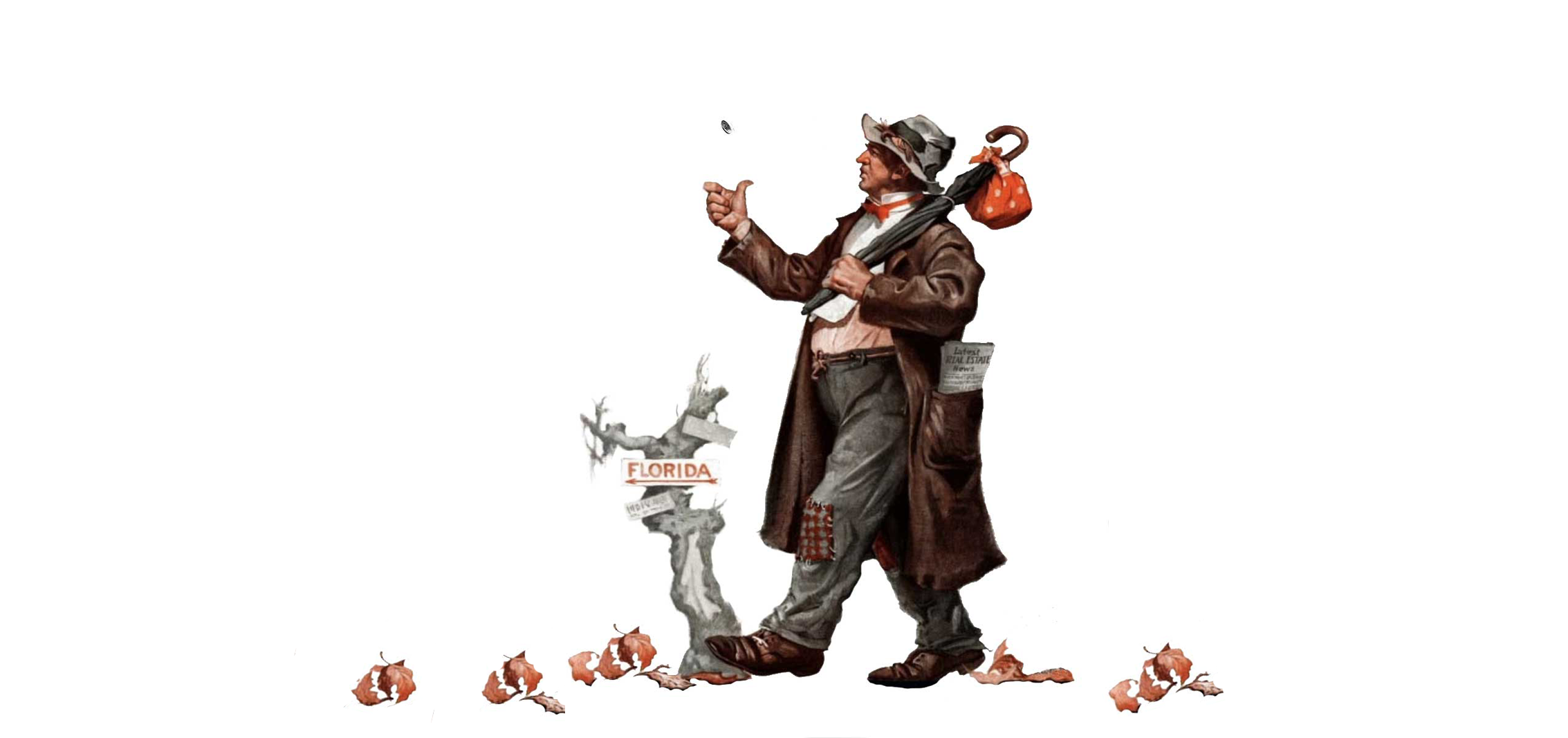
This image by Edgar Franklin Wittmack graced the cover of the Oct. 24, 1925 issue of The Saturday Evening Post, presenting a common visual representation of hobo in pop culture. (Image courtesy of Fine Art America)
Oct 2026
Cover Story
Riding the Rails
Hobo culture emerged from war’s ashes
by Corbin Crable
They’re not bums. Or vagabonds. Or tramps. Or panhandlers.
“I’m a hobo,” they’d tell you. “And there’s a difference.”
To the unaware, the hobo is synonymous with the aimless wanderer who begs for handouts. Not so, historians – and hobos themselves – are quick to say.
“One trait hobos have in common is that they travel and work. They take pride in this attribute and often travel with the implements of their trade,” according to a 2021 article from the NSA’s National Cryptologic Museum.
We tend to have a pretty static image of a hobo in our collective consciousness – to us, he’s usually a man sporting a five-o’-clock shadow, and he carries all his belongings in a handkerchief tied to the end of a stick. They need that meal, that temporary roof over their head, that money – but, unlike your average, everyday bum, the hobo is more than happy to work for it. And with that identity and that work ethic comes an entire subculture misunderstood by society at large.
National Hobo Convention
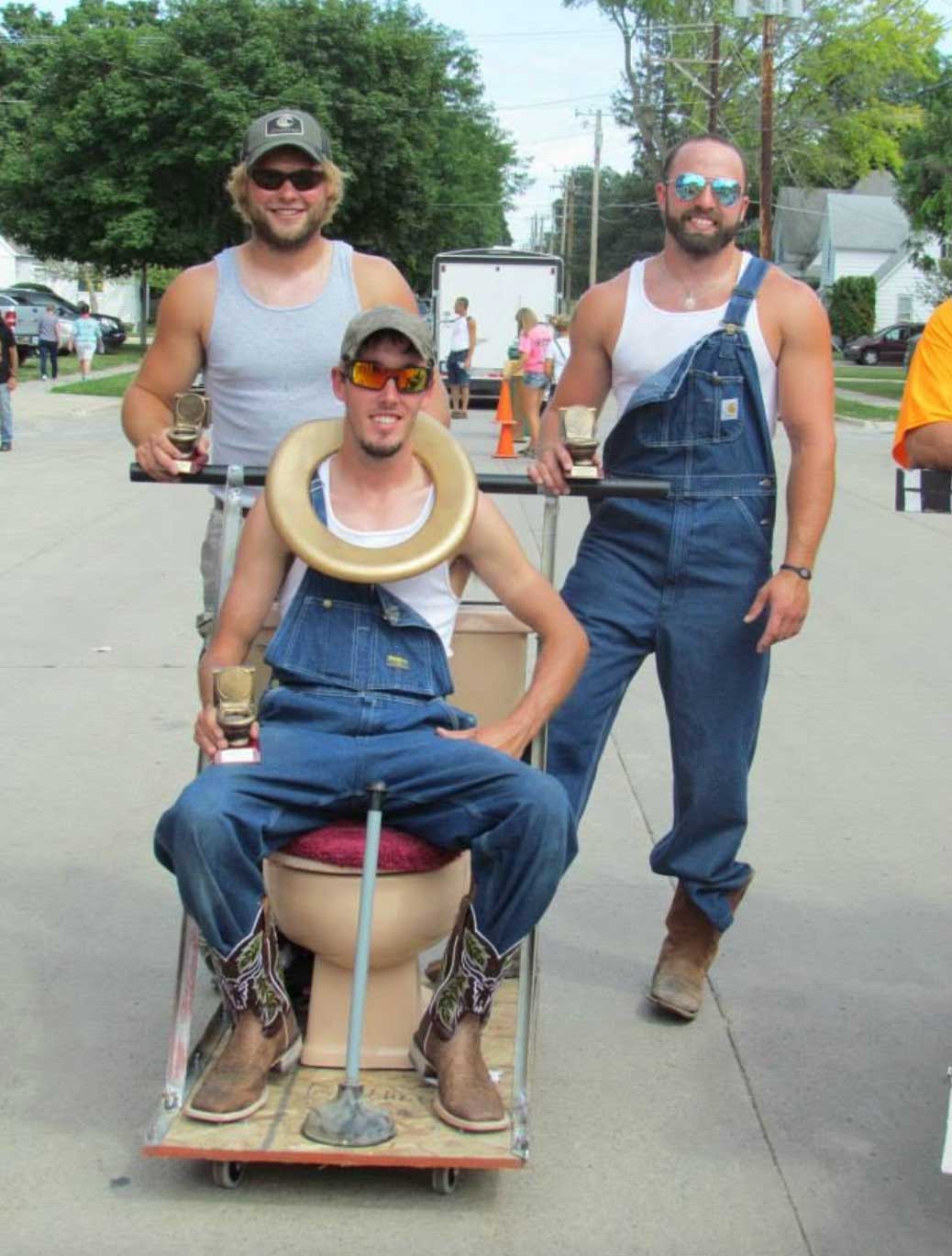
Attractions at the National Hobo Convention include the always popular toilet races. (Image courtesy of Facebook)
The hunt for work
Hobos can trace their origins to shortly after the end of the Civil War in 1865, as soldiers representing both the Union and Confederacy returned home from the battlefield. Though most soldiers found their way home, many were unable or simply unwilling to make that transition, instead taking jobs with the ever-expanding railroad industry, whose network had grown exponentially by the end of the war (by this time, steam-powered engines had only been in use for 30 years). The origin of the term “hobo” isn’t clear, but what we do know is that it became commonly used by the end of the century. Historians say that hobo communities emerged and grew in two distinct waves – one during the Reconstruction era, and the other during the Great Depression.
“The Panic of 1873 and the (years) that followed led men to climb aboard the freight trains in search of work,” the National Cryptologic Museum’s article states. “Jumping on slow-moving freights, they moved across the country following the different harvest seasons or working in mining or lumber camps. The situation repeated itself with the Great Depression of the 1930s. Thousands of men in search of work took to the rails and roads.”
Two hobo jump a train
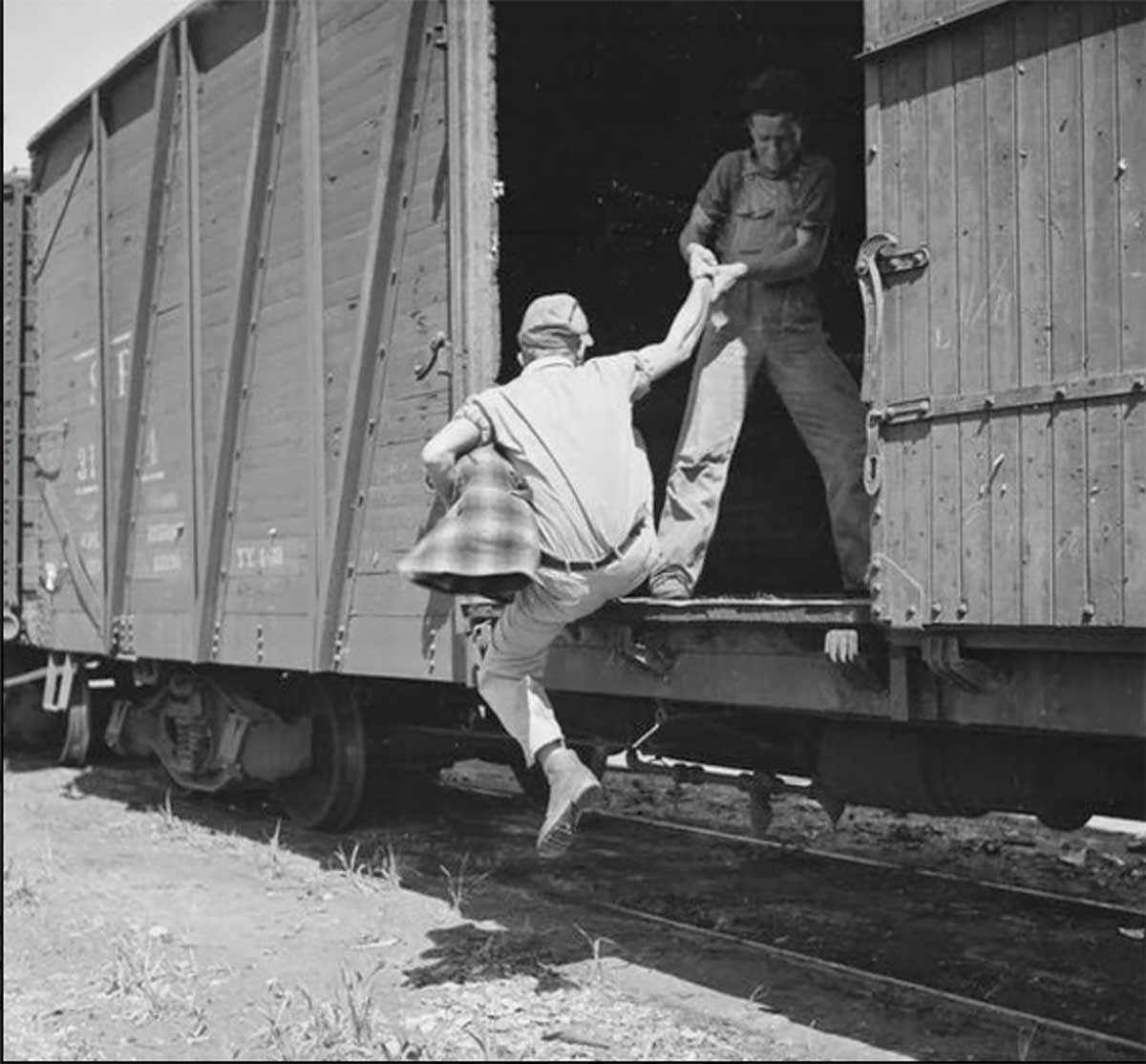
Two hobo jump a train with the hopes of finding work throughout 1930s America. (Image courtesy of the National Hobo Museum)
They didn’t carry many possessions with them, of course, but these men (and some women, too) created their own ethical code and their own unique culture that continues to this day. Their code of ethics, developed in the late 19th century, isn’t much different from the universal, unspoken rules by which we live our own lives. Among the code’s edicts: “Don’t take advantage of someone who is in a vulnerable situation, locals or other hobo,” and “Help your fellow hobos whenever and wherever needed; you may need their help someday.
”Hobos “traveled to work and worked to travel,” very often risking their freedom and their lives to do so. Hopping trains could land you in prison, and you risk grave injury or death trying to board or leap from a moving train. Still, it was the preferred method of travel for the hobo at the turn of the century and beyond.
A language all their own
Hobos were faced with discrimination and prejudice no matter the town in which they stopped. But there were just as many people who opened their doors to these traveling workers, many of them as an act of Christian charity. And since hobos usually didn’t encounter one another much, they developed a system of communication using symbols to indicate where resources might be found, the character of the people who lived in these towns, and places to avoid. For instance, a drawing of a top hat on a fence post means that a wealthy man or family occupy the home.
National Hobo Convention
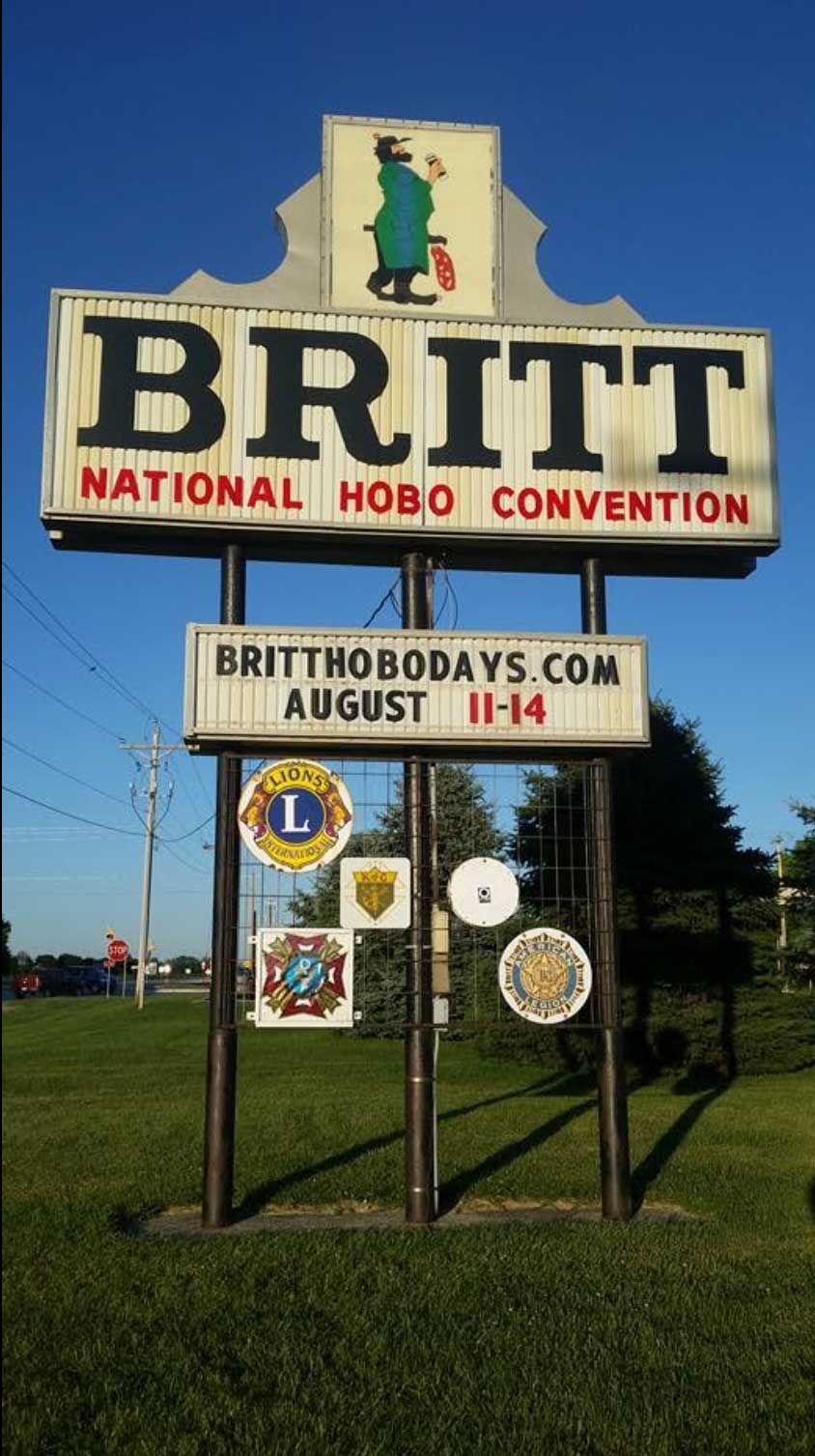
Britt, Iowa, has hosted the annual National Hobo Convention since 1900. (Image courtesy of Facebook)
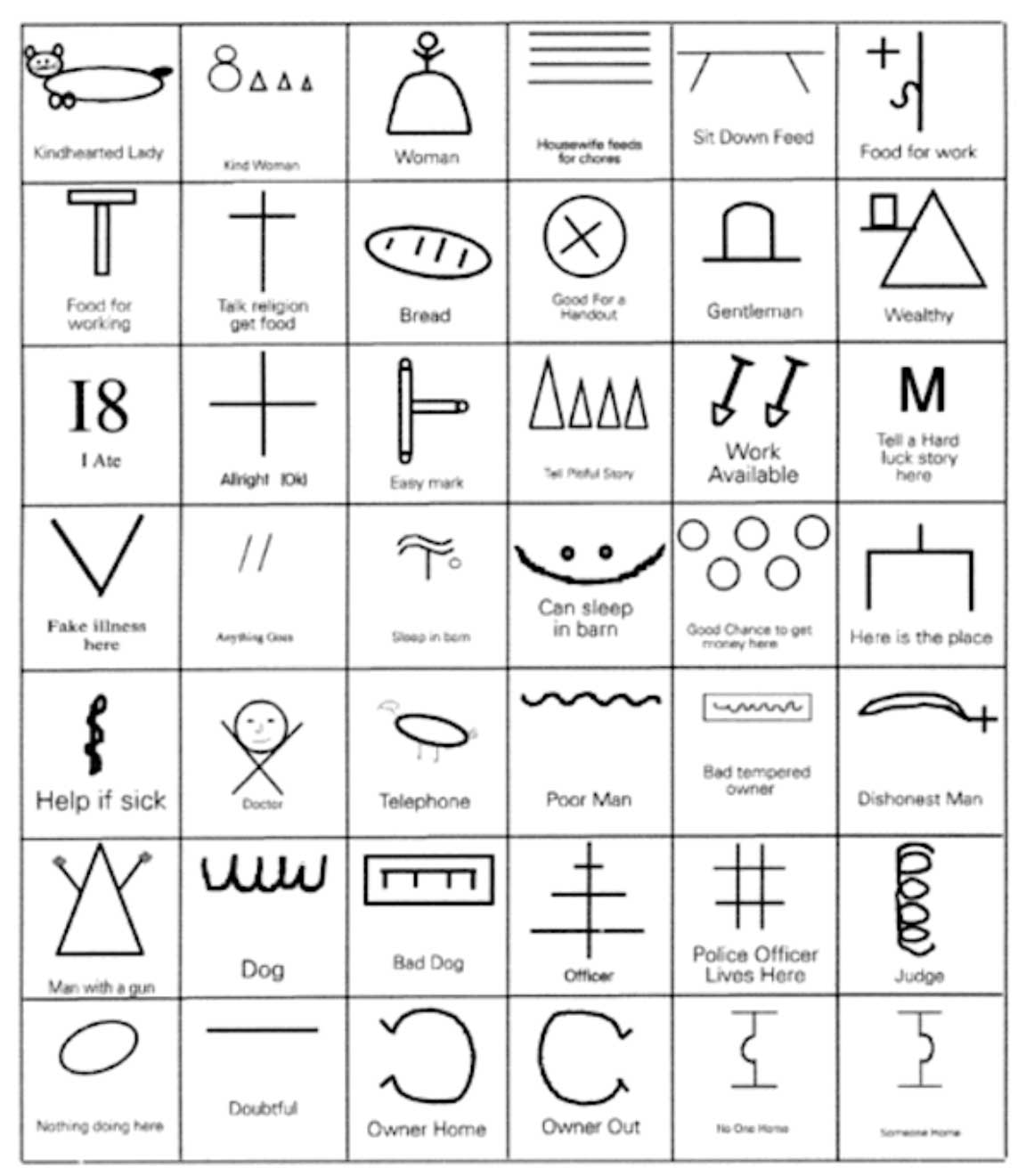
Hobo Markings
A few of the markings hobo would use to communicate with one another. (Image courtesy of the National Hobo Museum)
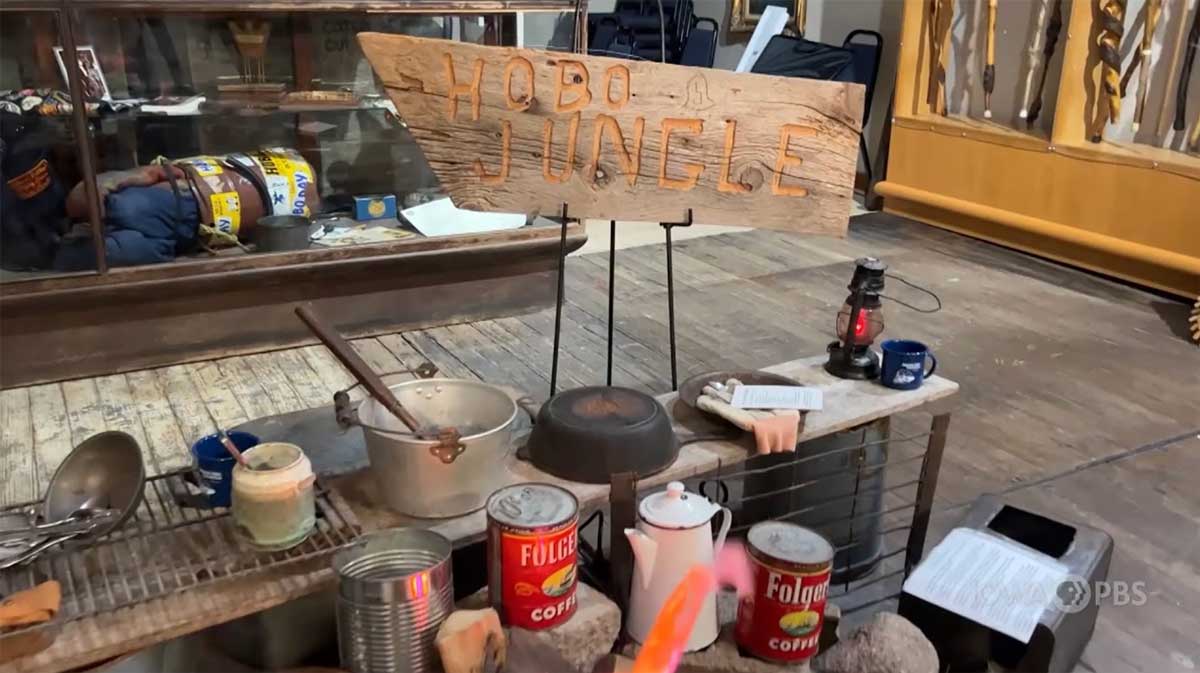
Artifact found in hobo jungle
A collection of artifacts you might find in a hobo jungle. (Image courtesy of Iowa PBS)
“The signs relayed information concerning a variety of topics important to the hobo. Symbols indicated where one could find a meal and whether work would be required first. Some signs described whether the police in town were friendly or that a hobo should keep moving,” according to the museum. “During the depression of the 1930s, Prohibition was also the law. Signs told whether a town was “dry.” Other symbols marked a good location to catch a train. All of it was information a hobo could use.”
The symbols usually were drawn using chalk or coal, so they easily washed away, having occupied spaces for just as brief a time as the people for whom they were intended. Today, such symbols are no longer in use, thanks to the Internet, which can direct hobo to any number of resources wherever they are.
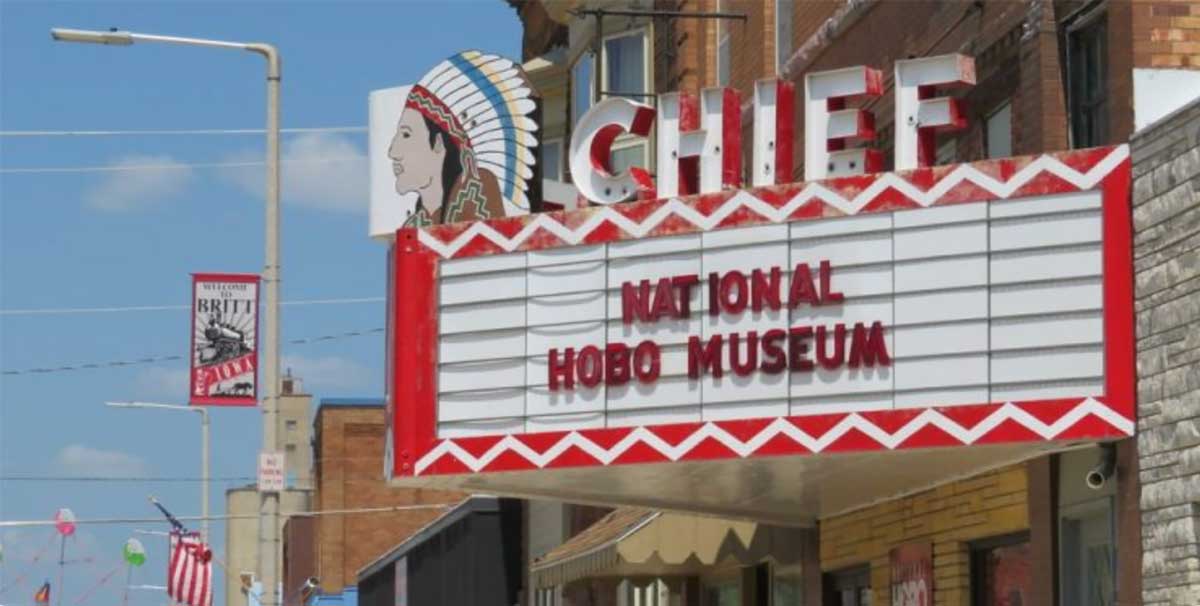
National Hobo Museum
The National Hobo Museum is housed in the Chief Theatre in Britt, Iowa. (Image courtesy of the National Hobo Museum)

Hobo King and Queen
King Tuck and Queen Minneapolis Jewel, crowned Hobo King and Queen at the National Hobo Convention. (Image courtesy of Artful Living)
Let’s set up a jungle
Even more common than finding temporary shelter in a new community, hobos established some areas as temporary ‘hobo jungles,’ the temporary camp home base for their small group until they decided to pack it up and move on.
“Usually located just outside of town, near running water and the tracks, the jungle served as pub, restaurant, hotel, literary gathering place and information center for traveling hobos,” author and historian Roger Bruns wrote in his book “Knights of the Road: A Hobo History.”
Although hobos often were able to warm their bodies thanks to the charity of some households – and a hearty bowl of what they called ‘mulligan stew,’ a concoction made from whatever meats and vegetables were available – many succumbed to the elements; others died at the hands of residents in the communities they visited, and others still died at the hands of their hobo brethren, a constant reminder of the dangers of their lifestyle.
God save our (hobo) king and queen
Hobos exist today in lesser numbers than in the late 19th and early 20th centuries, but in recent years, their culture has been more widely recognized and even celebrated. The National Hobo Museum in Britt, Iowa, is housed inside a small vintage movie theater, and it displays a voluminous collection of hobo artifacts, memorabilia, and photographs (you’ll even find examples of the coveted ‘Hobo Nickel’ – nickels with intricate designs carved in them; hobos often would trade them for goods and services). The museum has been open to the public for more than 40 years. You can visit during the town’s annual Britt Hobo Days, a national hobo convention that has taken place every year since 1900. The highlight of the event, which includes a parade, food, and craft tables, is the election of King and Queen of the Hobos. The next Britt Hobo Days is scheduled for Aug. 12-15, 2027.
In his book, Bruns says the spirit of the American hobo lives on, even if the hobo community’s numbers dwindle.
“They hit the tracks and beat their way across an American laced with railroad lines,” Bruns writes. “Some rode in boxcars, or crouched in cowcatchers, some in empty battery boxes beneath passenger cars, others clung precariously to the brake rods inches from the stinging cinders. The ingenuity of the hobo was only exceeded by his courage and, in many cases, his desperation.”

Got a light? Smoking accessories continue their collectible streak
If there’s one thing advertising in the 1950s and ‘60s taught us, it’s that smoking was an activity that brought people together. (Image courtesy of Pinterest) November 2024 Cover Story Got a light? Smoking accessories continue their collectible streak by Corbin…

A real cut-up Jack-o’-lanterns bring whimsy, fright to Halloween
Treasure your creatively-carved jack-o’-lantern while you can – they’ll begin to get soft and moldy after roughly three to five days. (Image courtesy of Manicpumpkincarvers.com) October 2024 Cover Story A real cut-up Jack-o’-lanterns bring whimsy, fright to…

A bridge to another time Covered bridges still stir up our nostalgia
Missouri’s Sandy Creek Covered Bridge, located in Hillsboro, is seen framed by winter snow. (Image courtesy of Facebook) September 2024 Cover Story A bridge to another time Covered bridges still stir up our nostalgia by Corbin Crable The covered bridge The covered…

Fun Under The Big Top Circus collectibles reflect colorful history, memories
This vintage-looking circus tent evokes a feeling of nostalgia and memories in the making. (Image courtesy of Vecteezy.com) August 2024 Cover Story Fun Under The Big Top Circus collectibles reflect colorful history, memories by Corbin Crable Revelers young and old…
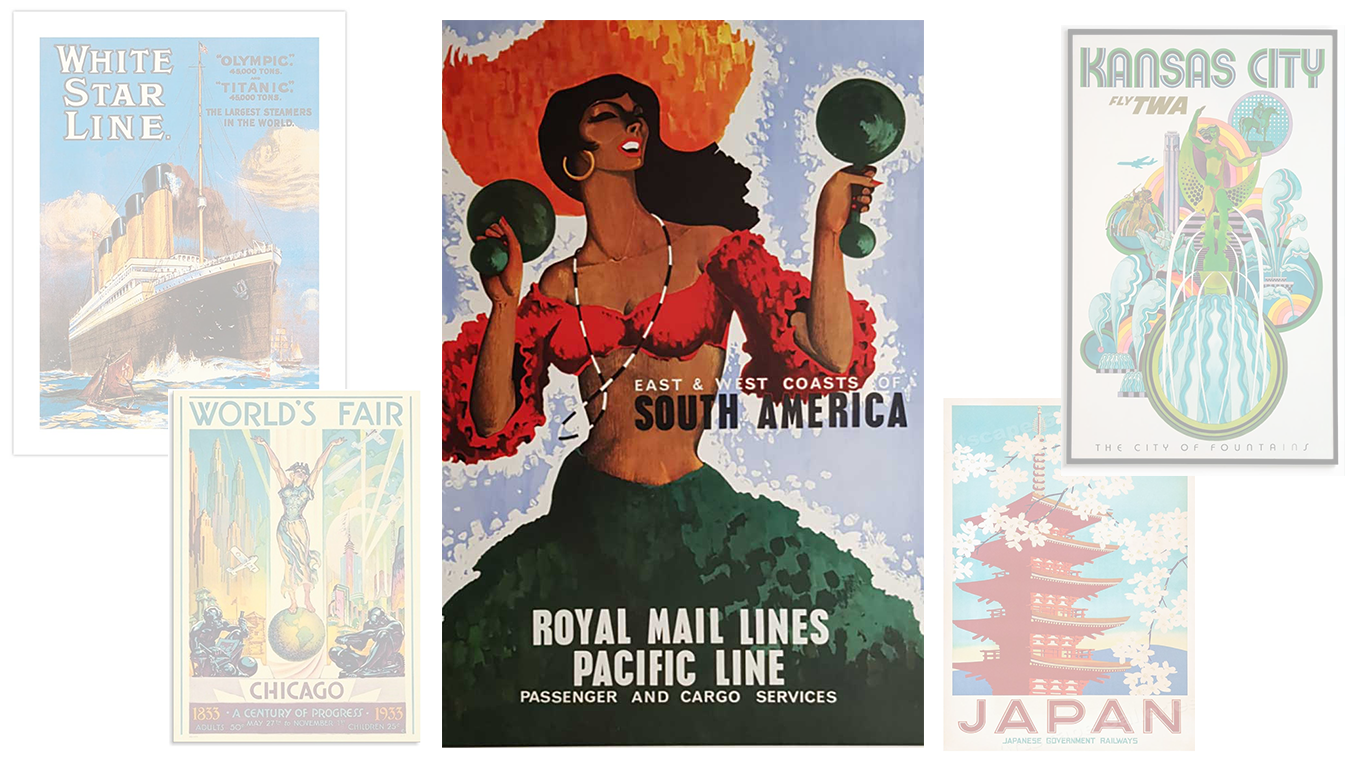
Adventure Awaits Travel posters jump-start travelers’ wanderlust
The Royal Mail Lines Pacific Line took travelers to any number of South American countries. The cruise ship company’s life was short, operating only from 1932 to 1965. (Image courtesy of antikbar.co.uk) July 2024 Cover Story Adventure Awaits Travel posters…
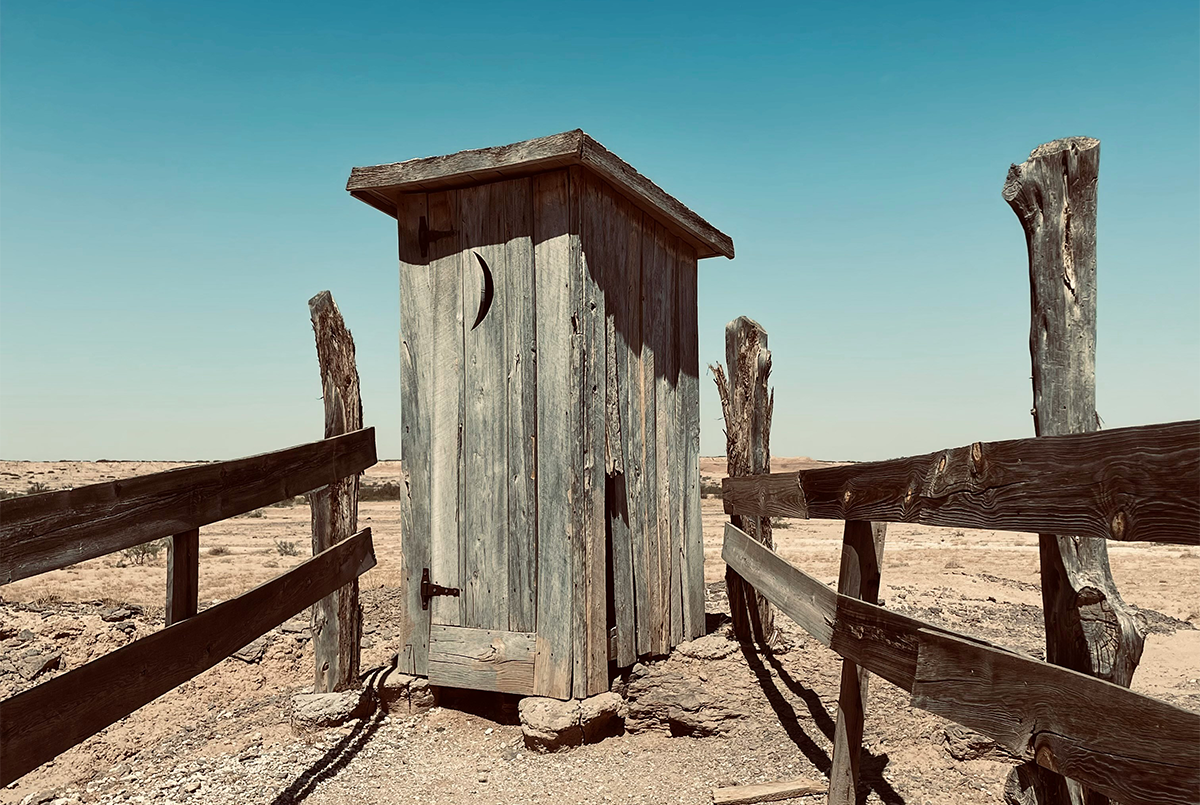
Privacy, please Outhouses were a part of daily lives in centuries past
Outhouses usually were located 50 to 100 yards from the back of one’s home. (Image courtesy of Daniel Coronoa / Unsplash.com) June 2024 Cover Story Privacy, please Outhouses were a part of daily lives in centuries past by Corbin Crable We all take indoor plumbing for…
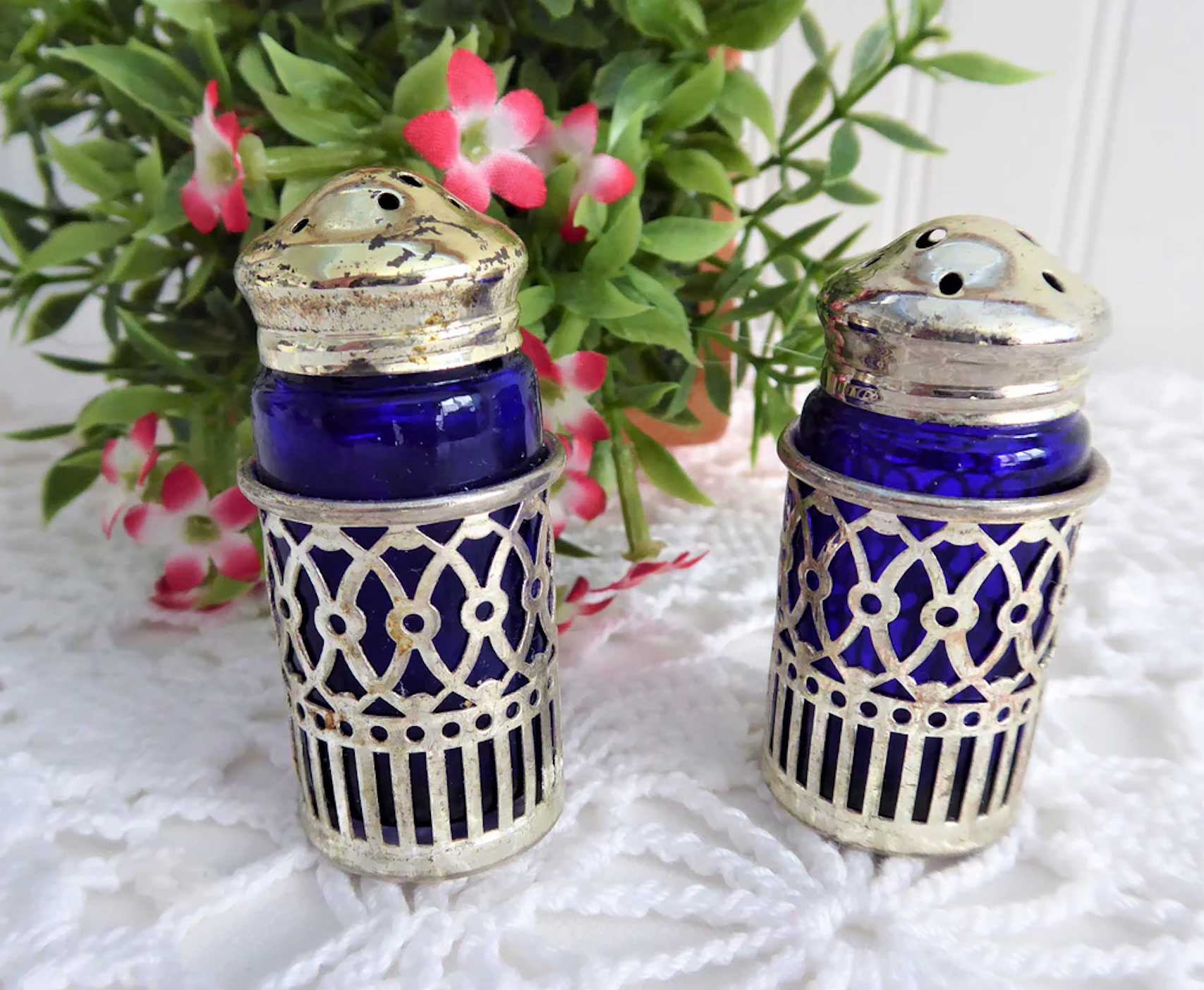
Two of a kind Salt and pepper shakers make inexpensive, colorful collectibles
These shakers have their original cobalt blue glass liners with silverplated frames and lids. (Image courtesy of Antiques and Teacups) May 2024 Cover Story Two of a kind Salt and pepper shakers make inexpensive, colorful collectibles by Corbin Crable It’s one of the…

What a doll! Barbie continues to inspire after all these years
Barbie, seen here in her original design, made her debut at the North American International Toy Show in 1959. (Image courtesy of Flatiron Nomad) Apr 2024 Cover Story What a doll! Barbie continues to inspire after all these years by Corbin Crable Ruth Handler had seen…

Landing Among the Stars NASA collectibles enjoy resurgence in popularity
The NASA logo, also referred to as “the meatball,” was designed by a NASA employee in 1959, the year after the organization was founded. Mar 2024 Cover Story Landing Among the Stars NASA collectibles enjoy resurgence in popularity by Corbin Crable Americans will be…
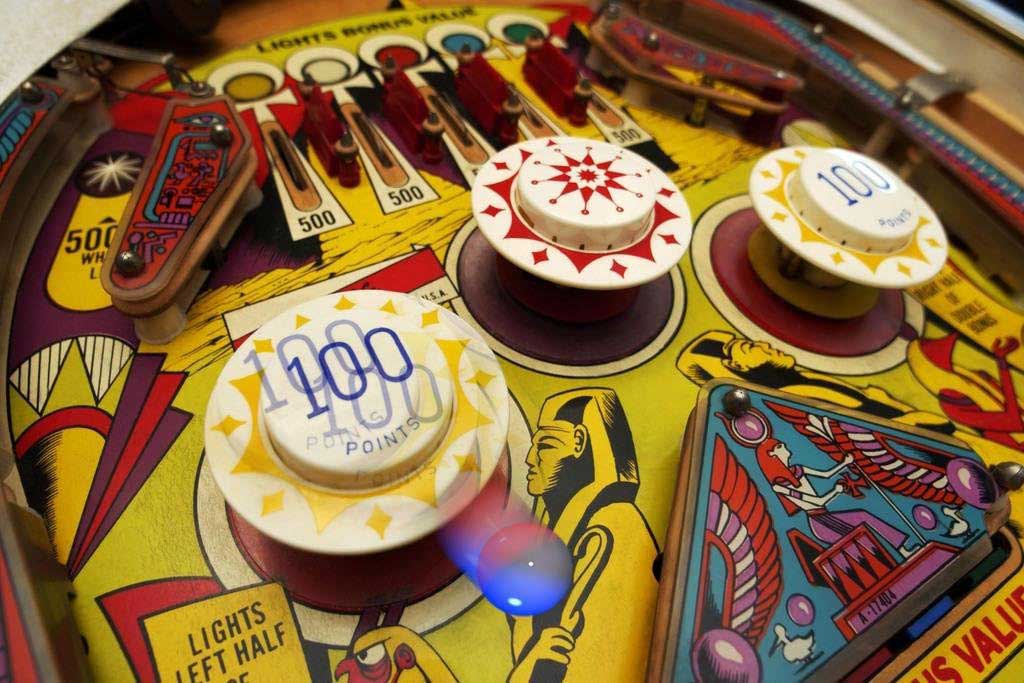
Pinball Wizard Pinball machines stay in the game even 100 years after initial release
Detail of a vintage pinball machine. (Image courtesy of Design Market) Jan/Feb 2024 Cover Story Pinball Wizard Pinball machines stay in the game even 100 years after initial release by Corbin Crable Clack! go the flippers as the ball is launched. Pop! go the bumpers…